Hidden in plain sight: surveillance disguised as road infrastructure
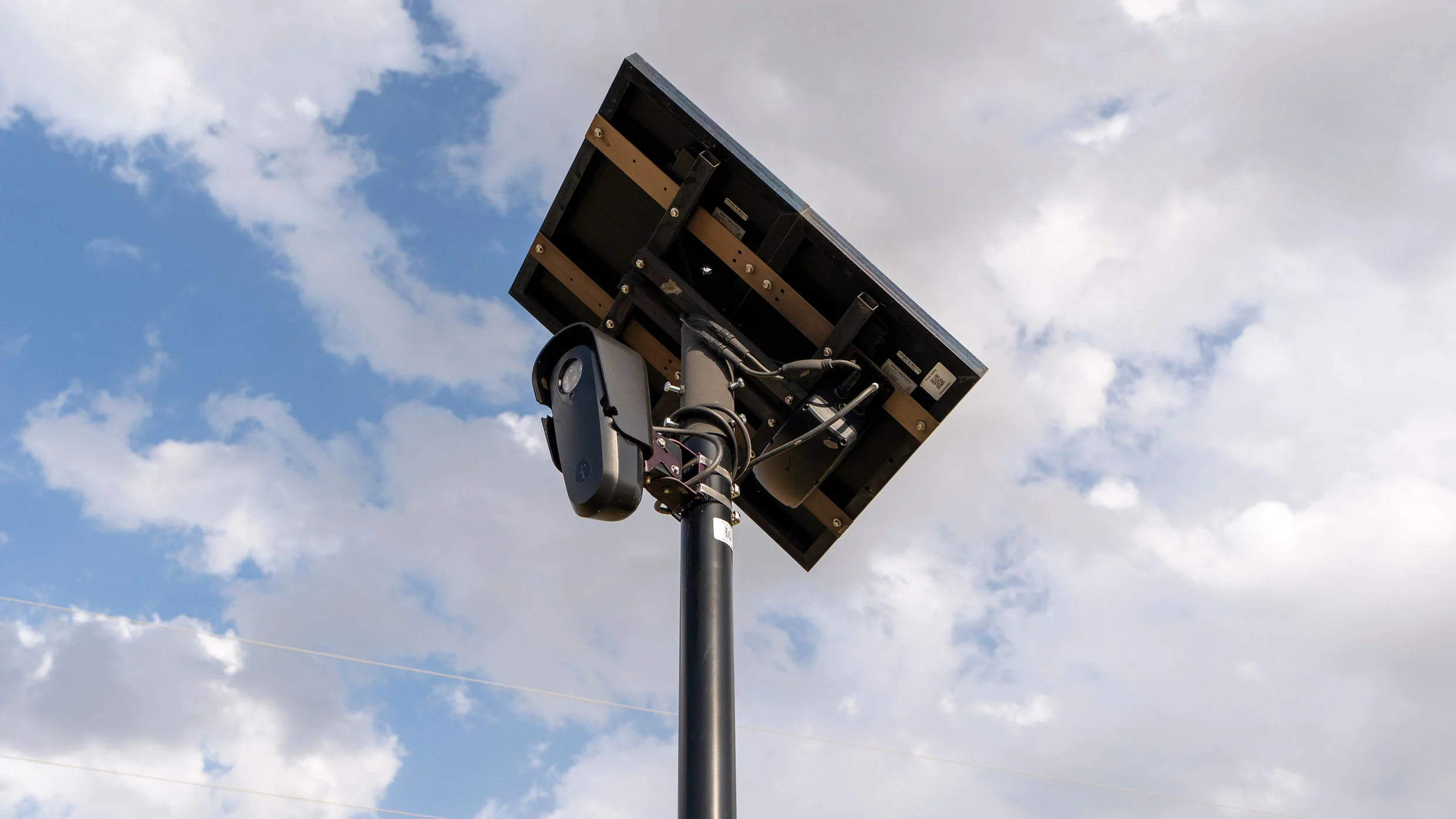
A coalition of over two dozen privacy and civil rights organizations, led by the Electronic Frontier Foundation and Imperial Valley Equity and Justice, has sent a formal letter to California Governor Gavin Newsom demanding the removal of covert license plate readers discovered across Southern California. The devices, which the groups say are concealed inside ordinary traffic safety equipment such as construction barrels, are believed to feed real-time vehicle tracking data into a U.S. Border Patrol predictive intelligence program that monitors the travel patterns of millions of American drivers nationwide.
The letter follows an Associated Press investigation published in November that first exposed the scope of the Border Patrol's domestic surveillance operation. That reporting revealed the agency had gone to considerable lengths to hide its equipment in states like Arizona, camouflaging plate readers inside orange and yellow construction barrels positioned along major highways. The privacy coalition says its own researchers have now identified a similar network in California, locating approximately 40 license plate readers in San Diego and Imperial counties -- both of which share a border with Mexico. More than two dozen of those devices were found hidden inside construction barrels.
How the predictive intelligence system works
The concern goes beyond mere data collection. According to the AP's investigation, the license plate data captured by these readers is fed into an algorithmic system that flags vehicles based on their origin, destination, and chosen route. The system appears specifically calibrated to identify short trips to the border region, which Border Patrol agents interpret as potentially indicative of drug or human smuggling activity. Drivers flagged by the algorithm may then be referred to local law enforcement for pretextual traffic stops -- pulled over for minor infractions like lane changes or speeding -- with no awareness that a federal predictive program triggered the encounter.
Court documents reviewed by the AP reveal at least two cases involving California residents. In one 2024 incident, a Border Patrol agent stopped a Nissan Altima driver in part because tracking data showed it had taken six hours to travel roughly 50 miles between the U.S.-Mexico border and Oceanside, California -- a travel pattern the agent described as consistent with smuggling tactics. In another case from 2023, agents detained a woman at an internal checkpoint because her route between Los Angeles and Phoenix was deemed circuitous. In both instances, the drivers were accused of transporting undocumented immigrants.

Constitutional questions and the Fourth Amendment frontier
The legal landscape surrounding mass license plate surveillance remains unsettled. Courts have generally upheld the collection of plate data on public roadways, reasoning that drivers have a reduced expectation of privacy on open roads. However, the Supreme Court has separately curtailed warrantless government access to other forms of persistent location tracking -- such as GPS devices and cellphone location data -- when that tracking is comprehensive enough to reveal intimate details about a person's life and movements.
The privacy coalition argues that large-scale plate reader networks, particularly when combined with predictive algorithms that analyze travel patterns, represent exactly the kind of sweeping surveillance the Fourth Amendment was designed to prevent. Legal scholars have increasingly echoed this position, noting that while a single plate scan may be trivial, the aggregation of millions of scans into a behavioral profile crosses a qualitative threshold that the courts have not yet fully addressed.
Why it matters: the expanding reach of domestic surveillance
The controversy underscores a broader tension in American governance: the growing deployment of surveillance technologies that operate in legal gray zones, often without meaningful public debate or legislative authorization. The program has existed under both Democratic and Republican administrations, and U.S. Customs and Border Protection has defended it as a tool for identifying threats and disrupting criminal networks, governed by what the agency calls a "stringent, multi-layered policy framework."
Governor Newsom's office has not publicly responded to the coalition's letter. The California Department of Transportation confirmed that state law prioritizes both public safety and privacy, and that it had issued permits to both the Border Patrol and the Drug Enforcement Administration for plate reader installations along state highways. The DEA, which shares its plate reader data with Border Patrol, declined to comment on its investigative tools and techniques. For millions of drivers in Southern California, the question remains: who is watching the roads they drive every day, and what is being done with the data?
This article is based on reporting by Fast Company. Read the original article.

Originally published on fastcompany.com