The Rise of the Robot Sports Coach
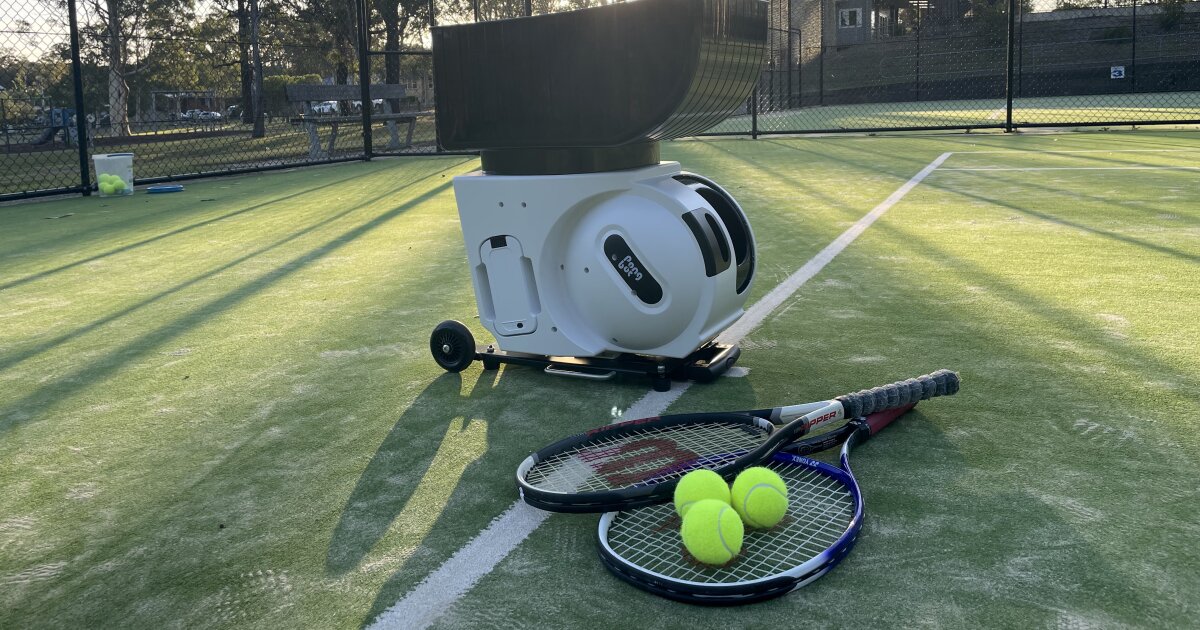
Artificial intelligence has been steadily infiltrating professional sports for years, from biomechanical analysis in baseball to tactical modeling in soccer. But consumer-grade AI coaching has remained largely aspirational -- until now. The Pongbot Pace S Pro, a ball machine that combines high-performance hardware with AI-driven player tracking, represents what may be the most capable automated tennis training system available to recreational and competitive club players. After extensive testing, the verdict is clear: for consistent, challenging, and endlessly patient practice sessions, this machine outperforms most human coaches.
At its core, the Pace S Pro is a ball launcher capable of firing tennis balls at speeds up to 80 mph with spin rates reaching 60 revolutions per second. It can replicate drives, slices, lobs, and drop shots with adjustable depth and trajectory. The ball launch interval can be set as short as 1.5 seconds, creating a relentless rhythm that forces quick recovery between strokes. The hopper holds 150 balls, and the internal battery lasts approximately eight hours -- enough for a full day of practice without plugging in.
Over 500 Drills and Fully Customizable Workouts
Where the Pongbot distinguishes itself from traditional ball machines is in the depth of its programming. The system ships with more than 500 pre-built training drills that span every skill level and shot type. Players can also design custom workout sequences through the companion app, varying speed, spin rate, placement, and rhythm within a single session. Want to practice returning high-kick serves for ten balls, then switch to low slices for another ten, followed by randomized placements? The app makes that trivial to configure.
The AI mode adds another dimension. Using wearable sensors, the Pongbot tracks the player's position on the court and adjusts ball direction dynamically. It can detect when a player is out of position and pause before launching the next ball, allowing recovery time that mimics the natural cadence of a rally. In theory, this creates a more game-like training experience than static drill patterns. In practice, the AI mode proved somewhat less reliable than the programmed drills during testing, possibly due to sensor placement or environmental conditions, but when it worked well, the adaptive behavior felt genuinely responsive.

Built for Performance, Not Portability
The Pace S Pro weighs 42 pounds and measures roughly 22 by 21 by 19 inches. It is not a machine you casually toss in a car trunk on the way to the courts. Getting it up stairs, across gravel paths, or into the back of a sedan requires some effort, and anyone who plays at a facility without convenient court-side access should factor portability into their purchasing decision. Once positioned on the court, however, setup is quick and the machine is stable during operation.
Priced at $1,349.99 with current promotional discounts, the Pongbot Pace S Pro is not an impulse purchase. But for serious recreational players who currently pay $60 to $100 per hour for private coaching, the math works in its favor quickly. The machine does not critique your grip or fix your footwork verbally, but it delivers an honest, tireless workout that exposes weaknesses through repetition. It will not cancel on you, show up late, or spend half the session chatting. For players who know what they need to practice and want a tool that pushes them relentlessly, this AI-powered machine sets a new standard for what at-home sports technology can accomplish.
This article is based on reporting by New Atlas. Read the original article.
Originally published on newatlas.com