Voyager 1 gives up another instrument
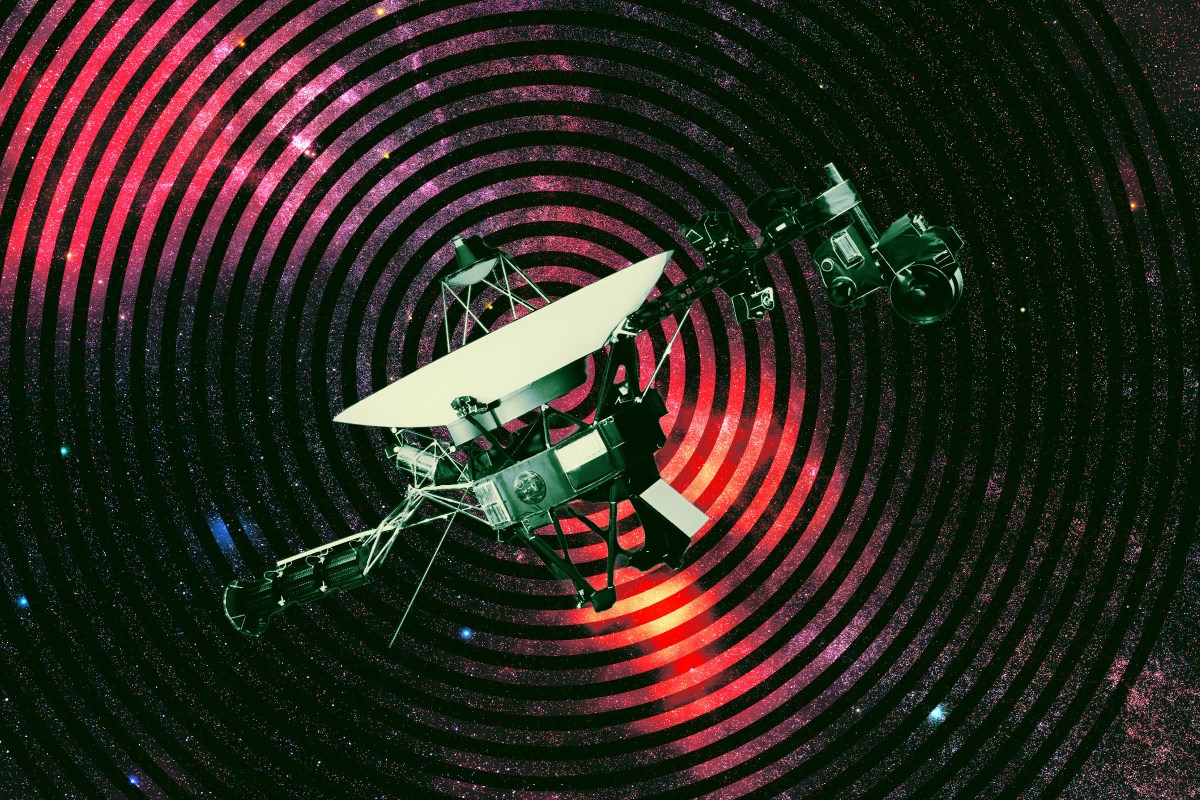
NASA has shut down one of Voyager 1’s long-running science instruments as engineers work to preserve the nearly 49-year-old spacecraft’s remaining power. The instrument, the Low-energy Charged Particles experiment, had operated since Voyager 1 launched in 1977 and helped measure particles from outside the solar system and beyond the galaxy.
The decision followed an unexpected drop in Voyager 1’s power levels during a routine roll maneuver on February 27. Engineers at NASA’s Jet Propulsion Laboratory were concerned that a further drop could trigger an automatic shutdown system designed to protect the spacecraft from an electrical fault. Recovering Voyager 1 from that condition would be risky because the probe is more than 15 billion miles from Earth.
Power is now the mission’s central constraint
Voyager 1 and its twin, Voyager 2, are powered by radioisotope thermoelectric generators. These systems convert heat from radioactive decay into electricity, but their output declines gradually over time. NASA says the generators on both probes are losing power at a rate of about four watts per year.
That slow decline has forced mission engineers to make increasingly difficult choices. Every remaining watt matters. When power becomes too limited, instruments and subsystems must be turned off in a planned sequence so the spacecraft can continue returning the most valuable possible science data.
The latest shutdown was not improvised. Voyager scientists had planned years in advance for the order in which systems would be sacrificed. The Low-energy Charged Particles experiment was next on that list.
What the instrument contributed
The Low-energy Charged Particles experiment measured low-energy particles originating outside the solar system and even beyond the galaxy. That made it part of Voyager 1’s historic interstellar science mission. After leaving the heliosphere, Voyager 1 became one of humanity’s few direct instruments for sampling the environment beyond the Sun’s protective bubble.
Turning off the instrument reduces Voyager 1’s scientific capacity, but it also helps preserve the spacecraft itself. The mission team left a small motor associated with the instrument online, keeping open the possibility that the system could be revived if circumstances allow. That is not a purely sentimental gesture: engineers revived a set of Voyager 1 thrusters last year after they had been considered inoperable for nearly two decades.
Only a few instruments remain
Voyager 1 originally carried ten instruments. After the latest shutdown, two remain online: one that listens to plasma waves and another that measures magnetic fields. The previous science sacrifice was the cosmic ray subsystem experiment, which engineers shut off in February 2025.
The narrowing instrument list shows how far the mission has moved from its original planetary flyby era. Voyager 1 is no longer a richly instrumented spacecraft surveying giant planets. It is a minimal, aging interstellar probe being carefully managed at the edge of its engineering limits.
A mission extended by restraint
The shutdown is a loss, but it is also the reason the mission can continue. Voyager 1’s survival now depends on disciplined engineering trade-offs: turn off one capability so another can continue, reduce risk before an automatic fault response, and preserve communication with a spacecraft whose signals must cross more than 15 billion miles.
That kind of mission management is less dramatic than a launch or a planetary encounter, but it is central to Voyager’s longevity. The spacecraft has lasted long past its original mission because engineers have repeatedly adapted to fading power, old hardware, and failures that were never meant to be repaired from Earth.
NASA’s latest decision may keep Voyager 1 operating for at least another year. At this stage, every additional year is scientifically and historically valuable. The spacecraft remains a working artifact from the 1970s, still measuring space far beyond the planets, with each shutdown marking both an ending and a strategy for keeping the mission alive.
This article is based on reporting by Futurism. Read the original article.
Originally published on futurism.com