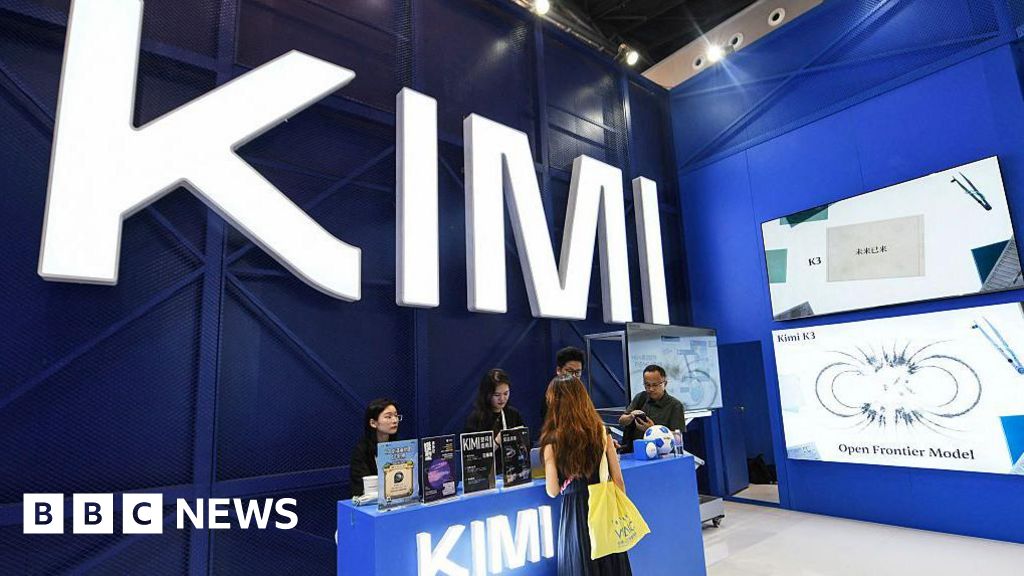
Moonshot AI’s Kimi K3 arrives as more than just another model release
Moonshot AI’s release of Kimi K3 has landed at a sensitive moment in the artificial intelligence industry. The Beijing-based company did not simply announce a new large model. It released the full weights after first introducing the model in mid-July, putting one of the largest openly distributed systems yet into the hands of developers who can inspect it, adapt it, and build on top of it.
That combination of scale and openness is why Kimi K3 has become a talking point far beyond its technical specifications. According to the supplied source material, the model has roughly 2.8 trillion parameters, is natively multimodal across text, images, and audio, and can handle a 1 million token context window. Those are the kinds of numbers usually associated with the industry’s most closely guarded systems, not with models released in a form that outsiders can download and modify.
The result is a release that sharpens several live debates at once: whether Chinese AI firms are closing the gap with leading U.S. labs, whether open-weight distribution can coexist with frontier-level capability, and whether transparency may sometimes offer a safer path than secrecy.
Why the release moved so fast
Kimi K3 appears to have spread quickly because it arrived through the channels that matter most to developers already working with open models. The weights were published on Hugging Face, a central distribution point for open-weight AI systems. The source text says the repository hit the platform’s top trending position within 30 minutes of release, with more than 4,000 likes in that initial burst. By the next day, it had reached about 7,700 likes and tens of thousands of downloads.
Those figures matter because they show immediate developer attention, not just media attention. In the current AI market, interest from developers often translates into experiments, benchmarks, fine-tunes, and integrations within days. A model that starts trending that quickly can influence product roadmaps long before large enterprises make formal decisions about adoption.
The source text also points to a more specific reason for the reaction: many developers saw Kimi K3 as a possible tipping point for open-weight AI. The attraction was not openness by itself. It was the suggestion that a very large open-weight model might now compete credibly with powerful closed models that are sold through APIs and priced per token.

Performance claims and what they mean
Moonshot reported strong performance in coding, agentic, reasoning, and knowledge tasks, with the source text saying the model placed behind but not far behind Anthropic’s Claude Fable 5 and OpenAI’s GPT-5.6 Sol in overall evaluations. It also says Kimi K3 outperformed many frontier models on widely used coding benchmarks.
Those claims should be read carefully. They come from the supplied source material and describe reported performance rather than an independently reproduced industry consensus. Even so, they help explain why Kimi K3 has become more than a regional story. If developers believe a model is close enough to frontier closed systems for practical work, the commercial logic changes. A slightly weaker model with open weights can still be attractive if it offers lower operating costs, more control, and the freedom to customize behavior.
The source text frames Kimi K3 as especially strong on long, complex coding, agentic, and multimodal tasks. That profile is important. Coding and agentic workflows are among the most commercially active parts of the current AI market, while multimodal capability is increasingly treated as a baseline expectation for advanced systems. A model that performs well across all three categories becomes relevant not only to researchers but also to application builders.
Open weights versus closed weights
The deeper significance of Kimi K3 is strategic. The release intensifies a debate over how advanced AI should be governed and distributed. Closed-weight model makers argue that limiting access can reduce misuse and protect safety controls. Advocates of open-weight models argue that transparency improves scrutiny, enables broader safety research, and prevents the concentration of power inside a handful of companies.
The source text explicitly notes that Kimi K3 raised the possibility that transparent open-weight systems may ultimately be easier to control, and therefore safer, than closed-weight models whose makers must defend against misuse while keeping core systems hidden. That is not a settled conclusion, but it is a consequential framing. It shifts the argument away from the older assumption that openness and safety necessarily conflict.
For developers, the distinction is practical as much as philosophical. Open weights allow teams to fine-tune a model, inspect outputs more closely, adapt it to internal environments, and avoid dependence on a single vendor’s API pricing or access rules. For companies building products, that can mean lower costs and more technical freedom. For major labs, it means the competitive moat around proprietary systems may be narrower than they would like.

What Moonshot AI represents
Kimi K3 also matters because of who released it. Moonshot AI was founded in March 2023 by Yang Zhilin, Zhou Xinyu, and Wu Yuxin, according to the source text. It describes Yang, the chief executive, as a Carnegie Mellon University PhD who also interned at Google Brain and Facebook AI Research before returning to China to start a company.
That background reflects a broader reality of the AI sector: the talent pipeline is global even when the competitive framing is national. The rise of firms such as Moonshot complicates any simple narrative that frontier AI progress will remain concentrated in a small cluster of Western labs. The source text says Kimi K3 challenged the notion that Western AI labs still lead Chinese counterparts in large language models, even if only by a narrow margin.
That does not mean the competitive race is over or that one release settles it. It does mean the industry has another data point showing that capability, scale, and developer reach are spreading.
What comes next
Kimi K3’s long-term significance will depend on what happens after the initial surge of downloads and attention. Developers still need to determine how well the model holds up in day-to-day production work, how expensive it is to run at meaningful scale, and how effectively organizations can adapt it for domain-specific tasks. Those questions are often what separate a headline-grabbing release from a lasting platform shift.
Still, the early reaction suggests that Moonshot AI has done more than publish an impressive technical artifact. It has forced a fresh look at the balance between openness and control, and at who gets to set the pace in advanced AI. If Kimi K3 proves durable outside the announcement cycle, it could strengthen the case that open-weight models are not just a parallel movement in AI, but an increasingly central one.
This article is based on reporting by Fast Company. Read the original article.

Originally published on fastcompany.com


