Aviation’s next test is moving from prototypes to places
For years, the electric vertical take-off and landing sector has been rich in renderings, demonstrations, and ambitious timelines. What it has lacked is a convincing answer to a basic operational question: where, exactly, will commercial air taxis run from once they move beyond trial flights? Dubai’s newly certified VDX vertiport offers one of the clearest answers yet.
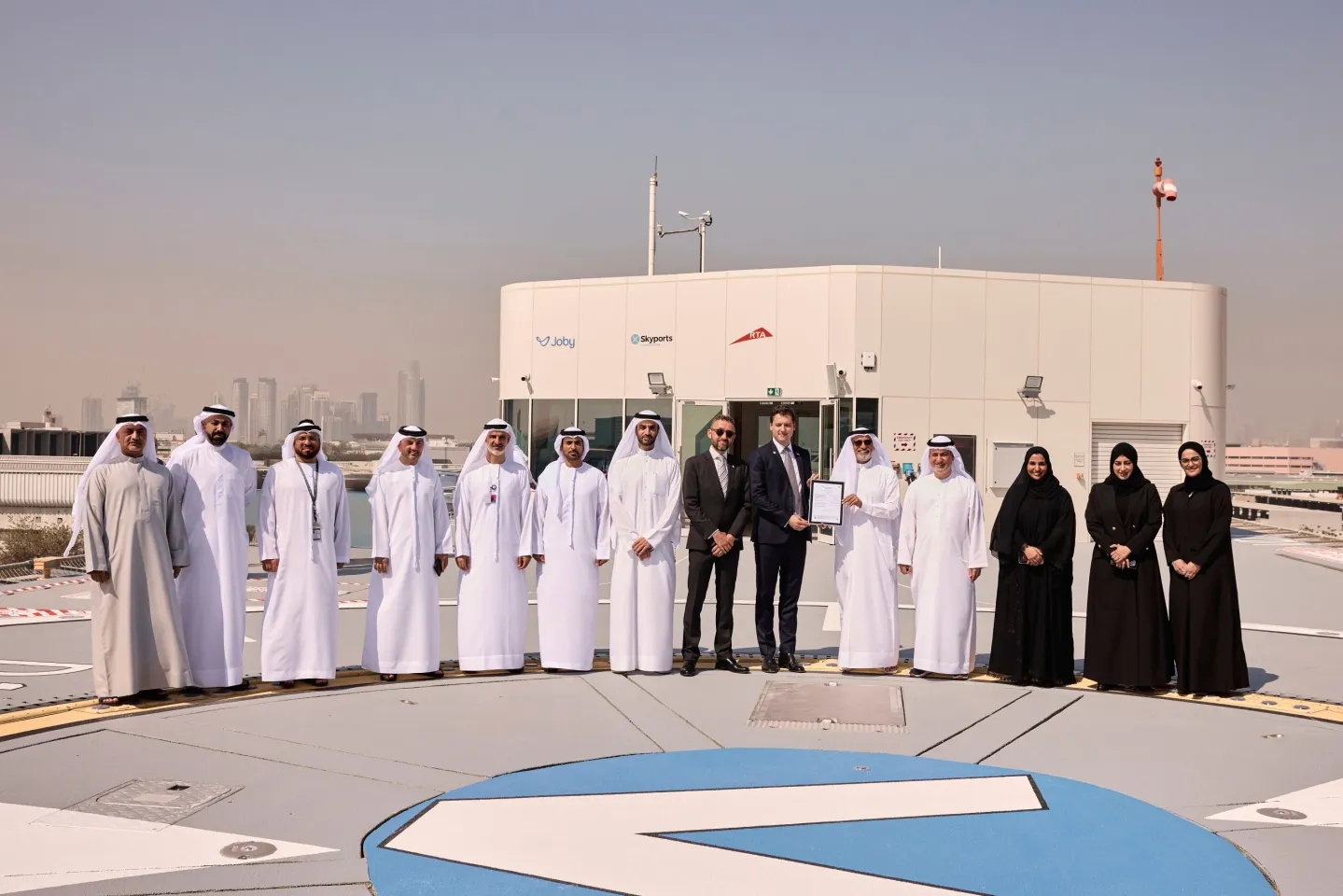
According to the developers, VDX has received regulatory certification from the United Arab Emirates’ General Civil Aviation Authority for eVTOL operations. The facility, located beside Dubai International Airport, is being developed by Skyports Infrastructure in collaboration with Dubai’s Roads and Transport Authority. The project is being described as the world’s first purpose-built commercial vertiport, a label that reflects the industry’s broader attempt to turn the idea of urban air mobility into regulated, repeatable transport infrastructure.
That distinction matters. Temporary landing pads and demonstration sites can prove that aircraft can take off, land, and carry out short missions. They do not prove that a city can support commercial air-taxi traffic with the same kind of planning, certification, passenger handling, and integration required for an actual transportation network. VDX is significant because it is being positioned not as a showcase, but as a hub.
What the certification changes
The regulatory approval clears VDX for eVTOL operations. In practical terms, that means one of the sector’s biggest hurdles has been crossed for this specific facility: a regulator has signed off on the site as a place intended to handle the aircraft category it was built for. For an industry often criticized for getting ahead of the rulebook, that is a more consequential milestone than another concept video or exhibition flight.
The vertiport is expected to serve as the main hub of Dubai’s planned Air Taxi network, with three additional vertiports under development around the city. Skyports holds exclusive rights to build and operate the vertiports in that system. Once operations are fully underway, the company says VDX will be able to handle as many as 170,000 passengers annually.
That projected throughput is large enough to signal serious intent but still small enough to show where the market stands today: this is an emerging premium mobility layer, not mass transit. The number is useful less as a forecast of immediate scale than as evidence that developers are now defining the sector in transportation terms, with annual capacity, network hubs, and site-specific regulation.

Why infrastructure may matter more than aircraft hype
The eVTOL industry is often discussed through the lens of aircraft design, battery performance, range, and noise. Those are fundamental variables, but they are only part of the equation. Commercial flight services need certified nodes, passenger circulation, safety procedures, maintenance interfaces, and connections to the existing transport system. Without that groundwork, even capable aircraft remain demonstrations in search of an operating environment.
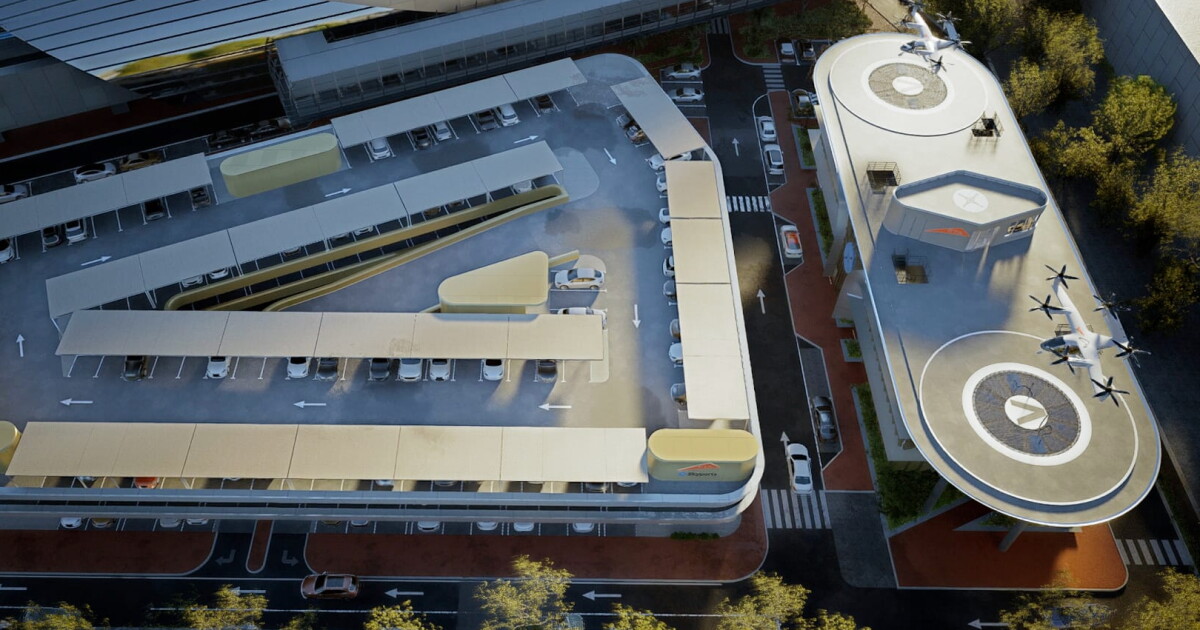
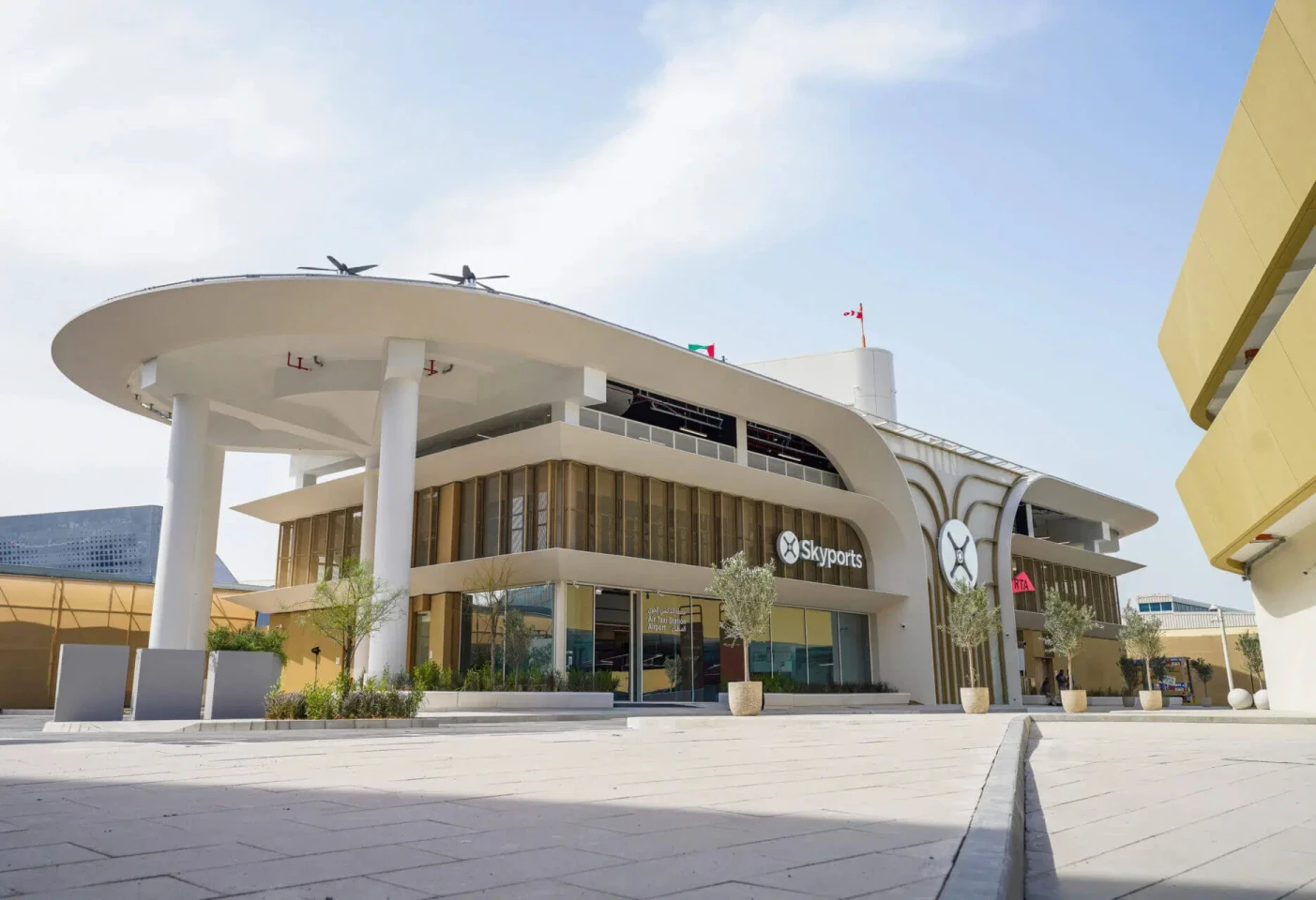
VDX is notable because it has been designed from the ground up for commercial air-taxi use rather than adapted from a temporary site. The source material describes a four-story building covering about 3,100 square meters, or roughly 33,000 square feet. That purpose-built approach helps explain why the approval is more than a symbolic win. It represents a piece of fixed infrastructure intended to normalize vertical urban aviation as a service, not merely an experiment.
There is also a strategic logic to the location. By sitting beside Dubai International Airport, the facility could act as a connector between traditional aviation and short-hop urban or regional aerial mobility. Whether that model ultimately proves economical will depend on future operating details, but the site choice reflects a realistic understanding of how early air-taxi demand may emerge: not from replacing all ground transport, but from serving selected routes where time savings matter.
Dubai’s role in the race
Dubai has repeatedly positioned itself as a proving ground for next-generation mobility projects, and the VDX certification fits that pattern. The city offers a combination of centralized planning, visible infrastructure investment, and a willingness to support pilot-scale deployment of new transport systems. For eVTOL developers and infrastructure companies, that can make it an attractive place to move from controlled testing toward early commercial operations.
That does not mean the wider global market is settled. A regulatory green light for one facility in one jurisdiction does not solve the broader challenges facing the sector, including aircraft certification, operational economics, public acceptance, weather resilience, and network expansion. But it does show that at least one city is trying to solve those issues through a coordinated infrastructure buildout rather than waiting for aircraft makers to lead on their own.
The industry has needed examples like this. Much of the air-taxi conversation has remained abstract because so many programs are still discussing what future services might look like. VDX makes the conversation more concrete. It puts dimensions, location, capacity, and regulatory status around a concept that has often floated between promise and marketing.

What this does and does not prove
The certification should not be mistaken for proof that large-scale commercial eVTOL service is now inevitable. It does not establish passenger demand, guarantee profitable operations, or answer how quickly fleets can ramp. Nor does it show how smoothly multiple vertiports, aircraft providers, air-traffic procedures, and maintenance systems will work together once regular service begins.
What it does prove is narrower but still important: a purpose-built commercial vertiport can move through a real regulatory process and emerge with approval to support eVTOL operations. That is one of the sector’s missing links. As infrastructure milestones go, it is stronger than a memorandum of understanding and more relevant than a design study.
If urban air mobility becomes a genuine industry rather than a long-running speculative niche, it will happen because projects like this assemble the less glamorous pieces: land use, certification, passenger handling, and integration with the rest of a city’s transport fabric. Aircraft will still matter, but infrastructure will decide whether those aircraft ever become part of everyday mobility.
Dubai’s VDX vertiport is therefore best understood as a structural milestone. It does not end the debate over air taxis. It changes the terms of that debate by giving the sector a tangible operating node, not just another prototype and another promise.
This article is based on reporting by New Atlas. Read the original article.
Originally published on newatlas.com