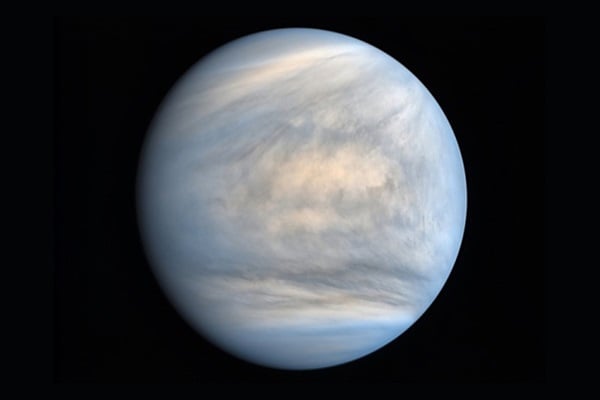
पुराने खगोलजीवविज्ञान विचार पर नया दृष्टिकोण
2026 लूनर एंड प्लैनेटरी साइंस कॉन्फ्रेंस में प्रस्तुत एक अध्ययन ग्रह विज्ञान में एक दिलचस्प संभावना की जांच करता है: यदि वीनस के वायुमंडल में जीवन मौजूद है, तो उसका कुछ हिस्सा पृथ्वी से आया हो सकता है। यह काम पैनस्पर्मिया के सिद्धांत पर आधारित है, यह पुराना लेकिन बहस का विषय रहा विचार कि जीवन या उसके मूल घटक बड़े टक्करों से निकले पत्थरों और मलबे के जरिए एक दुनिया से दूसरी दुनिया तक फैल सकते हैं।
यह सवाल विशेष रूप से महत्वपूर्ण है क्योंकि हाल के वर्षों में वीनस फिर से खगोलजीवविज्ञान की चर्चा में आया है। शोधकर्ताओं ने बहस की है कि क्या ग्रह के घने बादल-स्तर की कुछ परतें, कम से कम कभी-कभी, ऐसे तापमान और दाब दे सकती हैं जो सूक्ष्मजीवी जीवन के बने रहने के लिए पर्याप्त हों। नया अध्ययन यह साबित करने का दावा नहीं करता कि वहां जीवन है। इसके बजाय, यह पूछता है कि पृथ्वी से पदार्थ वीनस तक कैसे पहुंच सकता है और वह वीनस के बादलों के वातावरण में कितनी देर तक व्यवहार्य रह सकता है।
वीनस लाइफ इक्वेशन का उपयोग
Johns Hopkins University Applied Physics Laboratory और Sandia National Laboratories की शोध टीम ने 2021 में विकसित Venus Life Equation ढांचे का उपयोग किया। स्रोत में इस ढांचे को तीन कारकों के माध्यम से मौजूदा जीवन की संभावना का आकलन करने का तरीका बताया गया है: उत्पत्ति, दृढ़ता और निरंतरता।
इस मामले में, अध्ययन ने उस व्यापक ढांचे के भीतर एक अधिक संकीर्ण और विशिष्ट समस्या पर ध्यान केंद्रित किया: क्या पृथ्वी से निकला पदार्थ अंतरिक्ष के माध्यम से यात्रा कर सकता है और फिर वीनस के बादलों में व्यवहार्य रह सकता है। स्रोत रिपोर्ट के अनुसार, टीम के मॉडल यह अनुमान लगाते हैं कि पृथ्वी से निकले पदार्थ के कारण जीवन वीनस के बादलों में प्रति शताब्दी कम से कम कुछ दिनों के लिए मौजूद रह सकता है।
यह वाक्यांश महत्वपूर्ण है। यह किसी स्थिर वीनसियन जीवमंडल का वर्णन नहीं करता। यह एक सीमित और बीच-बीच में आने वाली संभावना का वर्णन करता है, जिसमें आयातित पदार्थ अल्पकालिक आवासयोग्य या जीवित रहने की खिड़कियां बना सकता है।
स्थानांतरण की समस्या कठिन है
अध्ययन को कठोर फ़िल्टरों की एक श्रृंखला से निपटना पड़ा। किसी टक्कर से पृथ्वी से निकला पदार्थ पहले तो निष्कासन के शुरुआती झटके और गर्मी को झेले। फिर उसे अंतरग्रहीय अंतरिक्ष की विकिरण, निर्वात और तापमान की चरम स्थितियों को सहना पड़े। इसके बाद, उसे इस तरह वीनस पहुंचना होगा कि वैज्ञानिक दृष्टि से महत्वपूर्ण रहने लायक जैविक पदार्थ बचा रहे।
स्रोत नोट करता है कि पृथ्वी पर पाए गए उल्कापिंडों पर किए गए पिछले मॉडलिंग और अध्ययनों से पता चला है कि जैविक पदार्थ निष्कासन और अंतरग्रहीय स्थानांतरण में जीवित रह सकता है। यह वीनस के सवाल को हल नहीं करता, लेकिन इसे पहली नज़र में जितना सट्टात्मक लगता है, उससे कम सट्टात्मक बनाता है। वही स्रोत यह भी बताता है कि पहुंचने पर, जैविक पदार्थ को जीवित रहने के लिए वीनस के बादलों में या उनके ऊपर फैलना होगा।
यह आखिरी शर्त बहुत महत्वपूर्ण है क्योंकि वीनस की सतह का वातावरण कुख्यात रूप से चरम है। संभावित आवासयोग्यता के समर्थक सतह के बजाय बादल-परतों पर ध्यान केंद्रित करते हैं।
टीम ने क्या मॉडल किया
शोधकर्ताओं ने यह देखा कि फायरबॉल उल्कापिंड, या बोलाइड, वीनस के वायुमंडल में कैसे व्यवहार करेंगे। ध्यान इस पर था कि आने वाला पदार्थ नष्ट होने या ग्रह के शत्रुतापूर्ण निचले वायुमंडल में बहुत नीचे चले जाने के बजाय क्या बादल क्षेत्र तक पहुंचाया जा सकता है। दूसरे शब्दों में, यह काम केवल पृथ्वी से वीनस तक पहुंचने के बारे में नहीं है। यह वीनस के सही हिस्से में पहुंचने के बारे में है।
यह अंतर समझाता है कि यह अध्ययन क्यों महत्वपूर्ण है। पैनस्पर्मिया के तर्क अक्सर व्यापक और अमूर्त लगते हैं, लेकिन वास्तविक वैज्ञानिक चुनौती बेहद विशिष्ट है। एक चट्टान ग्रहों के बीच यात्रा कर सकती है और फिर भी जैविक रूप से अप्रासंगिक रह सकती है यदि वह रास्ते में नष्ट हो जाए या ऐसे वातावरण में जमा हो जाए जहां जीवित रहना असंभव हो।
अध्ययन क्या कहता है और क्या नहीं
स्रोत सामग्री इतनी सावधान है कि सूक्ष्म व्याख्या का समर्थन कर सके। अध्ययन एक ऐसा मार्ग सुझाता है जिसके जरिए पृथ्वी से आया पदार्थ वीनस तक पहुंच सकता है और संभवतः थोड़े समय के लिए जीवन का समर्थन कर सकता है। यह यह साबित नहीं करता कि वीनस के वायुमंडल में अभी जीवन मौजूद है। यह यह नहीं दिखाता कि पुष्टि किए गए किसी भी वीनसियन सूक्ष्मजीव का स्रोत पृथ्वी है। और यह यह तर्क भी नहीं देता कि वीनस अपने बादलों में एक सतत, फलता-फूलता जीवमंडल रखता है।
इसके बजाय, यह बातचीत को संभावनाओं और स्थानांतरण तंत्रों की ओर मोड़ता है। यदि बादलों का वातावरण कभी-कभी रहने योग्य हो सकता है, और यदि जैविक पदार्थ कभी-कभी यात्रा में बच सकता है, तो वहां मौजूद किसी भी संभावित जीवन की उत्पत्ति की कहानी अधिक जटिल हो जाती है। वीनस को स्वतंत्र रूप से जीवन विकसित करने की आवश्यकता नहीं होती कि उसके बादलों में जीवन-संबंधी पदार्थ मौजूद हो।
वीनस से आगे इसका महत्व
अध्ययन का बड़ा महत्व यह है कि यह पैनस्पर्मिया की बहस को परिचित पृथ्वी-मंगल जोड़ी से आगे ले जाता है। ग्रह वैज्ञानिक वर्षों से यह सोचते रहे हैं कि क्या चट्टानें इन दुनियाओं के बीच जीवन-वाहक पदार्थ का आदान-प्रदान कर सकती हैं। वीनस को इस बातचीत में अधिक गंभीरता से शामिल करने से आंतरिक सौरमंडल में संभावित जैविक स्थानांतरण का नक्शा विस्तृत होता है।
इससे पैनस्पर्मिया सिद्ध नहीं हो जाता। लेकिन यह एक बात को मजबूत करता है जिस पर खगोलजीवविज्ञान बार-बार लौटता है: ग्रहों का इतिहास जितना दिखता है, उससे अधिक उलझा हुआ हो सकता है। यदि टक्करें पदार्थ को एक दुनिया से दूसरी दुनिया तक ले जा सकती हैं, तो यह सवाल कि जीवन कहां शुरू हुआ और कहां-कहां यात्रा की, हमेशा साफ ग्रह-सीमाओं में बंधे नहीं होते।
अभी के लिए, वीनस अध्ययन एक विचारोत्तेजक मॉडलिंग परिणाम है, खोज का दावा नहीं। लेकिन यह दिखाता है कि वीनस अब भी वैज्ञानिक रूप से इतना आकर्षक क्यों है। एक ऐसा ग्रह जिसे लंबे समय से एक शत्रुतापूर्ण अंत-बिंदु माना गया, वह भी रहने-योग्यता, अस्तित्व और दुनियाओं के बीच जीवन की संभावित आवाजाही के बारे में नई सोच को मजबूर कर सकता है।
यह लेख Universe Today की रिपोर्टिंग पर आधारित है। मूल लेख पढ़ें.
Originally published on universetoday.com