बार-बार सक्रिय रहने वाला एक ज्वालामुखी असामान्य रूप से लंबे समय तक चलने वाला विस्फोट कर रहा है
NASA Earth Observatory ने रीयूनियन द्वीप के पिटोन दे ला फोरनैज़ से पूर्व की ओर समुद्र तक बहते लावा की एक नई तापीय छवि प्रकाशित की है, जो एक ऐसे विस्फोट का उपग्रह-आधारित दृश्य देती है जो इस ज्वालामुखी में हाल की घटनाओं की तुलना में अधिक समय तक चला और अधिक लावा उत्पन्न कर रहा है।
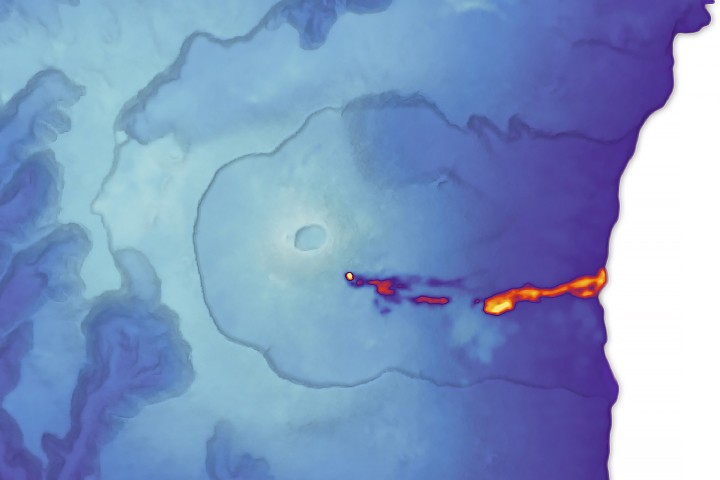
यह विस्फोट 13 फरवरी 2026 को Enclos Fouqué कैल्डेरा के भीतर शुरू हुआ, जब चार दरारें खुलीं और लगभग 10 से 50 मीटर ऊंची निरंतर लावा फव्वारों को पोषित किया। फरवरी और मार्च के दौरान, बेसाल्टिक लावा ज्वालामुखी के पूर्वी ढलान पर जंगल और घास वाले इलाके से नीचे की ओर बढ़ता रहा। 28 मार्च तक, Landsat 9 के तापीय डेटा ने उन प्रवाहों की ऊष्मा-छाप दर्ज की, जब वे महासागर की ओर बढ़ते रहे।
तापीय छवि क्या बताती है
NASA की यह छवि Landsat 9 पर लगे Thermal Infrared Sensor 2 के अवलोकनों से बनाई गई है। दृश्यांकन में, गर्म क्षेत्र पीले और ठंडी सतहें नीली दिखाई देती हैं, और तापीय डेटा को द्वीप के एक डिजिटल ऊंचाई मॉडल पर अध्यारोपित किया गया है। यह तरीका कक्षा से विस्फोट की संरचना को समझना आसान बनाता है।
ज्वालामुखी विशेषज्ञ Adele Campus के अनुसार, सबसे चमकीले क्षेत्र विस्फोट-स्थल, सक्रिय लावा चैनल और आगे बढ़ते प्रवाह-मुख के अनुरूप हैं। छवि में ऐसे स्थानीय हॉटस्पॉट भी दिखाई देते हैं जहां भूमिगत ट्यूबों से गुजरने के बाद लावा ब्रेकआउट के जरिए फिर बाहर निकलता है। यह विवरण महत्वपूर्ण है, क्योंकि यह दिखाता है कि लावा क्षेत्र सतह पर केवल कुछ हिस्सों के उजागर होने पर भी गतिशील बना रह सकता है।
Piton de la Fournaise दुनिया के सबसे प्रसिद्ध सक्रिय शील्ड ज्वालामुखियों में से एक है, और इसका परिवेश यह समझाता है कि इसे इतनी करीबी निगरानी में क्यों रखा जाता है। Réunion Island, Madagascar से लगभग 700 किलोमीटर पूर्व में स्थित है और Indian Ocean के तल पर लंबे समय से मौजूद मैंटल हॉटस्पॉट के ऊपर बनी। द्वीप स्वयं लगभग 20 लाख वर्ष पहले समुद्र-स्तर से ऊपर उठा, और 17वीं शताब्दी से ज्वालामुखी में 150 से अधिक दर्ज विस्फोट हो चुके हैं।
यह विस्फोट क्यों अलग है
Piton de la Fournaise में बार-बार सक्रियता सामान्य है। यहां जो बात अलग दिखती है, वह है हाल के विस्फोटों की तुलना में इसका पैमाना और अवधि। NASA के सारांश में कहा गया है कि फरवरी 2026 की यह घटना ज्वालामुखी के हाल के चरणों की तुलना में अधिक समय तक चली और अधिक मात्रा में लावा पैदा किया। इसलिए यह केवल एक दृश्य घटना नहीं, बल्कि विस्फोटक व्यवहार में बदलाव का संकेत भी है।
Earth Observatory लेख में उद्धृत Turin विश्वविद्यालय के Diego Coppola का कहना है कि वर्तमान गतिविधि संभवतः ज्वालामुखी में बार-बार होने वाली विस्फोटक गतिविधि के एक नए चक्र की शुरुआत को चिह्नित करती है। इसका अर्थ किसी विशिष्ट अगले विस्फोट की भविष्यवाणी नहीं है, लेकिन यह संकेत देता है कि मौजूदा घटना उस व्यापक बदलाव का हिस्सा हो सकती है जिसके जरिए यह प्रणाली स्वयं को अभिव्यक्त कर रही है।
इस संभावना को दीर्घकालिक उपग्रह विश्लेषण से समर्थन मिलता है। Campus और उनके सहयोगियों ने 2025 के एक अध्ययन में NASA और NOAA के दो दशकों से अधिक के अवलोकनों का उपयोग करके ज्वालामुखी की गतिविधि में रुझानों और पैटर्न की पहचान की। इसलिए नया विस्फोट एक समृद्ध रिमोट-सेंसिंग पृष्ठभूमि के साथ आया है, जिससे वैज्ञानिक इसे बहुत लंबे अवलोकन रिकॉर्ड में रख सकते हैं।
कक्षीय निगरानी क्यों महत्वपूर्ण है
ज्वालामुखी निगरानी अब केवल जमीन पर लगे उपकरणों तक सीमित नहीं है। तापीय उपग्रह अवलोकन गर्मी, प्रवाह पथ और समय के साथ विस्फोट की तीव्रता में बदलाव को मानचित्रित करने का तरीका देते हैं, अक्सर ऐसे भूभागों में जहां सुरक्षित रूप से पहुंचना कठिन होता है। Réunion Island के मामले में, 28 मार्च की छवि एक जटिल विस्फोट को मुख से समुद्र तक ऊष्मा परिवहन के एक पढ़ने योग्य पैटर्न में बदल देती है।
यह विज्ञान, जोखिम निगरानी और सार्वजनिक संचार के लिए महत्वपूर्ण है। लावा का समुद्र तक पहुंचना दृश्य रूप से नाटकीय है, लेकिन छवि का गहरा मूल्य विश्लेषणात्मक है। यह दिखाती है कि ऊर्जा कहां केंद्रित है, लावा कैसे चल रहा है, और एक लंबे समय से सक्रिय हॉटस्पॉट द्वीप वास्तविक समय में कैसे विकसित हो रहा है।
Piton de la Fournaise को ध्यान आकर्षित करने के लिए दुर्लभ विस्फोट की आवश्यकता नहीं है। यह पहले से ही ग्रह के सबसे सक्रिय ज्वालामुखियों में से एक है। लेकिन जब एक परिचित प्रणाली सामान्य से अधिक लंबे और अधिक प्रचुर प्रवाह बनाने लगती है, तो हर नई छवि एक अधिक महत्वपूर्ण कहानी का हिस्सा बन जाती है: सिर्फ यह नहीं कि ज्वालामुखी सक्रिय है, बल्कि यह कि उसका वर्तमान चरण हाल के सामान्य रुझान से अर्थपूर्ण रूप से अलग हो सकता है।
यह लेख science.nasa.gov की रिपोर्टिंग पर आधारित है। मूल लेख पढ़ें.
Originally published on science.nasa.gov