NASA restarts crewed deep-space flight with Artemis II
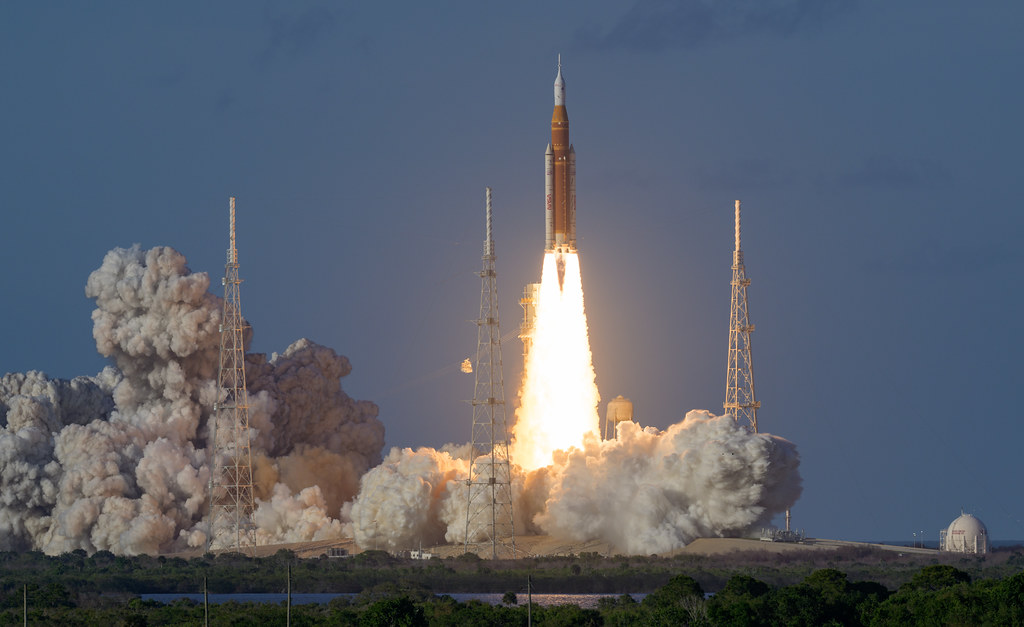
NASA’s Artemis II mission is now in flight after a successful April 1 launch from Kennedy Space Center in Florida, beginning the first crewed lunar flyby mission in more than half a century. The agency’s Space Launch System rocket lifted Orion and its four-person crew off Pad 39B at 6:35 p.m. EDT, starting what NASA described as an approximately 10-day test mission around the Moon and back.
The launch is a milestone for the Artemis program because it is the first time astronauts have flown aboard both the Space Launch System and Orion spacecraft together. NASA said the mission is designed not as a landing attempt, but as a proving flight to test life support, spacecraft operations, and crew performance in deep space before later missions push farther, including future surface operations.
A crewed test with long-range consequences
Artemis II carries NASA astronauts Reid Wiseman, Victor Glover, and Christina Koch, along with Canadian Space Agency astronaut Jeremy Hansen. NASA framed the mission as the opening crewed step in a larger campaign intended to build an enduring human presence at the Moon and support later missions aimed at Mars.
That makes Artemis II more than a symbolic return. The mission is meant to validate systems that were previously flown without crew and determine how Orion performs with people aboard during a demanding trip beyond low Earth orbit. NASA said one of the central objectives is to demonstrate life support systems for the first time with astronauts on board, turning a hardware program into an operational one.
Shortly after reaching space, Orion deployed its solar array wings and began the transition from launch to in-flight operations. NASA said teams on the ground and in the spacecraft immediately began checking key systems, reflecting the mission’s test-flight character. In other words, launch success was only the first major gate. The rest of the mission is about proving that the spacecraft, crew procedures, and support systems work as expected under real mission conditions.
Why this launch matters now
The agency has spent years building toward this point. Artemis II follows the uncrewed Artemis I mission and comes after delays and technical work that pushed the first crewed attempt later than originally planned. NASA officials said the mission lays the foundation for later flights that would move from lunar flyby to lunar surface operations.
That places Artemis II at the hinge point between demonstration and routine exploration. For the first time since the Apollo era, a crew is headed out on a lunar mission profile rather than remaining in low Earth orbit. NASA explicitly cast the moment as the start of a broader exploration phase rather than a standalone event. Administrator Jared Isaacman said the mission marks a return to the Moon that is intended not just as a visit, but as part of a longer-term effort tied to a future Moon base and deeper exploration beyond it.
The language matters because Artemis has always carried two timelines at once: the near-term challenge of launching astronauts safely around the Moon, and the longer-term ambition of building a sustainable campaign. Artemis II is where those timelines meet. If the mission performs well, it reduces uncertainty for the flights that follow. If it reveals design or operational issues, NASA still gets the data it needs before putting crews into more complex lunar missions.
A test mission, not a victory lap
NASA and program leaders have stressed that Artemis II is still a test. Associate Administrator Amit Kshatriya said that while the vehicle has now launched successfully, the real testing is only beginning. That framing is important because it sets expectations correctly: the mission’s success will be judged not only by whether the crew travels around the Moon and returns safely, but by how much the agency learns about spacecraft performance, operations, and human systems during the flight.
This is also why Artemis II may prove unusually influential. Test missions with crew often shape programs more than headline-grabbing destination missions do. They expose weaknesses, clarify procedures, and define what has to change before the next step. Orion now has to demonstrate that it can support its crew across the full mission profile and give NASA confidence that the architecture can scale.
- The mission launched April 1 at 6:35 p.m. EDT from Kennedy Space Center.
- It is planned as an approximately 10-day crewed lunar flyby and return.
- NASA says the flight will test life support and key spacecraft systems with crew aboard.
- The four-person crew includes three NASA astronauts and one CSA astronaut.
For the broader space sector, Artemis II is a reminder that flagship government exploration still sets the pace for much of the industry’s long-cycle work. Human lunar missions influence supplier networks, research priorities, international partnerships, and the cadence of future exploration planning. This single launch does not resolve the many schedule, budget, and engineering questions that still surround Artemis. But it does move the program out of anticipation and into operations.
That shift is substantial on its own. For more than 50 years, crewed lunar flight existed mainly as history and aspiration. Artemis II has now turned it back into a live program.
This article is based on reporting by NASA. Read the original article.
Originally published on nasa.gov