A new coating tries to stop stains before washing even begins
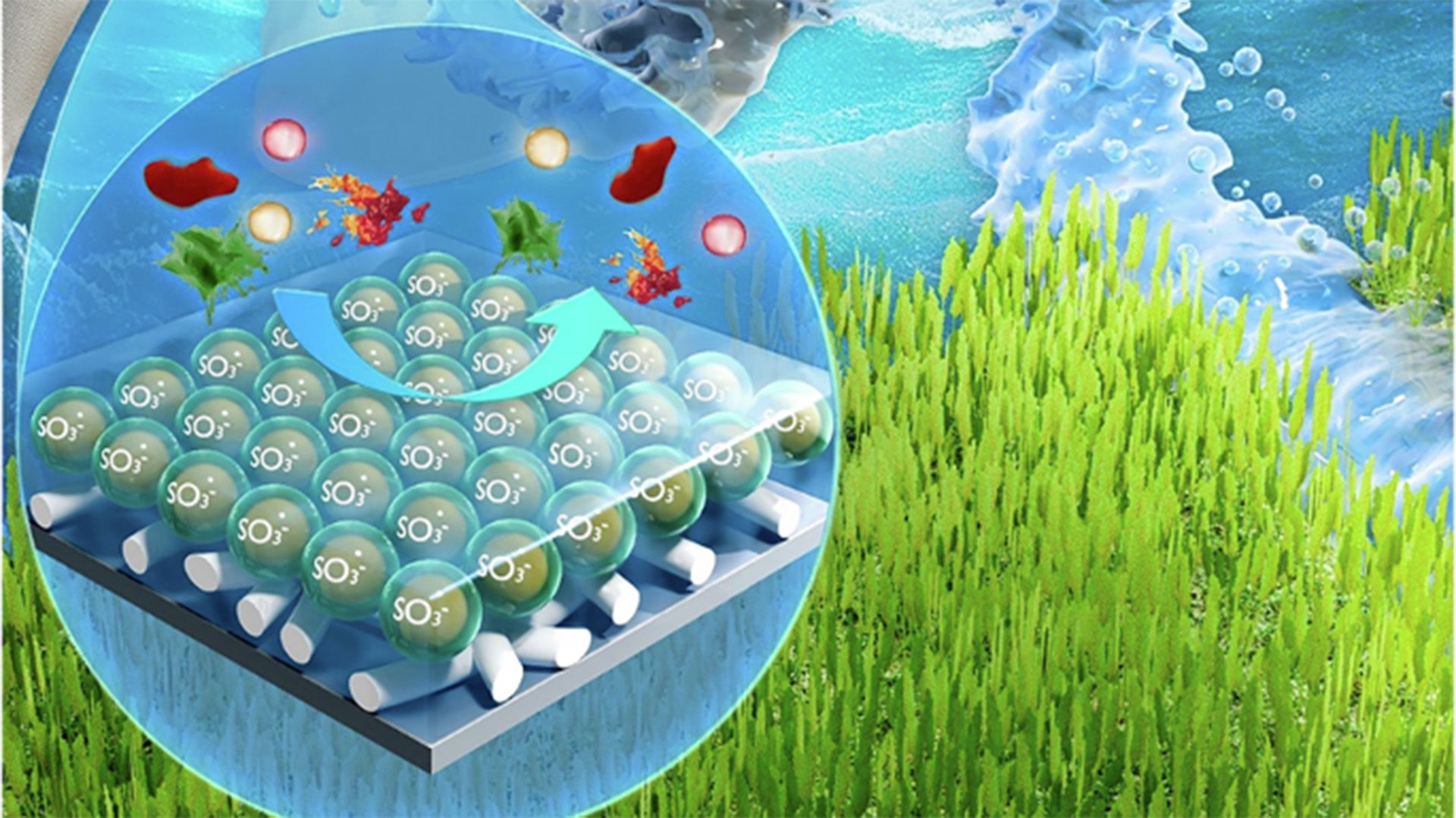
Material scientists in China have developed a self-cleaning textile coating that creates what they call “molecular water armor,” an ultrathin water layer that makes it harder for stains such as food, oil, and dirt to stick to fabric. The research, published in Communications Chemistry, points to a different way of shrinking laundry’s environmental footprint: redesign the surface of clothing so contaminants never bind strongly in the first place.
The concept is attractive because modern laundry remains resource-intensive even when detergents and machines improve incrementally. The source report notes that a single household washing cycle can use roughly 40 to 60 liters of clean water, while detergents contribute to chemical residues in wastewater and can increase microplastic release from synthetic fibers. In that context, a coating that makes stains easier to remove with far less water and little or no detergent could matter well beyond convenience.
How the “water armor” works
The coating coaxes water molecules into a stable protective arrangement on the fabric surface. According to the researchers, that layer sharply reduces how strongly common stains adhere, allowing many spots to be removed without the conventional detergent-heavy wash. The approach reframes the problem of cleaning clothes. Instead of focusing on how to scrub away dirt after it sticks, the scientists are trying to prevent strong attachment at the material level.
Co-authors Chongling Cheng of Southeast University and Dayang Wang of Jilin University summarized the idea clearly in the source report: rather than relying on detergent to remove firmly attached dirt, they modify the textile surface so stains do not adhere strongly to begin with. That makes the coating less a cleaning product and more a surface-engineering strategy.
What the study claims
- The coating creates an ultrathin water-based protective layer on fabric.
- It helps prevent food, oil, and dirt stains from sticking strongly.
- Researchers say many stains can then be removed without detergent or large amounts of water.
- The work suggests laundry water and electricity demand could fall by more than 80%.

Why this matters beyond the lab
Laundry is easy to overlook as an environmental issue because it is diffuse and domestic rather than industrial and dramatic. But the cumulative impact is large. The source report cites an estimate of 10 billion liters of laundry wastewater generated annually in China alone. Add the chemical load from detergents and the material degradation that comes with repeated washing, and it becomes clear why a preventive solution is appealing.
If the coating performs reliably in everyday conditions, it could change several pieces of the equation at once. Lower water use would reduce direct household demand. Reduced detergent use would lessen chemical discharge. Fewer harsh wash cycles could also help preserve garments, though the supplied source material does not quantify that effect. Even without broader claims, the potential 80% reduction in water and electricity demand is substantial enough to justify attention.
The questions that remain
As with many promising materials stories, the distance between lab performance and everyday adoption will determine the real significance. A coating has to remain effective after wear, storage, repeated exposure to the environment, and whatever cleaning it still receives. It also has to be practical to manufacture, apply, and maintain at scale. The source material does not resolve those commercialization questions, and they are important.
Still, the research is compelling because it pushes on a neglected design principle. Clothes are usually treated as passive surfaces that inevitably get dirty and then need cleaning chemistry to restore them. This work suggests fabrics themselves can be engineered as the first line of defense. That is a more systemic way to think about sustainability: not just how to make cleaning less harmful, but how to reduce the need for cleaning in the first place.
For now, “water armor” is a laboratory result with unusually concrete implications. If further work confirms durability and manufacturability, it could become one of those rare materials innovations that touches daily life without demanding behavior change. In a category full of incremental improvements, that would be a meaningful shift.
This article is based on reporting by Live Science. Read the original article.
Originally published on livescience.com