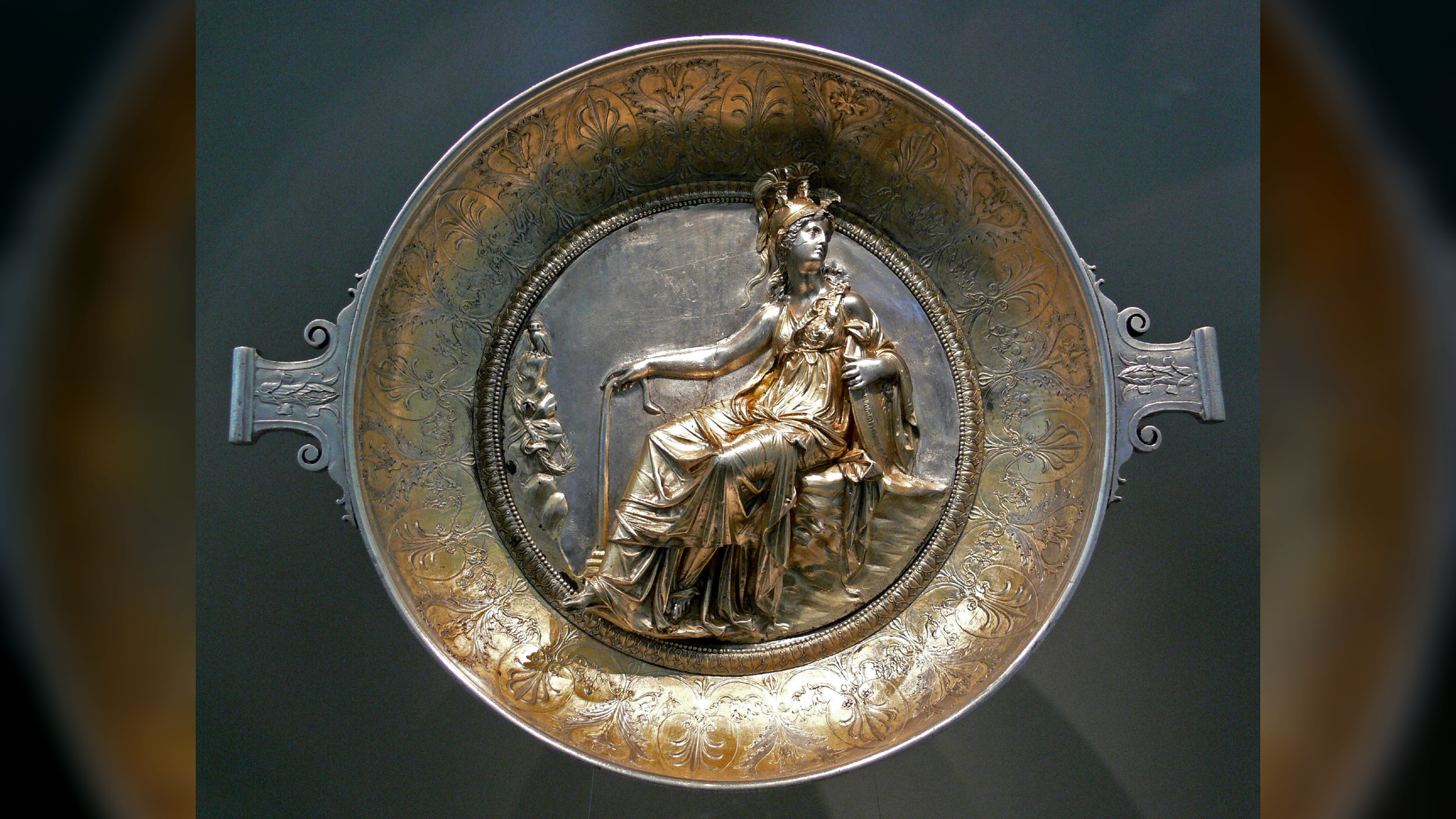
एक प्रसिद्ध रोमन ख़ज़ाने से निकली अलंकृत वस्तु
पुरातात्विक खोजें हमेशा नई खुदाई से नहीं आतीं। कभी-कभी सबसे रोचक कहानियाँ उन वस्तुओं से निकलती हैं जिन्हें बहुत पहले पाया गया था और बाद में इस नज़र से दोबारा देखा गया कि वे सत्ता, पहचान और प्राचीन सीमाओं के पार आवाजाही के बारे में क्या बताती हैं। यही स्थिति एथेना बाउल की है, एक चाँदी का पात्र जिस पर सोने की सजावट है और जो 1868 में मध्य जर्मनी में खोजे गए हिल्डेशाइम ख़ज़ाने का हिस्सा है।
Live Science द्वारा उजागर की गई इस कटोरी को दर्जनों रोमन चाँदी की कलाकृतियों वाले एक ख़ज़ाने में पाया गया था, जिसे सम्राटीय प्रशियाई सेना की एक रेजिमेंट के सैनिकों ने हिल्डेशाइम के पास एक शूटिंग रेंज बनाते समय खोजा था। यह बड़ा संग्रह अपनी कारीगरी, सीमांत स्थिति और इस अनसुलझे सवाल के कारण लंबे समय से ध्यान खींचता रहा है कि इतनी मूल्यवान रोमन मेज़-व्यवस्था भूमध्यसागर के मूल केंद्र से इतनी दूर दबी कैसे मिली।
एथेना बाउल को क्या विशिष्ट बनाता है
यह वस्तु केवल कीमती चाँदी का बर्तन नहीं है। यह सावधानी से रचा गया एक प्रदर्शन-पीस है। स्रोत पाठ के अनुसार, इस कटोरी का व्यास लगभग 10 इंच, यानी 25.3 सेंटीमीटर है, और इसका वजन लगभग 4.4 पाउंड, यानी 2 किलोग्राम है। इसके मध्य चिह्न में एथेना, ज्ञान और युद्ध की यूनानी देवी, एक चट्टान पर बैठी दिखती हैं; उनके हाथ के नीचे एक ढाल है और सिर पर पंखों वाला शिरस्त्राण। उनकी पवित्र पक्षी उल्लू पास की एक चट्टान पर बैठा है, जिसके चारों ओर जैतून की माला है।
पात्र का अधिकांश भाग चाँदी का है, लेकिन सोने की सजावट देवी, उनके वस्त्र, उनका ऐजिस, उल्लू और आसपास के विवरणों को उभारती है। यह मिश्रित धातु-प्रयोग कटोरी की औपचारिक और दृश्य महत्वाकांक्षा को रेखांकित करता है। यह मेज़-व्यवस्था देखने, हाथ में लेने और हैसियत के बयान के रूप में समझे जाने के लिए बनाई गई थी।

एक पुराना प्रतीक, एक नए पात्र में जड़ा हुआ
स्रोत सामग्री के सबसे दिलचस्प विवरणों में से एक यह है कि एथेना का प्रतीक स्वयं संभवतः दूसरी शताब्दी ईसा-पूर्व में बनाया गया था, जबकि उसे धारण करने वाली कटोरी पहली शताब्दी ईस्वी में बनाई गई थी। दूसरे शब्दों में, केंद्रबिंदु तैयार वस्तु से भी पुराना प्रतीत होता है। यह पुन: उपयोग, अनुकूलन और संभवतः किसी पहले की विलासिता-सामग्री की निरंतर प्रतिष्ठा का संकेत देता है, जिसे बाद के पात्र में शामिल किया गया।
यह संयोजन रोमन संग्रह-प्रवृत्तियों और कार्यशाला प्रथाओं की ओर इशारा करता है, जो एक वस्तु, एक क्षण वाली सरल कहानी से कहीं अधिक लचीली थीं। अभिजात्य वस्तुएँ मरम्मत की जा सकती थीं, बदली जा सकती थीं, या फिर से बनाई जा सकती थीं। स्रोत पाठ बताता है कि हिल्डेशाइम ख़ज़ाने की कई वस्तुओं पर घिसावट और मरम्मत के निशान थे, जो इस विचार को मज़बूत करता है कि ये नष्ट की जाने वाली दिखावटी वस्तुएँ नहीं बल्कि उपयोग और प्रदर्शन के नेटवर्क में बसी दीर्घजीवी संपत्तियाँ थीं।
हिल्डेशाइम की खोज क्यों महत्वपूर्ण है
इस कटोरी का ऐतिहासिक महत्व इस बात पर भी निर्भर करता है कि यह कहाँ मिली। मध्य जर्मनी ऐसी वस्तुओं का साधारण अंतिम ठिकाना नहीं था। हिल्डेशाइम ख़ज़ाने को अक्सर इस क्षेत्र में रोमन सैन्य उपस्थिति से जोड़ा गया है और यह पहले शताब्दी में जर्मनिक जनजातियों के विरुद्ध काम कर रहे पब्लियस क्विंक्टिलियस वारुस या किसी अन्य रोमन कमांडर का हो सकता है।
स्रोत सामग्री में यह श्रेय सतर्क रूप में रखा गया है, लेकिन मूल महत्व स्पष्ट है। यह ख़ज़ाना दिखाता है कि महँगी रोमन विलासिता वस्तुएँ विवादित सीमांत क्षेत्रों में साम्राज्यिक सत्ता के साथ या उसके निकट चलती थीं। सैन्य अभियानों में केवल हथियार और रसद नहीं चलते थे। वे उच्च पदस्थ कमांडरों और अधिकारियों की घरेलू और औपचारिक भौतिक संस्कृति भी साथ लेकर चलते थे।
विलासिता, रसद और साम्राज्य
एथेना बाउल जैसी वस्तुएँ साम्राज्य के एक शांत पक्ष को उजागर करती हैं। रोम का विस्तार अक्सर युद्धों, सड़कों और प्रशासन के माध्यम से बताया जाता है, लेकिन उत्तरी सीमांत पर सजे-संवरे चाँदी के बर्तनों की मौजूदगी दिखाती है कि अभिजात्य सामाजिक जीवन सैन्य क्षेत्रों तक कितनी गहराई से फैला हुआ था। भोजन, औपचारिक आतिथ्य और हैसियत की दृश्य भाषा अस्थिर इलाकों में भी रोमन जीवन का हिस्सा बनी रही।
यह कटोरी साम्राज्य की सांस्कृतिक परतों को भी दिखाती है। इसे अक्सर देवी के रोमन नाम के साथ मिनर्वा बाउल कहा जाता है, लेकिन इसकी छवि स्पष्ट रूप से एथेना से जुड़ी है, जो दिखाती है कि यूनानी पौराणिक प्रतीक-भाषा रोमन अभिजात्य कला का अभिन्न हिस्सा बनी रही। यूनानी सांस्कृतिक प्रतिष्ठा और रोमन राजनीतिक शक्ति का यह मेल साम्राज्यिक आत्म-प्रस्तुति की एक पहचान था।
यह वस्तु क्या बता सकती है और क्या नहीं
एथेना बाउल यह पूरी पहेली हल नहीं करती कि हिल्डेशाइम ख़ज़ाना क्यों दफनाया गया था। ख़ज़ाने युद्धक्षेत्र की अव्यवस्था से लेकर ऐसी योजनाबद्ध पुनर्प्राप्ति तक कई कारणों से छिपाए जा सकते हैं जो कभी हो ही न सकी। स्रोत सामग्री कोई निश्चित व्याख्या नहीं देती, और यही अनिश्चितता इस वस्तु की इतिहासकारों और आम लोगों के लिए स्थायी रुचि का हिस्सा है।
लेकिन यह जो ठोस रूप से दिखाती है, वह है असाधारण कारीगरी, मरम्मत और पुन: उपयोग के प्रमाण, और मध्य यूरोप तक रोमन विलासिता की पहुँच। यह एक कलाकृति भी है और इस बड़े इतिहास का एक डेटा बिंदु भी कि कैसे संपत्ति साम्राज्य के साथ आगे बढ़ती रही।

सीमा पर मौजूद एक वस्तु, जिसकी लंबी बाद की कहानी है
आज भी एथेना बाउल इसलिए प्रासंगिक है क्योंकि यह कई ऐतिहासिक विषयों को एक ही पात्र में समेट देती है: विजय, संग्रह, अनुकूलन और अभिजात्य वस्तुओं का प्रतीकात्मक मूल्य। जर्मन वन-परिवेश में मिली, लेकिन भूमध्यसागरीय कलात्मक परंपरा में जड़ें रखने वाली यह वस्तु याद दिलाती है कि साम्राज्यिक प्रणालियाँ केवल बल से नहीं, बल्कि भौतिक संस्कृति और प्रतिष्ठा के प्रवाह से भी टिकती थीं।
पुरातत्वविदों और संग्रहालय दर्शकों के लिए यह कटोरी खास तौर पर इसलिए आकर्षक बनी रहती है क्योंकि यह इन्हीं बिंदुओं के संगम पर खड़ी है। यह एक सुंदर वस्तु है, लेकिन यह इस बात का प्रमाण भी है कि रोम ने अपने शहरी केंद्र से बहुत दूर तक पहचान कैसे प्रक्षेपित की और कैसे विलासिता सत्ता की सीमा पर जीवित रह सकती थी, यात्रा कर सकती थी, और दफन हो सकती थी।
यह लेख Live Science की रिपोर्टिंग पर आधारित है। मूल लेख पढ़ें.
Originally published on livescience.com