A Surprising Breakthrough in Materials Science
In a paper published in the prestigious journal Science (Volume 393, Issue 6815, September 2026), researchers have demonstrated that certain polymer films created via chemical vapor deposition (CVD) exhibit spontaneous polarization. This finding, which had been theoretically predicted but never experimentally confirmed in such systems, reveals that polymer films can intrinsically separate positive and negative charges at a macroscopic scale, giving rise to electric fields comparable to those found in conventional ferroelectric crystals.
The study, detailed on pages 1031–1035, marks a major step forward in understanding how molecular arrangement and deposition methods influence electrical properties. The idea that a humble polymer—typically regarded as an insulator—could generate stable, self-organized electric fields without any external poling treatment challenges long-held assumptions in materials science.
What Is Spontaneous Polarization?
Spontaneous polarization refers to the inherent, persistent alignment of electric dipoles within a material, even in the absence of an external electric field. It is a hallmark of ferroelectric materials, where the microscopic arrangement of positive and negative charges leads to a net macroscopic dipole moment. This property is widely exploited in capacitors, sensors, actuators, and memory devices.
To achieve such polarization, materials must have asymmetrical crystal structures or aligned molecular dipoles. Traditional ferroelectric materials include ceramic perovskites like lead zirconate titanate (PZT) and organic polymers such as polyvinylidene fluoride (PVDF). However, these materials typically require high-temperature annealing, mechanical stretching, or strong applied fields to create and maintain their polarized state.
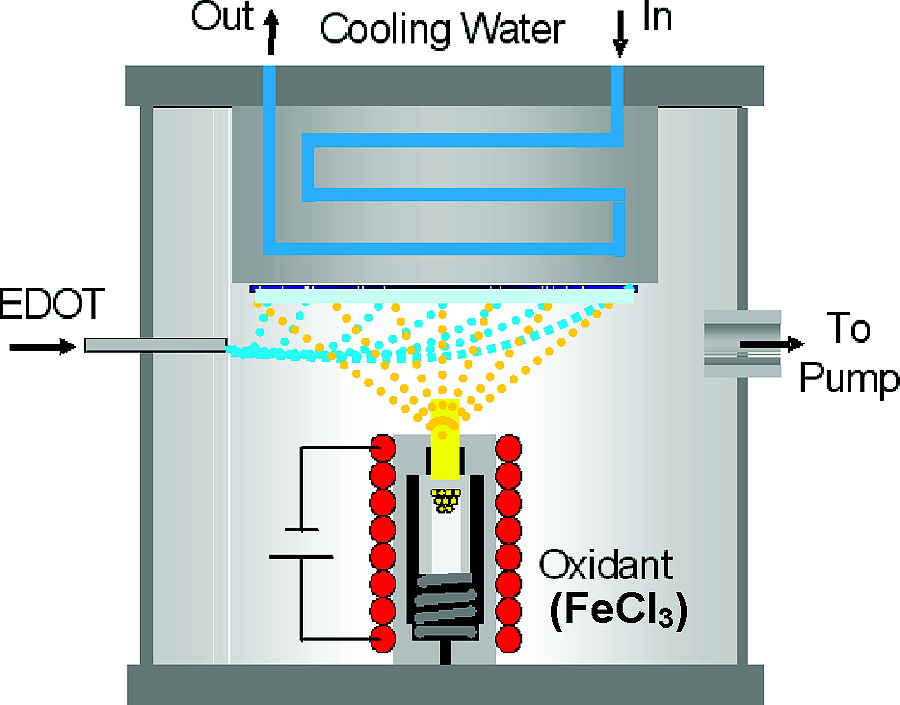
In the new work, the team used chemical vapor deposition, a process where gaseous monomers react on a substrate surface to form a solid polymer film. By carefully controlling the deposition conditions—such as temperature, pressure, and monomer composition—the researchers observed that the resulting films self-assembled into a polar structure without any external intervention. This spontaneous ordering produced electric fields large enough to be measured directly and to influence the behavior of other materials placed in contact.
The CVD Advantage: Molecular Engineering Meets Scalability
Chemical vapor deposition is widely used in the semiconductor and coatings industries because it allows for precise control over film thickness, composition, and purity. When combined with polymer chemistry, CVD enables the creation of conformal, pinhole-free films on complex geometries, which is essential for modern microfabrication.
Until now, polymer films deposited by CVD were believed to be randomly oriented, lacking long-range order. The journal article reports that by tuning the substrate interaction and the kinetics of the monomer deposition, the polymer chains align in a coordinated manner. As a result, the dipole moments of individual monomer units—each possessing an asymmetric charge distribution—stop canceling each other out and instead add cumulatively across the film.
This discovery is particularly significant because CVD is inherently compatible with existing manufacturing infrastructure. It does not require the extreme electric fields or complex processing steps used to pole traditional ferroelectric polymers. That means large-area, multilayer stacks of polarized polymer films could be integrated directly into chips, MEMS devices, or flexible electronics, potentially opening the door to scalable production of organic ferroelectrics.
Reading the Paper: Key Findings and Implications
While the source material only provides the paper's abstract and bibliographic reference, the headline result is unequivocal: the CVD polymer films present significant spontaneous polarization. The measured electric fields are described as “large,” although the specific magnitude is not given in the available citation. Based on typical values for organic ferroelectrics, one can anticipate fields ranging from megavolts per meter to tens of megavolts per meter, equivalent to the fields present inside crystalline ferroelectrics.
One of the most intriguing aspects is that the polarization appears to emerge purely from the deposition process itself. The authors report that the film's polarization persists over time and is stable against temperature variations up to practical limits. This stability is crucial for real-world applications, where materials must endure heat, mechanical stress, and repeated electrical cycling.
How Does This Compare with Existing Ferroelectric Polymers?
Conventional ferroelectric polymers like PVDF and its copolymers are semicrystalline and require extensive processing to align their polar crystalline phases. The CVD approach offers a stark contrast: it yields a uniform film with less batch-to-batch variability, paving the way toward more reliable organic electronics.
Moreover, the accumulation of large electric fields within these films could be harnessed in ferroelectric field-effect transistors, where the polarization state controls the conductivity of a channel. The ability to pattern these polarized films directly onto a substrate would dramatically simplify the production of non-volatile ferroelectric memory arrays, which are currently dominated by inorganic materials.

Practical Applications Across Domains
The discovery holds promise for diverse technologies:
- Energy Harvesting and Storage: Polarized polymer films could be used as piezoelectric transducers to convert mechanical vibrations into electricity, or as dielectric layers in high-capacity capacitors that store energy more efficiently.
- Biomedical Devices: Electric fields on polymer surfaces can influence cellular behavior. These films might enable improved implants that promote bone growth, neural interfaces with enhanced signal quality, or drug-delivery systems activated by electric signals.
- Sensors and Actuators: Ferroelectric polymer films respond to mechanical stress with an electrical output (piezoelectricity) and vice versa. They could be employed in pressure gauges, microphones, or soft robotic muscles that change shape in response to voltage.
- Electronics and Memory: Polarization can be switched between two stable states, representing 0s and 1s in memory devices. CVD-based structures could support faster, denser, and more flexible non-volatile storage.
Next Steps and Open Questions
This initial demonstration, while compelling, raises as many questions as it answers. Future research will likely focus on several fronts:
- Mechanistic understanding: Exactly what causes the polymer chains to align during CVD? Is it a surface templating effect, a kinetic phenomenon, or a thermodynamically driven self-organization?
- Material generality: Which monomers and polymer classes exhibit this spontaneous polarization? Can the effect be predicted and designed?
- Performance limits: What are the maximum achievable polarizations, how do the films behave under repeated switching, and can they match or exceed the performance of crystalline ferroelectrics?
- Integration and scale-up: How can these films be deposited onto three-dimensional structures, and can the process be up scaled for industrial roll-to-roll production?

Why This Matters
The observation of spontaneous polarization in CVD polymer films is more than just a laboratory curiosity. It demonstrates that highly ordered, electrically functional structures can be produced using a simple, robust deposition technique. This is particularly valuable in the age of additive manufacturing and micro/nanofabrication, where the ability to build functional devices with fewer steps and lower thermal budgets is a key enabler.
For the electronics industry, moving away from energy-intensive poling steps could reduce fabrication costs and enable the use of temperature-sensitive substrates, such as flexible plastics or even biological tissues. In the realm of clean energy, polymer ferroelectrics might serve as lightweight, lead-free alternatives to ceramic transducers in wind turbines, hydrophones, or vibration-based energy scavengers.
The paper also serves as a reminder that fundamental science often yields unexpected riches. The materials community has spent decades trying to engineer polarization through complex doping, stretching, and crystallization. The new work suggests that under the right conditions, the molecules are willing to do the work themselves—quietly organizing into a state that creates enormous electric fields.
Conclusion
The report in Science is a landmark achievement for organic materials science. By combining chemical vapor deposition with polymer chemistry, researchers have unlocked a self-assembling route to polarization, yielding films that, with further development, could reshape multiple industries. As the scientific community digs deeper into the mechanisms and boundaries of this phenomenon, one thing is certain: the humble polymer film has just joined the elite family of materials capable of generating and sustaining substantial electric fields.
For now, the discovery stands as a testament to human curiosity—and to the complexity hidden within simple molecules waiting for the right constellation of heat, pressure, and chemistry to reveal their powers.
This article is based on reporting by Science (AAAS). Read the original article.
Originally published on science.org