अल्सरेटिव कोलाइटिस में उपचार प्रतिक्रिया का नया वर्णन
अल्सरेटिव कोलाइटिस का उपचार अक्सर एक कठिन अनिश्चितता से प्रभावित होता है: समान diagnosis वाले दो मरीज एक ही दवा पर अलग-अलग प्रतिक्रिया दे सकते हैं। Nature Medicine में प्रकाशित नए विश्लेषण ने मरीजों की अपनी रिपोर्ट के आधार पर समय के साथ लक्षणों में बदलाव को वर्गीकृत करने का तरीका प्रस्तावित किया है।
शोधकर्ताओं ने 768 लोगों वाले phase 3b comparative trial के patient-reported outcomes का विश्लेषण किया। मरीजों को vedolizumab, एक anti-integrin therapy, या adalimumab, एक anti-tumor necrosis factor therapy, दी गई थी। प्रत्येक treatment के लिए चार अलग response-trajectory groups मिले। प्रतिक्रिया को एक endpoint मानने के बजाय यह तरीका उपचार के दौरान मरीज के अनुभव का क्रम पकड़ता है।
इस काम का उद्देश्य precision medicine की प्रमुख बाधा को समझना है: कोई therapy कुछ लोगों में क्यों काम करती है और दूसरों में क्यों नहीं। लेखक इसे response-trajectory-based taxonomy कहते हैं, लेकिन clinical use से पहले prospective validation जरूरी बताते हैं।
Validation ने trajectories को दीर्घकालिक परिणामों से जोड़ा
टीम ने 576 प्रतिभागियों वाले दूसरे phase 3 trial में vedolizumab trajectory groups की जांच की। patient-reported patterns को long-term disease complications से जोड़ा गया।
यह संबंध महत्वपूर्ण है क्योंकि patient-reported outcomes केवल यह नहीं बताते कि किसी scheduled assessment पर threshold हासिल हुई या नहीं। Trajectory तेज सुधार, देर से सुधार, अधूरा लाभ या लगातार लाभ न मिलने को दिखा सकती है। यदि ये patterns बाद के outcomes से विश्वसनीय रूप से जुड़ते हैं, तो वे treatment response को पहले और अधिक विस्तार से समझने में मदद कर सकते हैं।
अध्ययन यह स्थापित नहीं करता कि taxonomy को अब routine patient care निर्देशित करने के लिए इस्तेमाल किया जाना चाहिए। यह केवल दिखाता है कि trial data में ये patterns पहचाने जा सकते हैं और clinically relevant information दे सकते हैं।

Vascular inflammation संभावित कारण के रूप में उभरती है
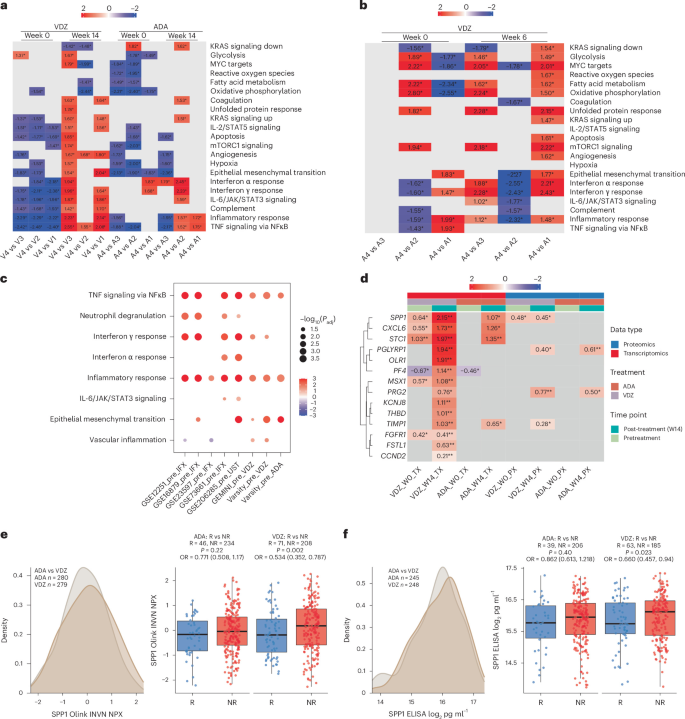
Vedolizumab पर कुछ लोगों की nonresponse समझने के लिए शोधकर्ताओं ने bulk transcriptomics, single-cell transcriptomics, spatial transcriptomics और proteomics को जोड़ा। विश्लेषण ने vedolizumab nonresponse को vascular inflammation से जोड़ा।
विशेष रूप से, SPP1-positive macrophages और endothelial cells के बीच interactions nonresponse से जुड़े पाए गए। Macrophages immune cells हैं, जबकि endothelial cells blood vessels की lining बनाते हैं। निष्कर्ष ऐसे vascular और immune-cell interaction की ओर इशारा करते हैं जो vedolizumab के अपेक्षित परिणाम न देने पर प्रासंगिक हो सकता है।
यह शोधकर्ताओं के analysis से मिला association है, यह प्रमाण नहीं कि ये cellular interactions treatment failure का कारण बनते हैं। फिर भी divergent responses के लिए स्पष्ट explanation की कमी वाले क्षेत्र में यह mechanistic lead देता है।
Real-world data ने combination therapy का प्रश्न उठाया
शोधकर्ताओं ने ulcerative colitis वाले लोगों के दो अलग real-world cohorts का भी अध्ययन किया, जिनमें 4,981 और 3,854 मरीज थे। इन cohorts में vedolizumab के साथ renin-angiotensin system inhibitors लेने वाले लोगों में long-term complications कम होने का association मिला। Anticytokine therapies के साथ ऐसा association नहीं बताया गया।
Renin-angiotensin system inhibitors ऐसी medicines हैं जो vascular inflammation को modulate कर सकती हैं। Vedolizumab group में बेहतर long-term outcomes के साथ उनका association molecular findings से मेल खाता है, लेकिन इससे यह सिद्ध नहीं होता कि medicines ने सुधार किया। Observational data उपयोगी संकेत दे सकता है, फिर भी patient groups और treatment decisions के अंतर से प्रभावित हो सकता है।
लेखकों के अनुसार परिणाम prospective validation और vedolizumab combination therapy चुनने में संभावित उपयोग की दिशा दिखाते हैं। यह research direction है, मरीजों को medication regimen बदलने की recommendation नहीं।

निष्कर्ष क्यों महत्वपूर्ण हैं
अध्ययन का व्यापक योगदान patient experience, clinical outcomes और biological mechanisms को जोड़ने का प्रयास है। बदलते symptoms पर आधारित response category responder-versus-nonresponder label से अधिक informative हो सकती है, खासकर chronic disease में जहां treatment benefit अलग-अलग लोगों में अलग तरह से विकसित होता है।
Ulcerative colitis research के लिए framework tailored studies का रास्ता सुझाता है: response patterns पहचानना, उनके biological correlates तय करना और किसी defined group के लिए targeted strategy बेहतर outcomes देती है या नहीं, यह जांचना। Clinical decision-making से पहले taxonomy को prospective रूप से जांचना अगला कदम है।
- शोधकर्ताओं ने ulcerative colitis trials में patient-reported treatment-response की चार trajectories पहचानीं।
- Vedolizumab nonresponse vascular inflammation तथा SPP1-positive macrophages और endothelial cells की interactions से जुड़ी थी।
- Real-world cohorts आगे के अध्ययन का समर्थन करते हैं, लेकिन combination treatment का लाभ सिद्ध नहीं करते।
यह लेख Nature Medicine की रिपोर्टिंग पर आधारित है। मूल लेख पढ़ें।
Originally published on nature.com
