A new rooftop solar format lands in the U.S.
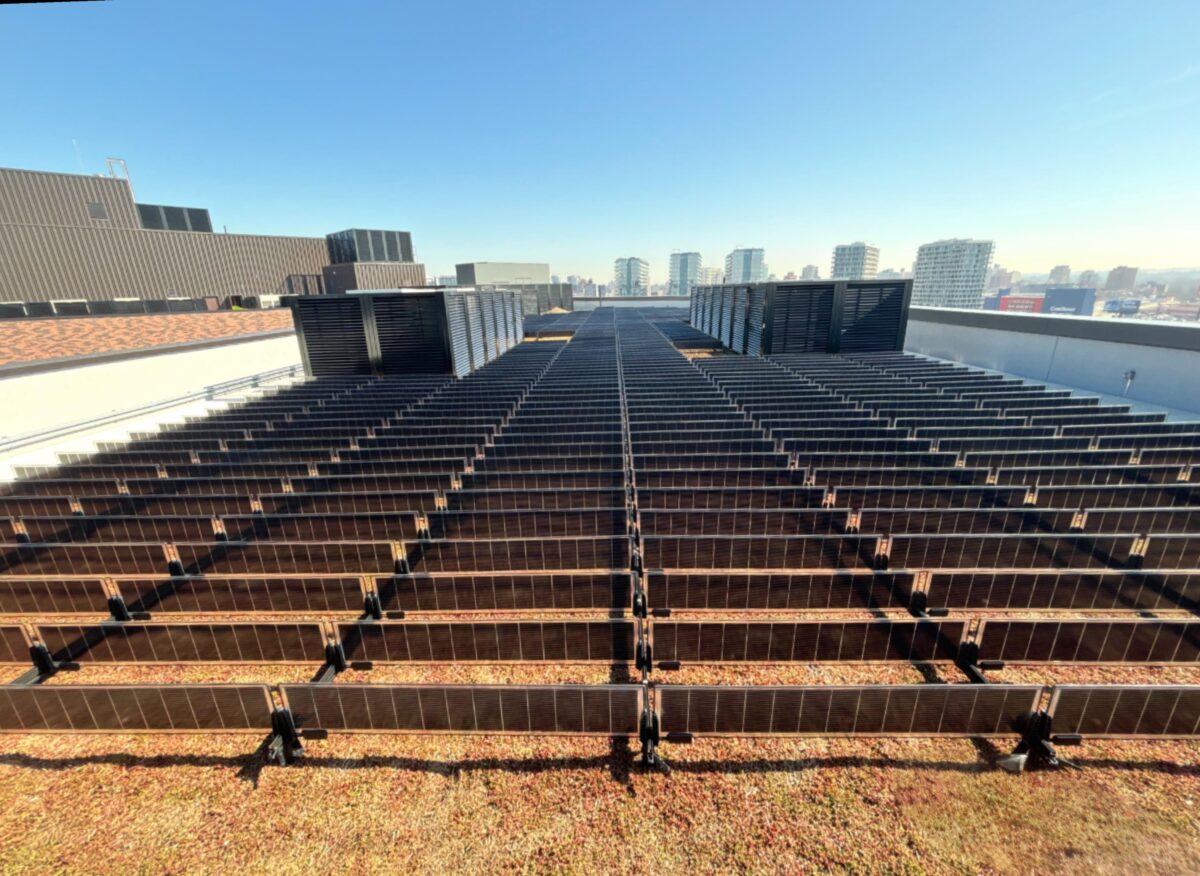
Vertical rooftop solar has made its U.S. debut through a 100 kW installation in Queens, New York, marking the first American project by Norwegian specialist Over Easy Solar. The system was installed in the Willets Point industrial area on a building owned by an undisclosed customer and paired with a green roof, creating a project that blends electricity generation with rooftop vegetation.
The installation was delivered with Sempergreen USA, which pv magazine identified as North America’s largest producer and supplier of pre-grown vegetation mats for green roofs. That pairing matters because the project is not simply another rooftop photovoltaic deployment. It is a test of whether low-weight, vertical, bifacial systems can fit urban roofs where conventional tilted arrays may be harder to permit, ballast, or combine with other rooftop uses.
Why this design stands out
The project uses Over Easy Solar’s xM3 VPV Unit, a prefabricated vertical bifacial system built for flat roofs. According to the source material, each unit contains four 256 W modules using heterojunction solar cells from Huasun and reaches 95% to 96% bifaciality. The system also uses a mounting design that requires no ballast and no roof penetration, a notable feature for buildings where extra structural load or roof disturbance can be a major constraint.
pv magazine reported that the 100 kW system is expected to produce up to 140,000 kWh per year, with actual output depending on variables including albedo, azimuth, and local shadowing. That framing is important: the project is being presented as a context-sensitive urban installation rather than a universal replacement for traditional rooftop solar.

The green-roof connection
Combining solar with a green roof is one of the more interesting elements of the launch. Green roofs can change rooftop surface conditions, and the source explicitly notes that expected production depends in part on albedo, or reflected light. That matters for vertical bifacial panels, which can harvest light from both sides. In practice, a planted roof and a vertical panel configuration may create a different performance profile than the standard low-slope rooftop array that dominates commercial installations.
Just as important, the physical configuration may make rooftop solar easier to combine with stormwater management, heat mitigation, and other building-level sustainability measures. The Queens project therefore functions as both a commercial installation and a demonstration of how rooftop real estate might be used more flexibly in dense cities.
What the U.S. debut signals
This is still a small project by utility-scale standards, but first deployments often matter less for capacity than for validation. By bringing a product designed around low weight, prefabrication, and simplified rooftop mounting into the U.S. market, Over Easy Solar is testing whether a niche European-style format can earn a place in American commercial solar.
Its first move into the U.S. is also a reminder that rooftop solar design is still evolving. For years, the baseline commercial formula has been familiar: flat roof, tilted racks, and a tradeoff between panel spacing, ballast, and maintenance access. Vertical rooftop PV proposes a different logic, one that could be relevant where wind loading, roof constraints, co-use with vegetation, or building integration make standard designs less attractive.
The result is not a broad market shift yet, but it is a meaningful technical milestone. A successful early project in New York gives the company a real reference site in one of the world’s most demanding urban building environments. If performance holds and installation economics prove competitive, the pilot could open the door to more specialized rooftop solar formats in U.S. cities.
- Over Easy Solar installed its first U.S. rooftop vertical solar project in Queens, New York.
- The 100 kW system is paired with a green roof and is expected to generate up to 140,000 kWh annually.
- The mounting system reportedly avoids ballast and roof penetration, targeting constrained flat-roof sites.
This article is based on reporting by PV Magazine. Read the original article.
Originally published on pv-magazine.com