यूरोप की कार बहस में उन्नत बायोफ्यूल्स पर लागत की कसौटी
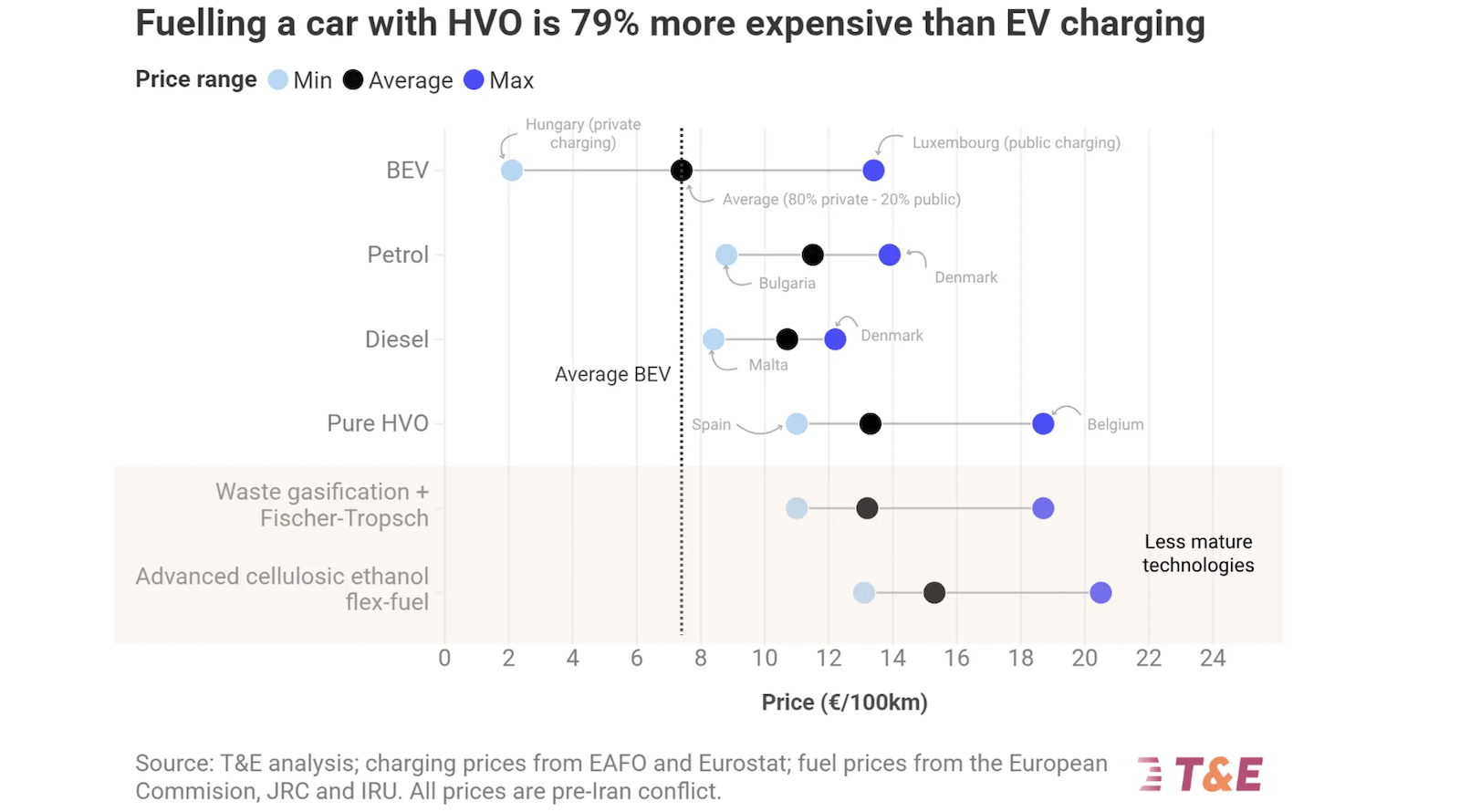
Transport & Environment के एक नए विश्लेषण ने यूरोपीय ऑटो सेक्टर की सबसे विवादित नीतिगत बहसों में से एक को और स्पष्ट संख्याएँ दी हैं: क्या उन्नत बायोफ्यूल्स दहन-इंजन वाहनों को कम-उत्सर्जन के रास्ते के रूप में गिनने में मदद करें, या ब्लॉक को बैटरी-इलेक्ट्रिक कारों पर ही ध्यान केंद्रित रखना चाहिए। समूह के आंकड़ों के अनुसार, अर्थशास्त्र असंतुलित है। यूरोपीय संघ में एक इलेक्ट्रिक वाहन को चार्ज करने की लागत औसतन लगभग €7 प्रति 100 किलोमीटर है, जबकि शुद्ध hydrotreated vegetable oil, या HVO, पर चलने वाली कार की लागत इसी दूरी के लिए लगभग €13 होगी।
यह अंतर महत्वपूर्ण है क्योंकि HVO को एक व्यावहारिक “drop-in” विकल्प के रूप में पेश किया गया है, जो जीवाश्म ईंधन की जगह लेकर मौजूदा वाहन बेड़े और ईंधन ढांचे का बड़ा हिस्सा बनाए रख सकता है। नया विश्लेषण तर्क देता है कि सुविधा की यह कहानी ड्राइवरों के लिए एक अधिक कठिन वास्तविकता को छिपाती है। औसतन, T&E के अनुसार, शुद्ध HVO एक EV को चार्ज करने से 79% अधिक महंगा है। नगरपालिका ठोस अपशिष्ट के बायोमास हिस्से या cellulosic residues जैसे स्रोतों से बने कम परिपक्व उन्नत बायोफ्यूल्स और भी महंगे हो सकते हैं, जो बैटरी-इलेक्ट्रिक वाहन चलाने की लागत से 80% से 110% अधिक तक जा सकते हैं।
नीतिगत विवाद एक ईंधन से कहीं बड़ा है
लागत की यह तुलना कुछ सरकारों और उद्योग पक्षों की उस व्यापक कोशिश के बीच आती है, जिसका उद्देश्य यह बदलना है कि EU वाहन उत्सर्जन को कैसे देखता है। जर्मन और इतालवी सरकारें, साथ ही यूरोपीय कार उद्योग के कुछ हिस्से, चाहते हैं कि उन्नत बायोफ्यूल्स पर चल सकने वाली दहन कारों को शून्य-उत्सर्जन के रूप में गिनने की अनुमति देकर EU के कार CO2 लक्ष्यों को कमजोर किया जाए। T&E का कहना है कि ऐसा बदलाव उन मुख्य नीतिगत लीवरों में से एक को कमजोर कर देगा जो ऑटोमेकर्स को अधिक किफायती EVs बाज़ार में लाने के लिए प्रेरित कर रहे हैं।
इस दृष्टिकोण में, सवाल केवल तकनीकी नहीं है। यह इस बारे में है कि धीमी इलेक्ट्रिफिकेशन की कीमत कौन चुकाएगा। अगर विधायक लक्ष्यों को ढीला करते हैं, तो विश्लेषण का सुझाव है, उपभोक्ताओं को ऐसे वाहन और ईंधन संयोजनों की ओर धकेला जा सकता है जो उपयोग में अधिक महंगे हैं, जबकि वे सीमित बायोफ्यूल आपूर्ति पर भी निर्भर होंगे। T&E का रुख स्पष्ट है: मौजूदा लक्ष्यों को बनाए रखने से, दुर्लभ उन्नत बायोफ्यूल्स पर निर्भर दहन वाहनों के लिए नए प्रोत्साहन बनाने की तुलना में, किफायती EVs की आपूर्ति बढ़ाने में अधिक मदद मिलेगी।
Vehicle policy manager Émilie Casteignau Bernardini ने स्रोत लेख में तर्क को साफ़ शब्दों में समेटा: EV को चार्ज करना उन्नत बायोफ्यूल से टैंक भरने से सस्ता है, और कारों के लिए बायोफ्यूल्स को बढ़ावा देना इलेक्ट्रिफिकेशन में देरी कर सकता है, जबकि मोटर चालकों को बिल पकड़ाया जाएगा।

कमी कीमत जितनी ही महत्वपूर्ण हो सकती है
यह विश्लेषण केवल आज के पंप-वर्सस-चार्जर गणित पर आधारित नहीं है। यह एक आपूर्ति समस्या की ओर भी इशारा करता है, जो समय के साथ और गंभीर हो सकती है। उन्नत बायोफ्यूल्स सीमित हैं, और उनकी मांग केवल सड़क परिवहन तक सीमित नहीं है। विमानन एक बड़ा प्रतिस्पर्धी बनता जा रहा है। EU के ReFuelEU ढांचे के तहत, जेट ईंधन आपूर्तिकर्ताओं पर sustainable aviation fuel लक्ष्यों से जुड़ी पेनल्टीज़ लगती हैं, जिससे महंगे होने पर भी उन्नत बायोफ्यूल्स खरीदने का मजबूत प्रोत्साहन बनता है। यह प्रतिस्पर्धा कीमतों को और ऊपर धकेल सकती है।
नीतिगत दृष्टि से, यह कमी एक असहज असमानता पैदा करती है। सड़क कारें ऐसा क्षेत्र हैं जहाँ बैटरी-इलेक्ट्रिक तकनीक पहले से व्यावसायिक रूप से उपलब्ध है और तेजी से मुख्यधारा बन रही है। विमानन के पास बड़े पैमाने पर ईंधन उत्सर्जन घटाने के लिए कम निकट-कालिक विकल्प हैं। अगर दोनों क्षेत्र उन्नत बायोफ्यूल्स के उसी सीमित भंडार के लिए प्रतिस्पर्धा करते हैं, तो विधायकों को तय करना होगा कि वे ईंधन सिस्टम-स्तर पर सबसे अधिक मूल्य कहाँ देते हैं।
T&E के विश्लेषण से संकेत मिलता है कि पैसेंजर कारों में दुर्लभ उन्नत बायोफ्यूल्स का उपयोग एक महंगा भटकाव होगा, खासकर अगर यह ऐसे सेगमेंट में इलेक्ट्रिफिकेशन की ओर बदलाव को धीमा कर दे जहाँ बैटरी वाहन पहले से एक सिद्ध विकल्प हैं।
यूरोपीय आयोग क्या प्रस्तावित कर रहा है
स्रोत यह भी नोट करता है कि यूरोपीय आयोग ने कार निर्माताओं को बायोफ्यूल क्रेडिट देने का प्रस्ताव रखा है, भले ही वह कुछ सदस्य देशों की तरह बायोफ्यूल-सक्षम दहन कारों को पूरी तरह शून्य-उत्सर्जन मानने तक नहीं गया हो। T&E का आकलन है कि आयोग का प्रस्ताव भी लंबी अवधि में ईंधन खर्च को काफी बढ़ा देगा। समूह का कहना है कि 2050 तक ईंधन खर्च मौजूदा विनियमन की तुलना में 60% अधिक होगा, जिससे लगभग €500 billion की अतिरिक्त लागत जुड़ जाएगी।
ये आंकड़े इस बहस को यूरोप की परिवहन और औद्योगिक नीति का केंद्रीय मुद्दा बनाने का एक कारण हैं। अब चर्चा केवल इस पर नहीं है कि बायोफ्यूल्स सिद्धांत रूप में उत्सर्जन घटा सकते हैं या नहीं। सवाल यह है कि क्या वे बड़े पैमाने के कार बाजार के लिए सही जवाब हैं, जब विकल्प अब संचालन लागत और पैमाने दोनों में इतना अलग-अलग हैं।

यह अभी क्यों महत्वपूर्ण है
दहन तकनीक के लिए लचीलापन बनाए रखने का दबाव यूरोप के कुछ हिस्सों में मजबूत है। कार निर्माता पूंजीगत जरूरतों, असमान उपभोक्ता मांग और क्षेत्रीय राजनीति के बीच संतुलन बना रहे हैं। बायोफ्यूल्स आकर्षक लग सकते हैं क्योंकि वे निरंतरता का वादा करते हैं। ड्राइवरों को परिचित वाहन मिलते रहते हैं। ईंधन स्टेशन प्रासंगिक बने रहते हैं। निर्माता अपने विरासत उत्पाद लाइनों को लंबे समय तक बचाए रख सकते हैं।
लेकिन निरंतरता, प्रतिस्पर्धात्मकता के बराबर नहीं है। स्रोत में उजागर विश्लेषण इसके विपरीत तर्क देता है: अगर नीति-निर्माता महंगे, सीमित आपूर्ति वाले ईंधनों को पैसेंजर कारों में इलेक्ट्रिफिकेशन के विकल्प के रूप में मानते हैं, तो वे घरों पर उच्च लागत थोप सकते हैं, जबकि सस्ते EVs को शोरूम तक धकेलने वाले बाज़ार संकेतों को कमजोर कर सकते हैं।
- T&E के अनुसार, EU में EV चार्जिंग की औसत लागत €7 प्रति 100 किमी है, जबकि शुद्ध HVO के लिए यह €13 है।
- समूह का अनुमान है कि शुद्ध HVO पर चलाना EV चलाने की तुलना में 79% अधिक महंगा है।
- और अधिक प्रयोगात्मक उन्नत बायोफ्यूल्स बैटरी-इलेक्ट्रिक ड्राइविंग से 80% से 110% अधिक महंगे हो सकते हैं।
- विश्लेषण का तर्क है कि EU के कार CO2 लक्ष्यों को कमजोर करने से लागत ड्राइवरों पर जाएगी और इलेक्ट्रिफिकेशन धीमा होगा।
परिणामस्वरूप यूरोप के परिवहन संक्रमण में एक और स्पष्ट रेखा खिंचती है। उन्नत बायोफ्यूल्स की भूमिका अब भी रह सकती है, खासकर वहाँ जहाँ इलेक्ट्रिफिकेशन कठिन है, लेकिन यहाँ प्रस्तुत तर्क यह है कि सीमित और महंगी आपूर्ति पैसेंजर कारों में नहीं खर्च की जानी चाहिए। ड्राइवरों के लिए, स्रोत में बताए गए लागत-अंतर से वास्तविक सवाल यह नहीं है कि बायोफ्यूल्स संभव हैं या नहीं। सवाल यह है कि क्या वे प्लग इन करने की तुलना में आर्थिक रूप से बिल्कुल भी उचित हैं।
यह लेख CleanTechnica की रिपोर्टिंग पर आधारित है। मूल लेख पढ़ें.
Originally published on cleantechnica.com




