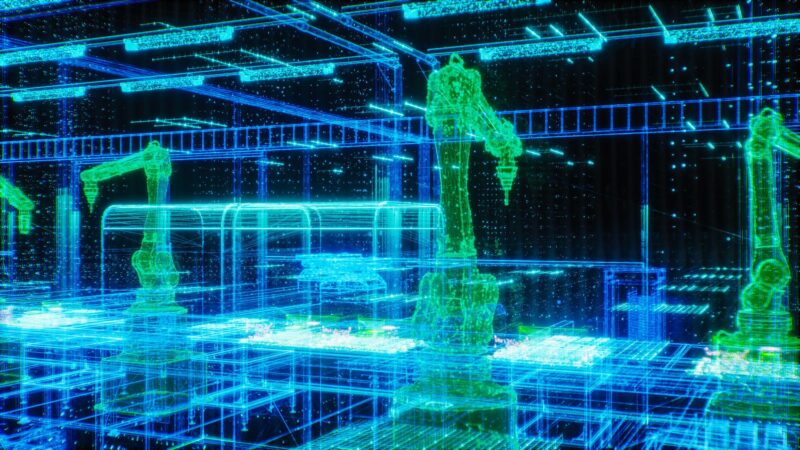
The Illusion of a Downloadable Robot
On a bench not long ago, a small quadruped turned cleanly to the right. The mirrored left turn dragged and lost contact. The legs had landed in different servo regions and loaded the body differently, so the same command did two different things. The code was symmetric; the contact mechanics were not.
This simple experiment illustrates a fundamental truth: the Llama analogy works until the model has to move hardware. The original Llama paper gave software teams a reusable starting point. A team that did not pay for the training run could adapt the model, shrink it, and serve it through a familiar software path. The weights were useful because other teams already had the tools to turn them into running software.
Robot models move the same way, but a robot policy does not travel on its own. A local control stack converts policy output into motion on the installed robot via its controller, within the cell's safety envelope. Model access will expand what robots attempt. The advantage will come from turning that behavior into supported work on installed systems, with a fault record a technician can use months later.
Robot Policies Are Getting Easier to Download
Google DeepMind's Open X-Embodiment project pooled robot data across institutions and robot bodies, and its RT-X results found that training across embodiments improves transfer in some settings rather than forcing each system to learn only from its own narrow dataset. DeepMind's newer releases split the work across the robot stack. Gemini Robotics 1.5 is a vision-language-action model that takes visual information and instructions and turns them into motor commands. Gemini Robotics-ER 1.6 sits higher in the stack, handling spatial reasoning and task planning while supporting progress checks and tool calls.
NVIDIA has pushed distribution in the same direction, with GR00T releases and Isaac models moving into developer channels such as Hugging Face's LeRobot. From a distribution perspective, the Llama story fits in with the idea that capable robot policies are becoming easier for developers to obtain.
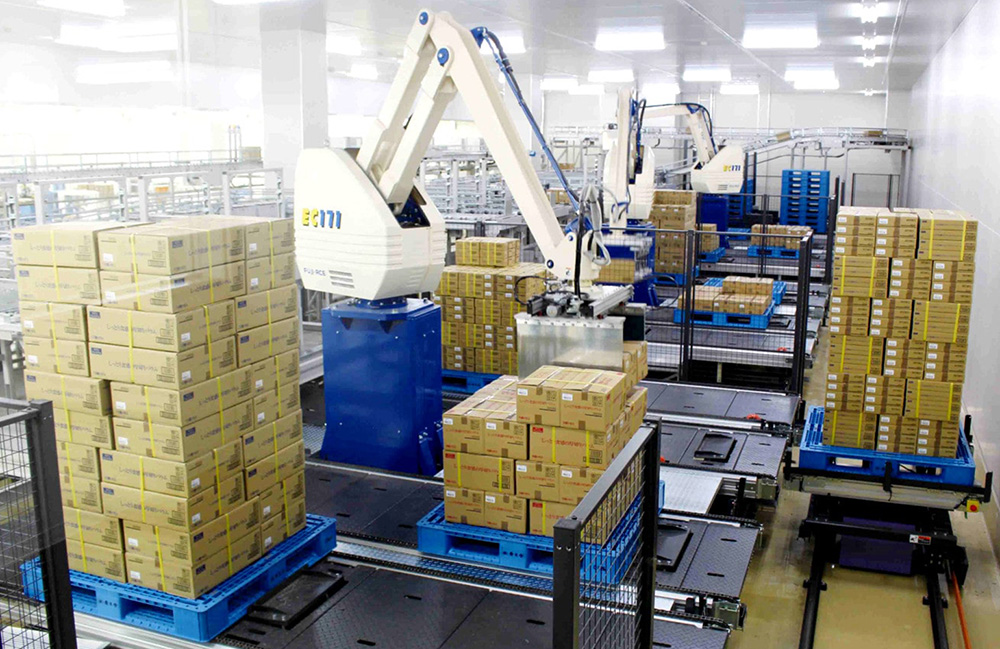
The Funding Frenzy Assumes Reusability
Against Crunchbase's count of nearly $14 billion in robotics venture funding in 2025, the individual rounds stack up fast. Skild AI raised $1.4 billion for an omnibodied robotics model, while Physical Intelligence is reportedly in talks for another $1 billion at a valuation above $11 billion. Yann LeCun's Advanced Machine Intelligence raised $1.03 billion around a different approach to world modeling, and Wayve closed a $1.2 billion Series D for autonomous driving.
Those rounds assume robot intelligence becomes reusable before the industry has proved that the release path works across systems. OpenVLA is a 7B-parameter open vision-language-action model trained on 970,000 robot manipulations, yet its deployment still requires adaptation to each robot's unique hardware and control stack.
The Hardware Gap Remains
The core challenge is that robot policies are tightly coupled to physical hardware. Even if a policy is open-source, it must be adapted to the specific robot's kinematics, sensor suite, and control interface. The Llama moment in software was possible because the underlying compute infrastructure is standardized. Robots, by contrast, come in countless form factors with different actuators, sensors, and safety constraints.
Moreover, real-world deployment introduces variability in lighting, surface friction, object weight, and wear over time. A policy that works perfectly in a lab may fail in a factory due to subtle differences in floor texture or ambient temperature. The fault record a technician uses months later is not just about code; it's about understanding how the hardware responded under specific conditions.

What the Llama Moment Would Look Like in Robotics
The Llama moment in robotics will not be the day a policy becomes downloadable. It will be the day another team can take that policy, adapt it to its robot, release it into a customer process, and still have it perform reliably. This requires not just open models but open toolchains for adaptation, simulation environments that accurately model hardware, and standardized interfaces for control stacks.
Initiatives like Open X-Embodiment and NVIDIA's Isaac are steps in the right direction, but they are not yet sufficient. The industry must invest in tools that allow policies to be transferred across platforms with minimal manual tuning. Until then, robotics will advance incrementally, policy by policy, robot by robot.
Conclusion
Robotics will not have a clean Llama moment because the physical world is messy. While AI models can be copied and run on any compatible hardware, robot policies must contend with the idiosyncrasies of each machine and environment. The funding and research are pouring in, but the path to reusable robot intelligence is longer and more complex than the software industry's open-source revolution.
This article is based on reporting by The Robot Report. Read the original article.
Originally published on therobotreport.com
