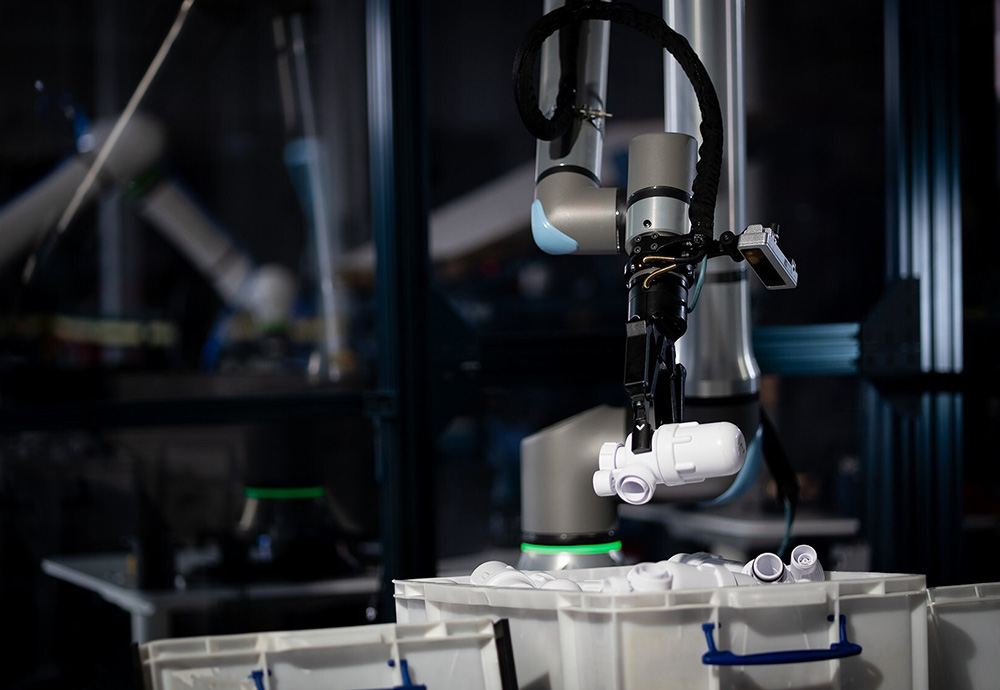
बिन पिकिंग की समस्या
औद्योगिक स्वचालन चुनौतियों के परिदृश्य में, deep bin picking का एक विशेष स्थान है: यह कठिन है, आर्थिक रूप से महत्वपूर्ण है, और उन प्रकार के programmatic solutions के प्रति हठपूर्वक प्रतिरोधी है, जिन्होंने अधिक structured applications में robotic automation को सफल बनाया है। यह कार्य सरल लगता है — एक bin से randomly oriented parts उठाकर manufacturing process के अगले चरण के लिए उन्हें सही ढंग से रखना — लेकिन यह कई अलग-अलग तकनीकी चुनौतियों को जोड़ता है, जिन्होंने मिलकर दशकों तक भरोसेमंद automated solutions को elusive बनाए रखा है।
एक deep bin में parts तीन आयामों में randomly oriented होते हैं। वे एक-दूसरे में उलझे, stacked, या अन्य parts द्वारा आंशिक रूप से obscured हो सकते हैं। bin की walls geometric constraints बनाती हैं जो robot arm approaches को सीमित करती हैं। part surfaces reflectivity, translucence, और texture में अलग-अलग होती हैं, जिससे machine vision जटिल हो जाती है। और एक जटिल pile से part को grasp करने और निकालने की भौतिक क्रिया के लिए adaptive force control की आवश्यकता होती है: part को भरोसेमंद रूप से पकड़ने के लिए पर्याप्त force लगाना, बिना part को नुकसान पहुँचाए, साथ ही आसपास के parts के साथ होने वाली mechanical interactions को navigate करना जो items हटाए जाने पर बदलती हैं।
multi-shift facilities चलाने वाले manufacturers के लिए, जिनमें part volume अधिक होता है, यह चुनौती एक महत्वपूर्ण bottleneck और labor cost का प्रतिनिधित्व करती है। Human operators bin picking को intuitively संभाल सकते हैं, visual perception और tactile feedback पर भरोसा करते हुए, जिन्हें वे स्वाभाविक रूप से और बिना explicit programming के लागू करते हैं। लेकिन manual bin picking से जुड़ी labor cost और variability — विशेष रूप से high-mix production environments में, जहाँ part portfolio बड़ा और लगातार बदलता रहता है — automation को आकर्षक बनाती है, यदि reliability bar पूरी की जा सके।
Rapid Operator AI क्या करता है
Vention का Rapid Operator AI adaptive machine vision, learned grasping policies, और real-time force-feedback control के संयोजन से bin picking challenge को संबोधित करता है। यह system depth cameras और structured light का उपयोग करके bin contents का three-dimensional representation बनाता है, और जumbled pile के भीतर individual parts तथा उनकी orientations की पहचान करता है। Grasping pose estimation — सफल grasp के लिए optimal approach angle, gripper orientation, और contact points की गणना — neural network models द्वारा संभाली जाती है, जिन्हें part images और सफल grasp attempts के बड़े datasets पर प्रशिक्षित किया गया है।
इस system की adaptability के लिए machine learning component अत्यंत महत्वपूर्ण है। Template-based machine vision systems के विपरीत, जिनके लिए precise CAD models की आवश्यकता होती है और जो parts के expected orientations से अलग होने पर विफल हो जाते हैं, Rapid Operator AI के neural models training data से generalize कर सकते हैं ताकि relatively limited retraining के साथ novel presentations और नए part geometries को संभाला जा सके। dozens या hundreds of different part numbers चलाने वाले high-mix manufacturers के लिए, यह generalization capability उस अंतर को तय करती है जो एक ऐसे system के बीच है जो पूरे production portfolio में उपयोगी है और एक ऐसे system के बीच जो केवल एक specific part family के लिए काम करता है लेकिन दूसरों तक विस्तार के लिए significant engineering effort मांगता है।
force-feedback integration bin से parts को बिना नुकसान निकालने की mechanical challenge को संबोधित करती है। System real time में gripper forces की निगरानी करता है, यह पहचानता है कि कब कोई part entangled है या कब extraction path obstructed है, और उसी के अनुसार robot की trajectory को समायोजित करता है। यह feedback loop system को bin pile की stochastic mechanics — items हटाए जाने पर parts की cascading movements — को संभालने में सक्षम बनाता है, बिना उन brittle failure modes के जो open-loop bin picking systems में दिखाई देते हैं जब वास्तविक दुनिया अपेक्षित configuration से अलग होती है।

लक्षित बाज़ार और deployment context
Vention Rapid Operator AI को midmarket और enterprise manufacturers के लिए position कर रहा है जो multi-shift facilities चलाते हैं — ऐसा segment जहाँ automation की economics compelling हैं, लेकिन जहाँ traditional industrial robot deployments के लिए आवश्यक capital और engineering resources ऐतिहासिक रूप से एक barrier रहे हैं। Vention का broader platform, जो web-based programming और rapid mechanical assembly के साथ rapid-deployment modular automation system प्रदान करता है, का उद्देश्य robotic cells को deploy करने के लिए आवश्यक समय और expertise को महीनों से घटाकर दिनों या हफ्तों तक लाना है, जैसा कि traditional integrator-led projects में लगता है।
Rapid Operator AI इस rapid-deployment philosophy को machine learning और perception layer तक विस्तारित करता है। Manufacturers को अपनी bin picking AI विकसित करने या specialized robotics AI vendors को engage करने की आवश्यकता के बजाय — एक ऐसी प्रक्रिया जिसमें पारंपरिक रूप से significant machine learning expertise और system-specific training data collection के महीनों की जरूरत होती है — system pre-trained models के साथ आता है जिन्हें limited data requirements के साथ structured onboarding process के माध्यम से specific parts के अनुरूप adapt किया जा सकता है।
व्यापक संदर्भ: AI robot stack के नीचे की ओर बढ़ रहा है
Vention का launch industrial robotics में एक broader trend का संकेतक है: automation stack के lower levels में AI capabilities का progressive integration, system orchestration level पर AI से आगे बढ़कर perception और motion control subsystems में embedded AI तक, जो सीधे physical world के साथ interface करते हैं। यह trend deep learning for 3D object recognition, reinforcement learning for contact-rich manipulation, और large-scale simulation environments जैसी तकनीकों के maturation से संभव हुआ है, जो neural models को physical deployment से पहले synthetic data पर train करने देते हैं।
Manufacturers के लिए इस trend का practical significance यह है कि वे capabilities, जिनके लिए पहले expensive, specialized integration work की आवश्यकता होती थी, अब increasingly software updates या platforms के भीतर नए products के रूप में उपलब्ध हैं जिन्हें वे पहले से उपयोग कर रहे हैं। Sophisticated AI-enabled automation में entry barrier केवल कीमत में नहीं, बल्कि उन systems को deploy और maintain करने के लिए आवश्यक domain expertise में भी गिर रहा है। यह capability democratization — mid-size manufacturers के लिए adaptive bin picking AI को accessible बनाना, न कि केवल बड़े automotive या electronics producers के लिए — underlying technical advances जितनी ही significant हो सकती है।
Bin picking अंतिम application domain नहीं होगा जहाँ AI उस automation को unlock करेगा जो पहले impractical थी। Dexterous manipulation की आवश्यकता वाले assembly tasks, unstructured environments में quality inspection, और highly variable package characteristics वाली logistics applications में material handling — ये सभी visual perception और contact-rich manipulation challenges के समान संयोजन प्रस्तुत करते हैं। Bin picking के लिए बनाए जा रहे solutions अगली पीढ़ी के manufacturing automation के building blocks हैं, और Vention की rapid deployment philosophy suggests करती है कि ये solutions पिछली automation technology waves की तुलना में factory floor तक तेज़ी से पहुँच सकते हैं।
यह लेख The Robot Report की रिपोर्टिंग पर आधारित है। मूल लेख पढ़ें.
Originally published on therobotreport.com