A highly personalized trial is testing whether patient-driven research can scale
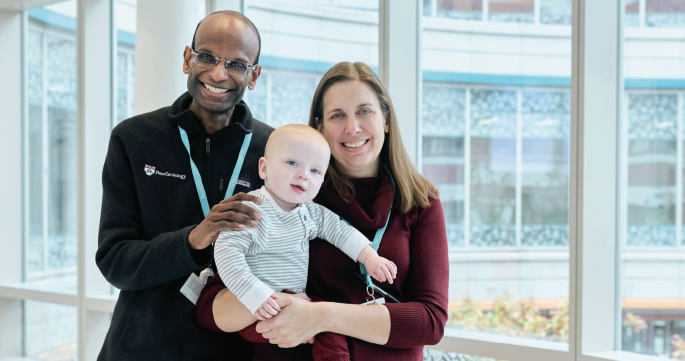
A new Nature Medicine feature points to a notable shift in how some medical research is organized: the patient is no longer treated only as a study subject, but as a central force in shaping the research itself. The article focuses on a trial built around one baby and presents it as a sign that patient-driven research may be moving from an unusual exception toward a more mainstream model.
That framing matters because modern medicine has long been structured around large populations, standardized protocols and conventional sponsor-led development. The feature argues that this default approach can miss people with rare conditions or unusual disease presentations, especially when the economics or timelines of traditional drug development make individualized work difficult. By centering a single patient’s needs, the reported trial suggests that clinical research can be organized differently when urgency, genetics and therapeutic opportunity align.
Why this case stands out
The article does not present the case as a generic human-interest story. Instead, it places the baby-centered trial inside a broader conversation about how research institutions, regulators and funders may need to adapt. The implication is that personalized trials are not simply about compassion; they also challenge the rules and expectations that govern evidence generation.
Patient-driven research can change the sequence of decision-making. Families, clinicians, scientists and developers may work in tighter coordination. Questions that would normally be settled late in a drug-development process can become immediate: what evidence is enough to proceed, what outcomes matter most, and how should risk be judged when there is no established treatment path? In that sense, the patient is “in the room” not as a symbolic participant, but as a practical influence on study design and scientific priorities.
The feature’s central claim is that this one-baby trial shows how such an approach can go mainstream. That does not mean every therapy will be built around a single person. It means the institutions of medicine may be learning how to incorporate patient priorities earlier and more formally, particularly in areas such as rare disease where conventional models can be too slow or too rigid.
What mainstreaming could mean
If patient-driven research expands, the effects could reach well beyond a single case. Clinical development could become more adaptive, especially where genomics identifies narrowly defined patient groups. Trial structures might place greater weight on individualized endpoints, real-world feasibility and the speed of therapeutic response. Regulators and ethics boards may also face pressure to evaluate highly tailored interventions without forcing them into frameworks designed for mass-market therapies.
That transition would not be simple. Personalized studies are resource-intensive, scientifically complex and hard to compare across patients. They can also raise difficult questions about fairness. If one family, one clinic or one donor network can accelerate a bespoke trial, how should health systems ensure that access does not depend on visibility or private support? Patient-driven models promise responsiveness, but they also expose the uneven infrastructure beneath modern medicine.
The feature therefore points to two parallel developments. One is technical: the rise of genomic analysis and advanced therapeutic platforms makes it increasingly plausible to design interventions around very small patient populations. The other is institutional: health research is being pushed to recognize that patients and families often hold knowledge, urgency and motivation that should shape the work, not merely accompany it.
From rare exception to research template
Rare disease medicine has often been where system change becomes visible first. Small patient populations force researchers to confront the limits of conventional evidence standards and commercial incentives. A trial organized around one baby is a particularly stark example, but it also illustrates the broader direction of travel. When a disease is genetically specific and clinically urgent, the distance between laboratory science and patient need can shrink dramatically.
That creates an opportunity for a new kind of collaboration. Researchers still supply the technical expertise. Clinicians still manage care. But patients and caregivers can influence goals, timelines and tolerable tradeoffs in ways that are especially relevant when there is little precedent to follow. The lesson is not that science becomes less rigorous. It is that rigor has to be applied in a format that fits the medical reality in front of researchers.
The article’s significance lies in its suggestion that health systems are beginning to absorb that lesson. Patient-driven research is often discussed in abstract terms, yet this feature grounds the concept in a concrete clinical effort. A one-baby trial is an extreme case, but extreme cases often reveal where the system is capable of evolving.

The broader signal for medicine
The strongest takeaway is that personalization in medicine is no longer just about therapies; it is also about the research process itself. As scientific tools become more precise, the structures around them may need to become more flexible. That includes funding pathways, approval processes and expectations about what acceptable evidence looks like when the target population is tiny and the need is immediate.
Nature Medicine presents this trial as a test of whether mainstream institutions can make room for that kind of flexibility without abandoning scientific standards. If they can, patient-driven research may become less of a special accommodation and more of a recognized pathway for certain kinds of care. If they cannot, highly individualized science could remain confined to a small number of exceptional cases.
Either way, the reported trial marks an important moment in medicine’s ongoing shift toward more tailored care. The patient is not just the end point of research anymore. Increasingly, the patient may be one of the forces directing it.
This article is based on reporting by Nature Medicine. Read the original article.
Originally published on nature.com