Study identifies a cellular driver of a serious CAR-T complication
Researchers have linked a severe inflammatory bowel complication following BCMA-targeted CAR-T treatment to the expansion and persistence of CAR-positive T cells in the gut. The finding comes from a Nature Medicine report examining immune effector cell-associated enterocolitis after treatment with ciltacabtagene autoleucel, also known as cilta-cel.
Cilta-cel is a B-cell maturation antigen-targeting CAR-T therapy approved for people with relapsed or refractory multiple myeloma. CAR-T treatments are made by engineering a patient’s T cells to recognize a target on cancer cells. They can produce deep responses, but the therapies can also trigger serious immune-related toxicities.
The newly described condition, immune effector cell-associated enterocolitis, has been reported as severe diarrhea after cilta-cel treatment. The new analysis adds evidence that the complication is not simply a nonspecific intestinal inflammation: CAR-positive T cells themselves infiltrated intestinal tissue and appeared to be the principal cause of disease in the patients studied.
Nine cases among patients treated at one center
The investigators identified nine cases of cilta-cel-associated enterocolitis with CAR-positive T-cell infiltration among 158 cilta-cel-treated patients at MD Anderson Cancer Center. They reported an incidence of 5.1% at a six-month landmark and 5.7% across the full cohort.
Those figures describe experience at a single treatment center and should not be treated as a universal estimate for every patient or care setting. Still, the report provides a detailed look at a complication that can be severe and whose biological basis has been uncertain.
All of the reported cases showed monoclonal or oligoclonal T-cell populations. The team assessed this using vector integration analysis, flow cytometry and T-cell receptor sequencing. Together, those approaches allowed the researchers to examine whether particular engineered or related T-cell populations had expanded rather than treating the inflammation as a broadly mixed immune response.

Persistence in blood tracked with bowel disease
A striking feature of the analysis was the difference in CAR-T persistence in the bloodstream. Patients with immune effector cell-associated enterocolitis had 100-fold greater CAR-T-cell persistence in peripheral blood than patients without the complication, according to the study.
That association does not by itself establish a clinical prediction rule. The report does, however, point to durable expansion of the engineered cells as an important feature of the cases and connects a blood-based measurement with pathology seen in the intestine.
The researchers also used RNA sequencing to investigate the activity of cells involved in the disease. Their analysis found increased cytotoxic and inflammatory programs. In plain terms, the affected tissue contained CAR-positive T cells with molecular signatures consistent with cell-killing activity and inflammation, supporting the conclusion that the infiltrating cells were biologically active rather than incidental bystanders.
Why the result matters for CAR-T care
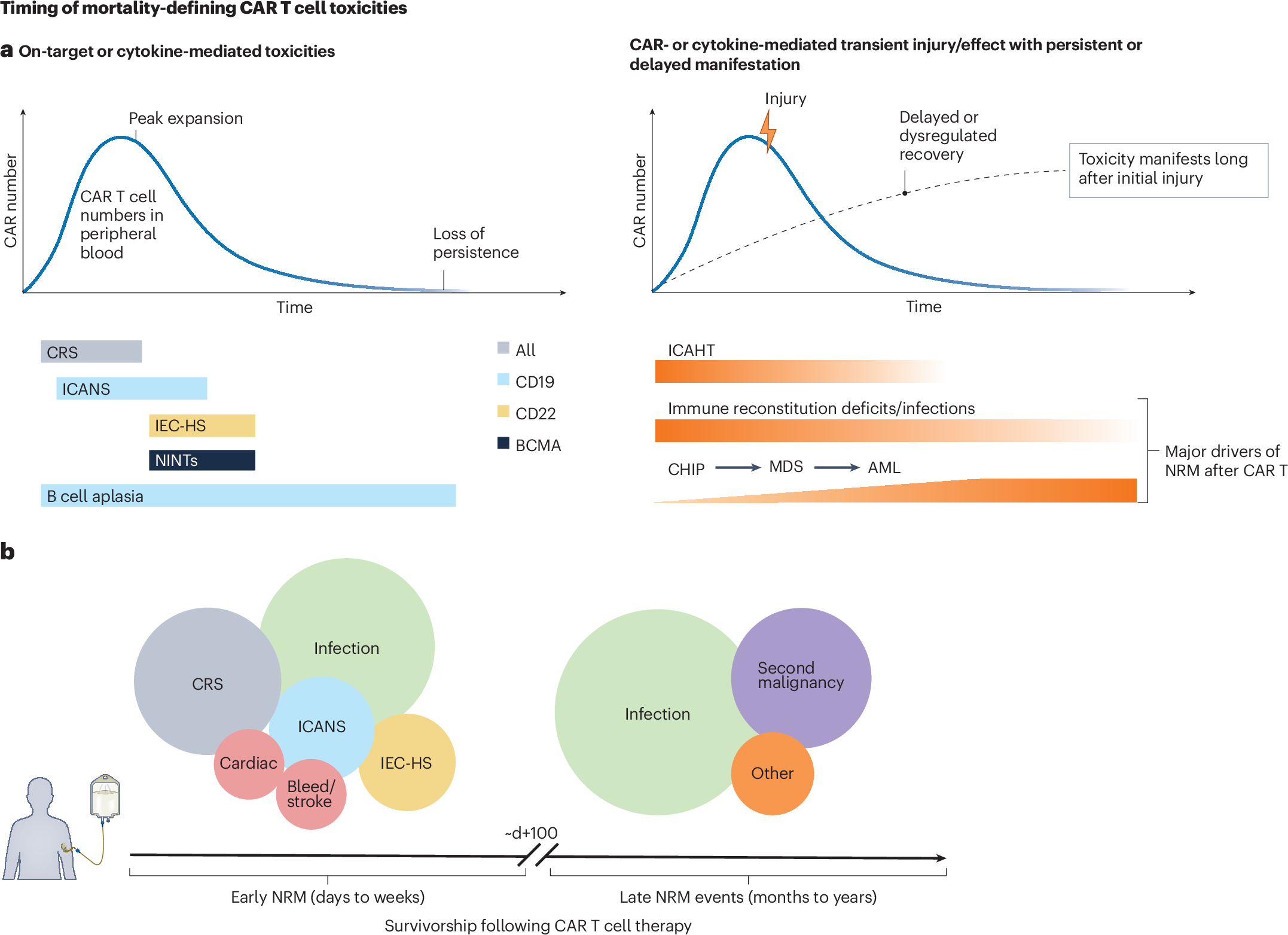
CAR-T therapy is designed to mobilize immune cells against cancer, and continued CAR-T persistence may be relevant to therapeutic effect. This study highlights a difficult counterpoint: persistent engineered cells can also be associated with damaging immune activity outside the intended cancer target.
For clinicians, the work provides a more specific framework for investigating severe diarrhea after cilta-cel treatment. Biopsy-confirmed disease, characterization of infiltrating cells and measurement of CAR-T persistence may help distinguish this entity from other gastrointestinal causes that can occur in heavily treated cancer patients.
The findings also create clear research questions. Larger studies will be needed to determine which patients are at greatest risk, whether blood persistence can help identify risk early, and how intestinal disease can be controlled without undermining cancer treatment. The report establishes a mechanistic lead, but it does not resolve those questions.

A narrower name for a complex safety challenge
As cellular therapies move into broader use, rare but serious toxicities become more important to recognize precisely. The researchers’ evidence supports viewing cilta-cel-associated enterocolitis as a CAR-T-cell-driven disorder in the reported cases, rather than as a generic post-treatment gastrointestinal side effect.
That distinction could matter for surveillance, diagnosis and the development of management strategies. Most importantly, it gives researchers a concrete biological target: the expanded, cytotoxic CAR-positive T-cell populations found in affected intestinal tissue.
The study does not argue that this outcome is expected for most people receiving cilta-cel. It instead documents an uncommon but consequential complication and supplies molecular, cellular and tissue-level evidence for how it may arise. For a treatment field built around altering immune cells, understanding when those cells persist, where they travel and how they behave is central to making therapy safer.
This article is based on reporting by Nature Medicine. Read the original article.
Originally published on nature.com