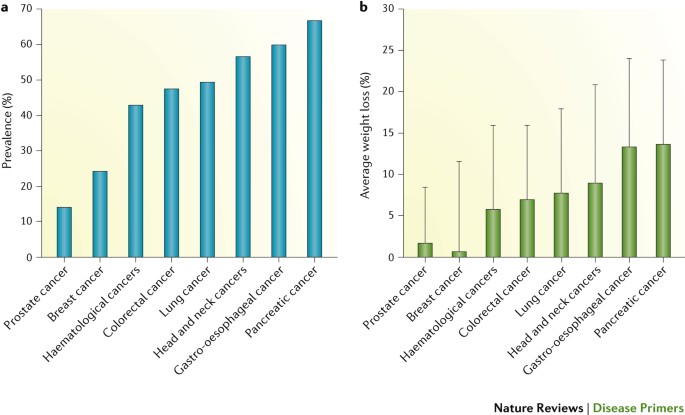
Cancer cachexia is one of oncology’s most consequential but difficult-to-track complications. The wasting syndrome can erode body weight and physical reserve while cancer care is under way, yet its timing, biological correlates and links to particular tumors have remained incompletely characterized. A newly published study in Nature Medicine uses longitudinal clinicogenomic records from Memorial Sloan Kettering Cancer Center to build an episode-level view of the condition at health-system scale.
The researchers analyzed data from 52,236 patients with cancer who underwent MSK-IMPACT profiling between 2010 and 2024. Rather than treating cachexia as a single static label, they identified trajectories of consensus-defined cachectic weight loss over time. That approach let the team examine when episodes occurred, how they related to outcomes and disease course, and what other routinely collected information accompanied them.
Episodes clustered around disease progression
Across cancer types, cachectic weight-loss episodes tended to cluster near periods of disease progression. The study found that these episodes were associated with poorer outcomes in nearly all cancer types examined. The result reinforces the clinical importance of weight loss as more than a background symptom: in the data, it appeared around consequential points in a patient’s disease trajectory.
The scale of the dataset matters because cancer cachexia is not confined to one tumor type or treatment setting. A large longitudinal cohort can reveal patterns that might be missed in smaller studies or in records that capture weight at only a few clinical visits. The authors’ episode-resolved design also distinguishes a changing clinical event from a one-time measurement.

A recurring blood-test signature
The atlas identified a consistent serologic pattern across diverse malignancies. During cachectic weight-loss episodes, patients showed lower albumin and hemoglobin levels, alongside higher liver-enzyme levels. These findings do not establish that any one laboratory change causes cachexia. They do, however, show that episodes of weight loss were associated with a recognizable collection of clinical measurements already common in routine care.
Albumin, hemoglobin and liver-enzyme values are not exclusive markers for cachexia, and the study does not present them as standalone diagnostic tests. Their value in this context is that, when combined with longitudinal weight data and other patient information, they help describe the systemic consequences associated with the syndrome.
Tumor genetics entered the picture
The analysis also connected cachectic episodes to somatic tumor genotypes. Numerous genomic features were associated with more frequent onset of cachectic episodes, including TP53 mutation across several diseases. That observation points toward a possible way of studying cachexia that joins the patient’s clinical course with tumor biology rather than considering cancer-associated weight loss solely as a general consequence of advanced illness.
Association is not the same as a mechanism, and the reported findings do not show that a specific mutation directly produces cachexia. Still, the genomic links provide hypotheses for future work on why patients with different tumors, and different tumor alterations, may face different risks.
Predicting upcoming risk
Building on the observed patterns, the researchers developed a multivariable model to predict impending cachectic weight loss in patients with lung, colorectal and prostate cancer. The model was validated in an independent external cohort from Dana-Farber Cancer Institute that included 5,785 patients.
External validation is a meaningful part of the result. Models can appear useful when tested only in the health system that produced their training data. Testing the approach in a separate cohort offers evidence that its performance was not limited to a single institutional dataset, although broader prospective evaluation would still be needed before any clinical deployment decisions.
- The dataset included 52,236 patients profiled at Memorial Sloan Kettering from 2010 through 2024.
- Cachectic episodes were linked with inferior outcomes in nearly all cancer types studied.
- The researchers validated a risk model externally in 5,785 Dana-Farber patients.
A path for routine-data research
The study’s central proposition is practical as well as scientific: routine clinicogenomic data can be used as a scalable discovery resource for cancer cachexia. Such records bring together repeated weight measurements, laboratory testing, clinical outcomes and tumor sequencing in a way that enables researchers to observe disease-associated changes over time.
For clinicians and researchers, the work does not offer a new treatment or a definitive explanation for cachexia. It supplies a detailed map of how the syndrome appeared across a large real-world cancer population, identifies clinical and genomic associations, and demonstrates that impending risk may be modeled in selected cancers. That combination could help guide future studies designed to test interventions earlier in a patient’s course.
Cachexia’s impact on morbidity and mortality has long been recognized, while its drivers and systemic effects have remained hard to define. By resolving weight-loss events into episodes and tying them to clinical, serologic and genomic information, this atlas gives the field a larger framework for investigating one of cancer care’s most persistent challenges.
This article is based on reporting by Nature Medicine. Read the original article.

Originally published on nature.com