Trade War Delivers Massive Blow to Ford
Ford Motor Company has disclosed that escalating tariff measures stemming from the ongoing international trade dispute will cost the automaker approximately $900 million in the current fiscal year, a staggering sum that threatens to erode margins, delay capital investments, and ultimately raise prices for American car buyers. The figure, revealed during Ford's latest quarterly earnings call, represents the single largest tariff-related financial impact disclosed by any U.S. automaker to date.
The $900 million estimate encompasses duties on imported components including steel, aluminum, semiconductors, battery cells, and assembled vehicle modules sourced from factories in China, Mexico, and the European Union. Ford's chief financial officer described the tariff burden as a significant headwind that the company cannot fully absorb without making difficult decisions about pricing, product mix, and operational spending.
Breaking Down the $900 Million
Ford's tariff exposure is spread across multiple categories of imported goods, each subject to different duty rates and regulatory frameworks. The breakdown, as disclosed in the company's supplemental earnings materials, reveals the breadth of the challenge.
Materials and Components
The largest single category is raw materials and semi-finished components, accounting for approximately $380 million of the total tariff bill. This includes duties on imported steel and aluminum used in vehicle body structures, chassis components, and powertrain housings. Despite Ford's significant domestic manufacturing footprint, the company relies on imported specialty steel alloys and aluminum castings that are not produced in sufficient quantities by U.S. suppliers.
- Steel and aluminum: $210 million in duties on imported metals used across Ford's North American assembly plants.
- Semiconductors: $95 million in duties on imported chips sourced primarily from Taiwanese and South Korean fabricators.
- Battery cells: $75 million in duties on lithium-ion cells imported from China and South Korea for use in Ford's Mustang Mach-E and F-150 Lightning.
Assembled Modules and Sub-Systems
The second-largest category, at approximately $320 million, covers assembled modules and sub-systems imported from Mexico and China. Ford's global manufacturing strategy involves producing certain components at specialized factories outside the United States and shipping them to North American assembly plants for final installation. Tariffs on these cross-border flows represent a direct tax on Ford's existing supply chain architecture.
Particularly impacted are electronic control modules, infotainment systems, and wiring harnesses manufactured at Ford's facilities in Mexico. While the United States-Mexico-Canada Agreement provides tariff relief for qualifying goods, recent trade actions have imposed additional duties that exceed USMCA protections for certain categories of products.
Finished Vehicle Imports
The remaining $200 million relates to tariffs on finished vehicles and major assemblies imported from Europe. Ford's Lincoln brand sources certain models from European production facilities, and the Transit van, a high-volume commercial vehicle, is assembled in Turkey. Tariffs on these imports have increased substantially under the current trade regime.

Impact on Vehicle Pricing
Ford has indicated that it will attempt to offset a portion of the tariff burden through a combination of cost reductions, supply chain restructuring, and selective price increases. However, the company acknowledged that consumers will inevitably bear some of the cost.
Industry analysts estimate that Ford may need to raise average transaction prices by $800 to $1,500 per vehicle to recover the full tariff impact, a significant increase in a market where affordability is already a growing concern. The average transaction price for a new vehicle in the United States has risen above $48,000, pricing out an increasing number of potential buyers and pushing them toward the used car market.
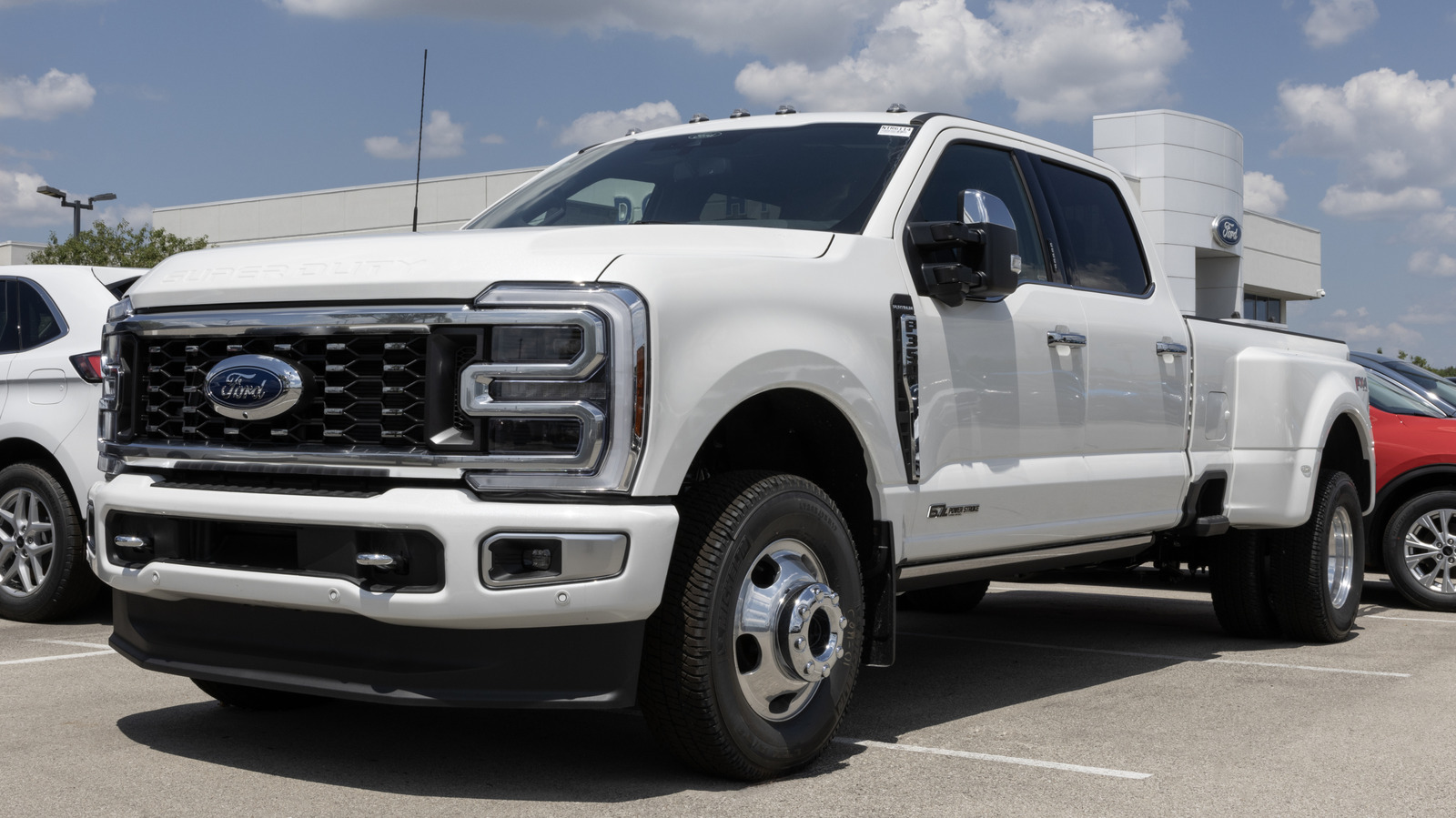
Ford's CEO stated during the earnings call that the company is working to minimize the consumer impact by prioritizing price increases on higher-margin vehicles such as the F-150, Bronco, and Explorer while holding pricing on more price-sensitive models like the Maverick and Escape. This strategy carries risk, as even affluent buyers may balk at higher prices if competing brands absorb tariffs more effectively.
Supply Chain Restructuring Plans
In response to the tariff environment, Ford has accelerated efforts to restructure its global supply chain. The company is investing in domestic supplier capacity, relocating certain component production from China to Mexico and India, and exploring alternative sourcing arrangements for critical materials.
Ford recently announced a $2 billion investment in a new battery component plant in Kentucky that will reduce the company's reliance on imported battery cells from Asia. The plant, expected to begin production in 2028, will manufacture cathode and anode materials using domestically sourced minerals. While this investment will eventually reduce Ford's tariff exposure, it provides no immediate relief.
Broader Industry Impact
Ford is not alone in facing substantial tariff costs. General Motors disclosed a $600 million estimated tariff impact during its own earnings call, while Stellantis reported $450 million in additional duties. The cumulative effect on the U.S. automotive industry is estimated at more than $3 billion annually, a cost that flows through the supply chain and ultimately reaches consumers in the form of higher vehicle prices, reduced incentives, or fewer standard features.
The trade war's impact extends beyond direct tariff costs. Uncertainty about future trade policy is delaying investment decisions, complicating long-term planning, and straining relationships between automakers and their global supplier networks. Several industry trade groups have called on the administration to negotiate targeted relief for the automotive sector, arguing that broad-based tariffs are counterproductive to the goal of strengthening domestic manufacturing.
What Comes Next
Ford's leadership has warned that the $900 million estimate could increase if additional tariff measures are imposed or if existing exemptions expire without renewal. The company is lobbying aggressively for sector-specific relief and has joined a coalition of manufacturers seeking exclusions for components that cannot be sourced domestically in the near term. For now, the tariff bill represents a harsh reality that Ford must navigate while simultaneously investing billions in its electric vehicle transition, a balancing act that will test the company's financial resilience for years to come.
This article is based on reporting by cnbc.com. Read the original article.

Originally published on cnbc.com