The Blood Moon Returns
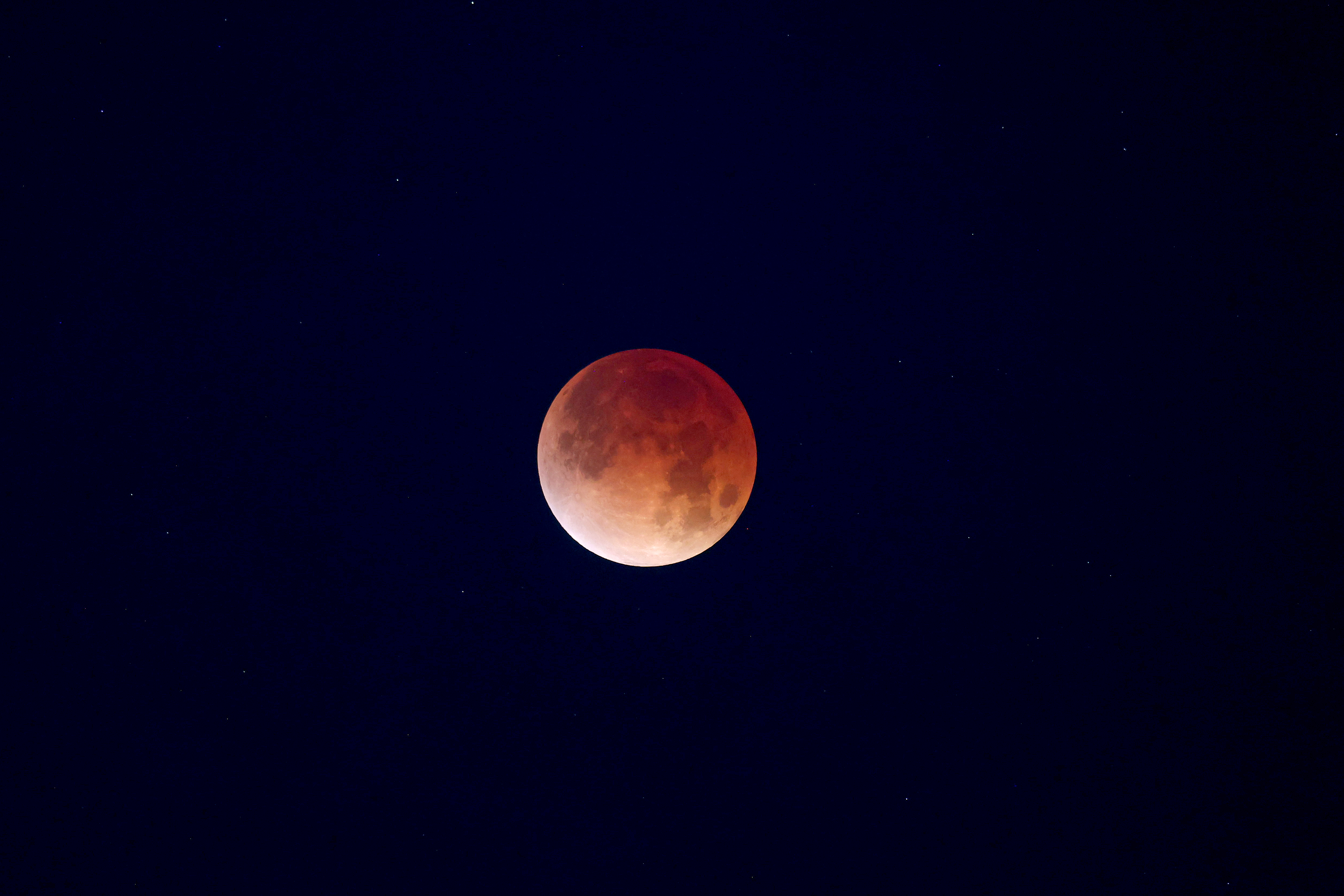
Skywatchers around the world were treated to a total lunar eclipse this week as the Moon passed completely through Earth's shadow, transforming from its usual bright silver into a deep copper-red hue that has inspired mythology and scientific curiosity for millennia. The eclipse was visible in its totality across the Americas, Europe, and parts of Africa, with partial phases observable across an even wider geographic area.
Total lunar eclipses occur when the Sun, Earth, and Moon align precisely so that Earth's shadow completely covers the lunar surface. Unlike solar eclipses, which are visible only from a narrow path on Earth's surface, lunar eclipses can be observed by anyone on the nightside of the planet, making them among the most widely shared astronomical events.
Why the Moon Turns Red
The distinctive red coloring during totality is caused by the same atmospheric phenomenon that produces red sunsets. As sunlight passes through Earth's atmosphere, shorter blue wavelengths are scattered away by air molecules while longer red wavelengths are bent around the planet and projected onto the Moon's surface. The Moon essentially glows with the light of every sunrise and sunset happening simultaneously around Earth's circumference.
The exact shade varies from eclipse to eclipse depending on atmospheric conditions. Volcanic eruptions, large wildfires, or heavy industrial pollution can inject particles into the upper atmosphere that darken the eclipse, producing a deep brownish-red or even a nearly invisible Moon. Conversely, unusually clear atmospheric conditions produce a brighter, more vivid copper-orange color. This eclipse featured a relatively bright totality, suggesting the upper atmosphere was comparatively clean of particulate interference.
Scientific Observations
While lunar eclipses are primarily a visual spectacle, they continue to provide scientific value. Astronomers use eclipses to study Earth's atmosphere from an unusual angle — by analyzing the spectrum of light that passes through the atmosphere and illuminates the Moon, researchers can characterize atmospheric composition and particulate content in ways that complement direct atmospheric measurements.
This technique has been adapted for exoplanet research. When a planet transits its host star, starlight passes through the planet's atmosphere in exactly the same way that sunlight passes through Earth's atmosphere during a lunar eclipse. By studying lunar eclipses as a test case, astronomers refine the spectroscopic methods they use to analyze the atmospheres of planets orbiting distant stars, searching for signatures of water vapor, oxygen, and other molecules that might indicate habitability.
The Eclipse Timeline
The eclipse progressed through several distinct phases over the course of approximately five hours. The penumbral phase, during which the Moon entered Earth's faint outer shadow, began subtly, with only a slight dimming visible to careful observers. The partial phase followed as the Moon entered the darker umbral shadow, producing a visible dark bite that gradually consumed the lunar disk. Totality lasted approximately one hour, during which the entire Moon was bathed in the deep red light filtered through Earth's atmosphere. The sequence then reversed as the Moon exited the shadow.
Photographers captured stunning images of the eclipse at various stages, with the most dramatic compositions showing the blood-red Moon against star fields that are normally invisible in the Moon's glare. Long-exposure images revealed the Milky Way alongside the eclipsed Moon, a combination that is only possible during totality when the Moon's brightness drops by several orders of magnitude.
Cultural and Historical Significance
Lunar eclipses have played prominent roles in human history and culture. Ancient civilizations interpreted the blood-red Moon as an omen, with accounts from Mesopotamian, Chinese, and Mesoamerican sources describing elaborate rituals performed during eclipses. Christopher Columbus famously used his foreknowledge of a lunar eclipse in 1504 to convince Indigenous Jamaicans that he controlled the Moon, leveraging European astronomical knowledge as a tool of colonial coercion.
In the modern era, lunar eclipses serve as accessible entry points for public engagement with astronomy. Unlike many astronomical events that require telescopes or specialized equipment, a total lunar eclipse is visible to the naked eye and unfolds slowly enough to be observed casually. The event this week prompted eclipse-watching gatherings at observatories, parks, and public spaces around the world, connecting millions of people with a cosmic phenomenon that has captivated humanity since the earliest recorded observations.
Looking Ahead
The next total lunar eclipse visible from the Americas is not expected until 2028, making this week's event the last opportunity for many observers to witness the phenomenon for more than two years. Partial lunar eclipses will occur in the interim, but they lack the dramatic color transformation that makes totality so compelling. For those who missed this eclipse, the wait will be worth it — the 2028 event promises an even longer period of totality.
This article is based on reporting by NASA. Read the original article.
Originally published on nasa.gov