Un nouvel outil pour l’une des plus anciennes frustrations de la topologie
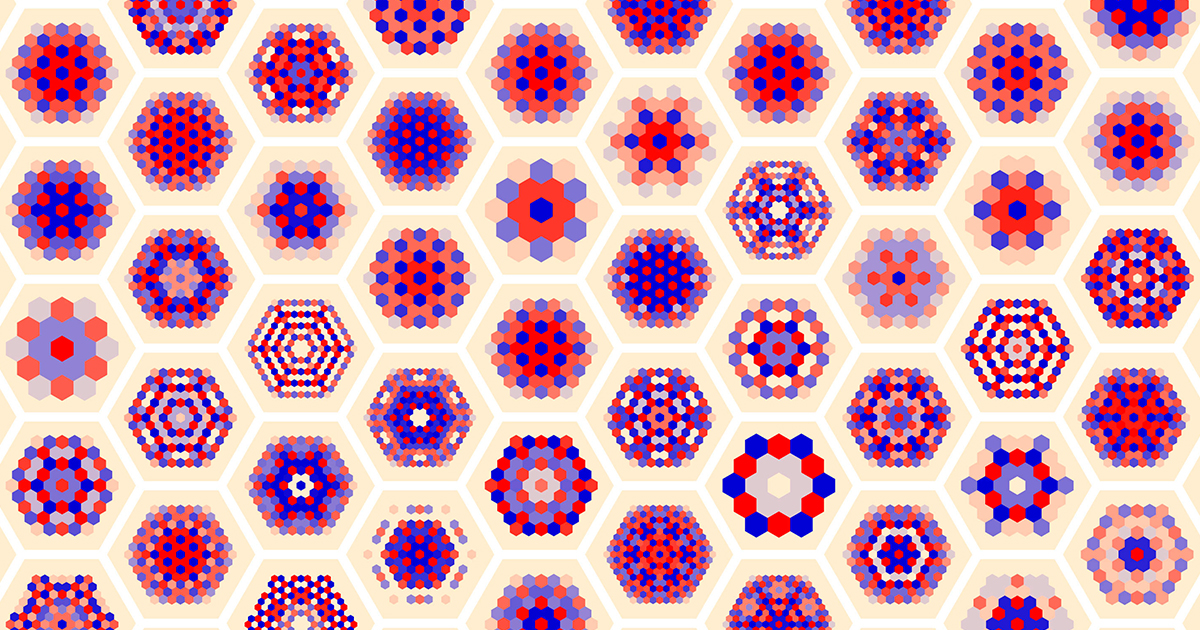
Des mathématiciens ont présenté une nouvelle manière de distinguer les nœuds, et l’idée est suffisamment parlante pour dépasser la littérature spécialisée : à chaque nœud peut être attribué un type coloré de « code QR ». Comme le rapporte Quanta Magazine, les chercheurs espèrent que cette méthode offrira un éclairage particulièrement puissant sur des nœuds compliqués qui ont longtemps résisté à une classification nette.
La théorie des nœuds peut sembler abstraite, mais elle se situe à un carrefour important entre les mathématiques pures et le monde physique. On retrouve des nœuds dans les boucles d’ADN, les chaînes polymères et les mouvements des fluides, tandis qu’en mathématiques ils structurent des questions centrales de la topologie, l’étude des formes et de la structure spatiale. Le défi est trompeusement simple à formuler. Étant donné deux objets emmêlés, comment un chercheur peut-il démontrer s’ils sont réellement différents ou simplement deux vues d’un même nœud sous-jacent ?
Pourquoi les outils existants ne suffisent pas
Au cours du siècle dernier, les théoriciens des nœuds ont constitué une boîte à outils d’« invariants », des mesures qui capturent une propriété stable d’un nœud. Si deux nœuds produisent des valeurs d’invariant différentes, ils doivent être différents. Mais s’ils produisent la même valeur, cela ne règle pas la question. Ils peuvent malgré tout être distincts. Cette certitude à sens unique a sans cesse obligé les chercheurs à trouver un équilibre entre puissance et praticité.
Comme le note Quanta, certains invariants sont puissants mais difficiles à calculer, tandis que des invariants plus simples échouent souvent à distinguer les nœuds complexes. Le problème devient particulièrement aigu lorsque le nombre de croisements augmente. Lorsqu’un nœud comporte de nombreux brins qui se superposent, les méthodes qui fonctionnent bien sur les exemples des manuels commencent à se dégrader. Dror Bar-Natan, de l’Université de Toronto, a formulé sans détour le défi informatique dans le récit de Quanta : pour de nombreux invariants, parler de centaines de croisements et de calcul pratique relève de la science-fiction.
La promesse d’un nouveau « code QR »
L’approche récemment décrite vise à modifier cet équilibre. Au lieu de fournir un simple nombre ou une signature symbolique, elle produit un objet structuré plus riche, comparé visuellement à un code QR coloré. La métaphore est importante parce qu’elle met en avant deux caractéristiques à la fois : la compacité et la densité d’information. Les chercheurs n’ajoutent pas simplement un petit ajustement au catalogue existant des invariants. Ils proposent une nouvelle représentation susceptible de porter davantage de détails discriminants tout en restant plus exploitable que certains des outils les plus puissants déjà disponibles.
C’est cette possibilité qui rend l’avancée remarquable. En théorie des nœuds, la partie la plus difficile n’est souvent pas de définir sur le papier un invariant sophistiqué, mais de calculer quelque chose de significatif avant que la complexité n’explose. Si cette nouvelle construction peut être calculée sur des classes de nœuds plus vastes que celles auxquelles le domaine est habituellement confronté, elle pourrait aider les chercheurs à trier des familles de nœuds jusque-là trop lourdes à comparer efficacement.
Pourquoi cela compte au-delà des mathématiques pures
L’application directe du résultat reste mathématique, mais la théorie des nœuds a l’habitude de quitter le tableau noir. Les molécules biologiques peuvent s’emmêler. Les polymères synthétiques peuvent former des topologies complexes. Les écoulements de fluides génèrent des structures dont le comportement peut parfois être éclairé par le langage topologique. De meilleures méthodes pour distinguer les nœuds peuvent donc affiner les outils conceptuels utilisés dans plusieurs domaines scientifiques voisins, même si le premier public visé reste celui des topologues.
Il y a aussi une leçon méthodologique. Les mathématiques modernes progressent souvent non seulement en résolvant des conjectures célèbres, mais aussi en inventant de nouvelles façons de coder la structure pour rendre les questions calculables. En ce sens, le « code QR » des nœuds s’inscrit dans une tradition plus large de création de représentations qui transforment un problème de classification insoluble en quelque chose que les chercheurs peuvent réellement manipuler, comparer et tester.
Un domaine toujours défini par la difficulté
Rien de tout cela ne signifie que le problème de la classification des nœuds soit soudain résolu. La théorie des nœuds reste pleine de cas où les apparences sont trompeuses et où la complexité s’accumule rapidement. Même de nouveaux outils puissants doivent faire leurs preuves sur de nombreux exemples avant que les mathématiciens sachent à quel point ils sont vraiment transformateurs. Mais le reportage de Quanta traduit un véritable changement de ton : il ne s’agit pas d’un simple résultat incrémental mineur, mais d’un ajout potentiellement important à l’arsenal de travail du domaine.
L’enthousiasme vient de la possibilité d’un champ d’action élargi. Un meilleur invariant fait plus que séparer un nœud d’un autre. Il change les questions que les chercheurs osent poser. Si des nœuds complexes peuvent être distingués plus fiablement et à plus grande échelle, alors les bases de données d’exemples deviennent plus informatives, les conjectures peuvent être testées de manière plus poussée et les motifs cachés au sein de familles emmêlées peuvent devenir plus faciles à voir.
Pour une discipline qui a passé des décennies à naviguer dans le compromis inconfortable entre puissance et calculabilité, cela suffit à faire d’un nouveau « code QR » coloré bien plus qu’une métaphore astucieuse. Il pourrait devenir un instrument sérieux pour démêler l’un des problèmes de classification les plus tenaces des mathématiques.
Cet article s’appuie sur un reportage de Quanta Magazine. Lire l’article original.
Originally published on quantamagazine.org