Introduction
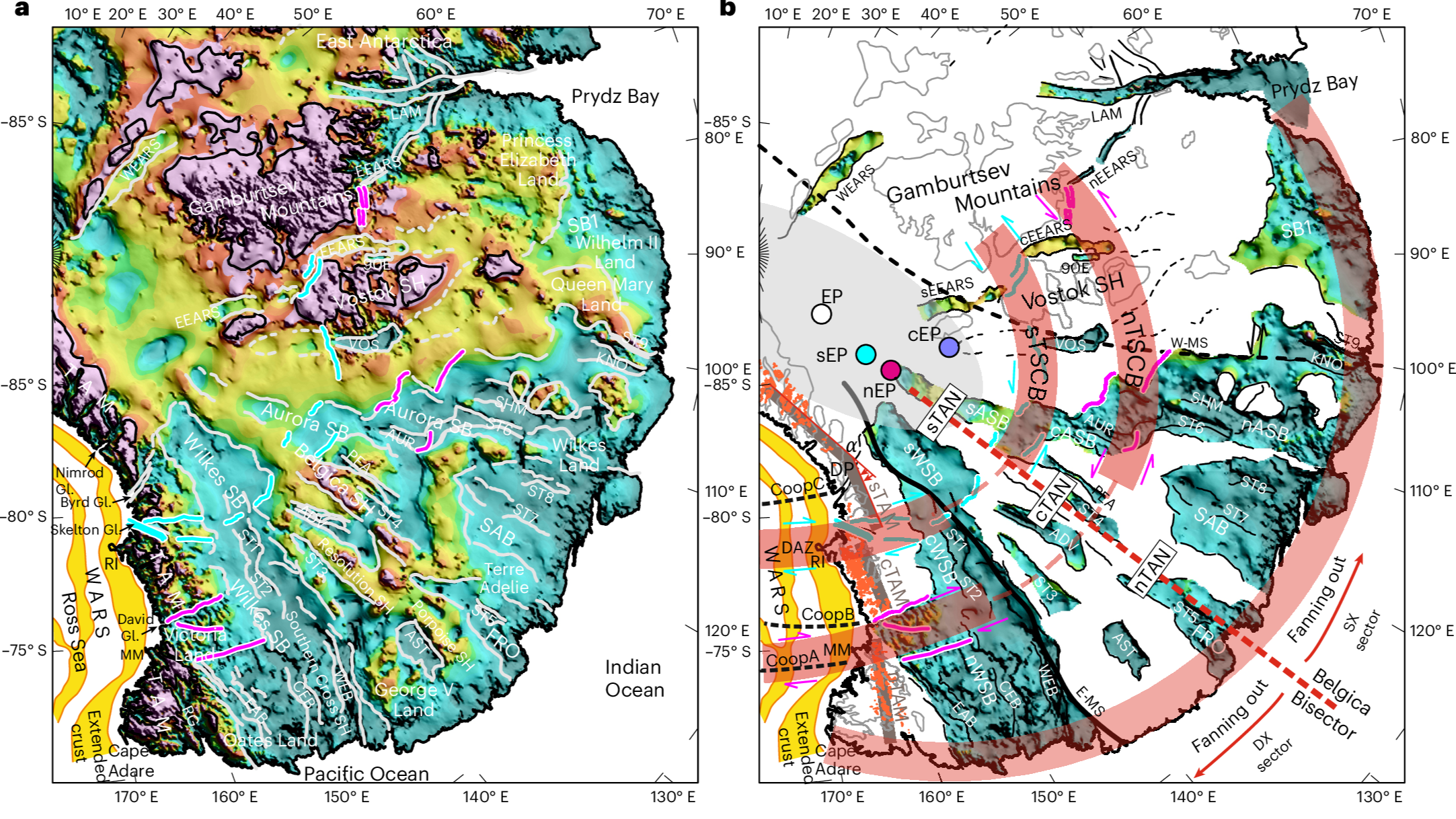
Scientists have discovered a giant, fan-shaped geological structure deep beneath the East Antarctic Ice Sheet that connects several well-known basins, revealing a previously unrecognized tectonic system. The discovery, published in the journal Nature Geoscience, sheds new light on the geological history of Antarctica and the breakup of the ancient supercontinent Gondwana.
The Discovery
Researchers from the University of Genoa in Italy, led by first author Egidio Armadillo, observed that many buried basins in East Antarctica appear to radiate from a common center. This prompted a detailed investigation using gravitational, magnetic, and seismic data, as well as models simulating the formation of the structure. The team named the feature the East Antarctic Fan-Shaped Basin Province.

Rotational Extension
The structure is the product of a tectonic process known as distributed rotational extension, where Earth's crust deforms outward from a fixed central point, similar to fingers spreading on a human hand. The gaps between these 'fingers' are triangular basins that were previously known but not recognized as part of a single system. According to Armadillo, this may be one of the largest and clearest examples of distributed rotational extension ever identified in continental crust.
Connection to Gondwana
The fan-shaped structure likely formed during the breakup of Gondwana, the supercontinent that once included Antarctica, South America, Africa, India, and Australia. The tectonic forces that tore Gondwana apart left distinct signatures in the crust, and this discovery helps explain the origins of some of East Antarctica's most prominent features, including the Wilkes and Aurora basins and the basin hosting Lake Vostok, the largest known subglacial lake on Earth.

Implications for Antarctic Geology
The finding underscores that Antarctica still holds many geological secrets beneath its thick ice cover. Understanding the structure of the continent's bedrock is crucial for predicting ice sheet behavior and assessing the potential for future ice loss. The study also highlights the value of integrating multiple geophysical datasets to reveal hidden features.
Future Research
The researchers plan to further investigate the timing of the rotational extension and its relationship to other tectonic events in the region. The discovery opens new avenues for studying how continental rifting processes shape the Earth's surface, even in the most remote and inaccessible areas.

Conclusion
The identification of the East Antarctic Fan-Shaped Basin Province marks a significant advance in our understanding of Antarctic geology. It demonstrates that large-scale tectonic features can remain hidden beneath ice sheets for millions of years, awaiting discovery through innovative analysis of geophysical data.
This article is based on reporting by Live Science. Read the original article.
Originally published on livescience.com