Space station technology is becoming a second product line
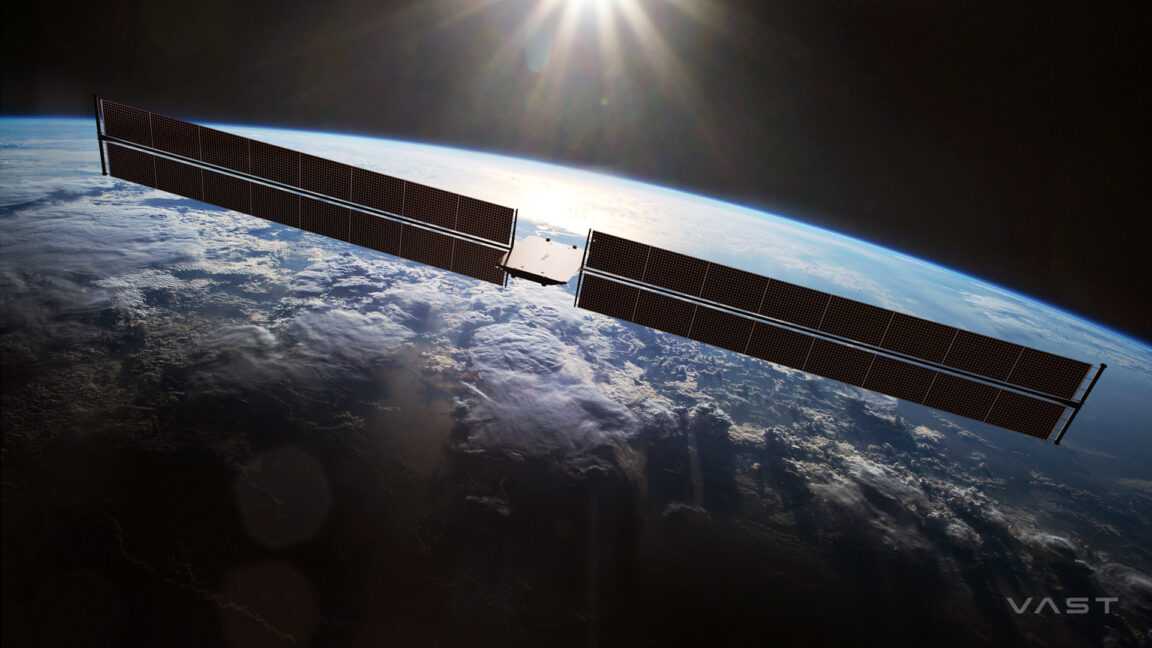
Vast Space, best known for its private space station ambitions, is broadening its business into high-power satellites. The company announced that it plans to sell a 15 kilowatt-class satellite bus derived largely from technologies it has been developing for its Haven-1 station program, marking a strategic shift from a single flagship destination product toward a more diversified spacecraft business.
The move reflects a familiar lesson in commercial space: major platform technologies often become more valuable when they can support multiple revenue streams. Vast chief executive Max Haot framed the decision directly, saying successful space companies diversify their products and that the question for Vast was when, not whether, to do so.
What Vast is offering
The company’s first satellite product is a 15 kW-class bus intended for power-hungry missions. According to the source text, each satellite will be roughly 3 meters long, 4 meters tall, weigh 700 kilograms and carry at least 350 kilograms of payload. Design lifetime is listed at five years, with operations ranging from low Earth orbit out to lunar orbit.
That specification places the product in a segment aimed at more demanding commercial and infrastructure missions than the smaller buses that dominate many current constellations. Vast says it wants to serve telecommunications, observation and data-services customers. It also plans to offer an NVIDIA Space-1 Vera Rubin Module to support orbital data-center inferencing needs, indicating that the company sees AI-linked compute as a future use case in space-based platforms.

Why the station program matters
The satellite bus is not being developed from scratch. Vast says the design will rely heavily on technologies proven or advanced through its Haven-1 program. That includes subsystems associated with power, propulsion, tracking and other spacecraft functions that were exercised on a small demonstration mission launched in November. According to the company, that test vehicle completed dozens of objectives successfully before de-orbiting three months later.
For a younger space company, that matters in two ways. First, it reduces the need to build a wholly separate engineering base for satellites. Second, it turns the station effort from a capital-intensive moonshot into a technology incubator with nearer-term product opportunities. If a company can reuse its avionics, power architecture and operational knowledge across several spacecraft types, the economics improve.
Vast still needs to build some new hardware for the satellite bus, including in-house electric propulsion and deployable solar arrays. Even so, the overlap with Haven-1 gives the new line a stronger industrial logic than a pure adjacency play would have.
An early customer, and an ambitious ramp
Vast says it has already signed a customer for four satellites, along with an option for up to 200 more. The company is targeting the launch of at least 10 satellites in the fourth quarter of 2027.
Those figures suggest the announcement is more than a branding exercise. At the same time, the option structure leaves room for uncertainty. Commercial space customers frequently sign framework deals that depend on financing, launch access, performance milestones or market demand. The source text does not identify the buyer, so the scale and firmness of that pipeline are still hard to judge externally.
Still, even a modest initial order would give Vast a concrete route into a market that can generate revenue earlier and more repeatedly than station missions, which are complex, infrequent and vulnerable to schedule slip.

The market is crowded, but not closed
Vast is entering a competitive satellite-bus market. Established aerospace contractors and a newer generation of commercial manufacturers already offer buses across size classes and mission profiles. Differentiation will depend on performance, delivery speed, price and the ability to tailor systems for specific payload needs.
Vast appears to be positioning around higher power and architectural reuse from its station work. The reference to operations extending out to lunar orbit also hints at an ambition to serve cislunar missions, an area expected to grow if government and commercial lunar programs continue expanding. Whether demand materializes at scale is another question, but the operating envelope is broader than a typical low-Earth-orbit-only product pitch.
What this says about the private-space-station market
The announcement is also revealing in a different way: it underscores how uncertain and long-horizon the private space station business remains. Building a station can be technically exciting and strategically important, but it is difficult to rely on as the sole commercial engine for a company. Diversification is therefore not just opportunistic. It is a risk-management strategy.
By moving into satellites, Vast can monetize core engineering capabilities without waiting entirely on the timing of orbital destinations, crew demand or future NASA and private-customer station traffic. In that sense, the new product line may strengthen the company’s station ambitions rather than distract from them. More revenue options can support the same industrial base.
A test of whether platform reuse can scale
The larger question is execution. Vast now has to prove that station-derived technology can become a competitive satellite platform, that it can manufacture at meaningful cadence, and that enough customers want a 15 kW-class bus to sustain the business. Those are nontrivial hurdles.
But the strategy is coherent. Instead of treating Haven-1 as an isolated project, Vast is trying to turn it into a technology foundation. If that works, the company could become more than a station developer. It could become a broader spacecraft supplier serving communications, observation, compute and possibly lunar missions.
Commercial space has repeatedly shown that the companies with the best survival odds are the ones that can repurpose hard-won hardware into multiple lines of business. Vast is now trying to do exactly that, and its new satellite bus is the clearest sign yet that the company sees its future as a diversified spacecraft maker, not only as a host in orbit.
This article is based on reporting by Ars Technica. Read the original article.
Originally published on arstechnica.com