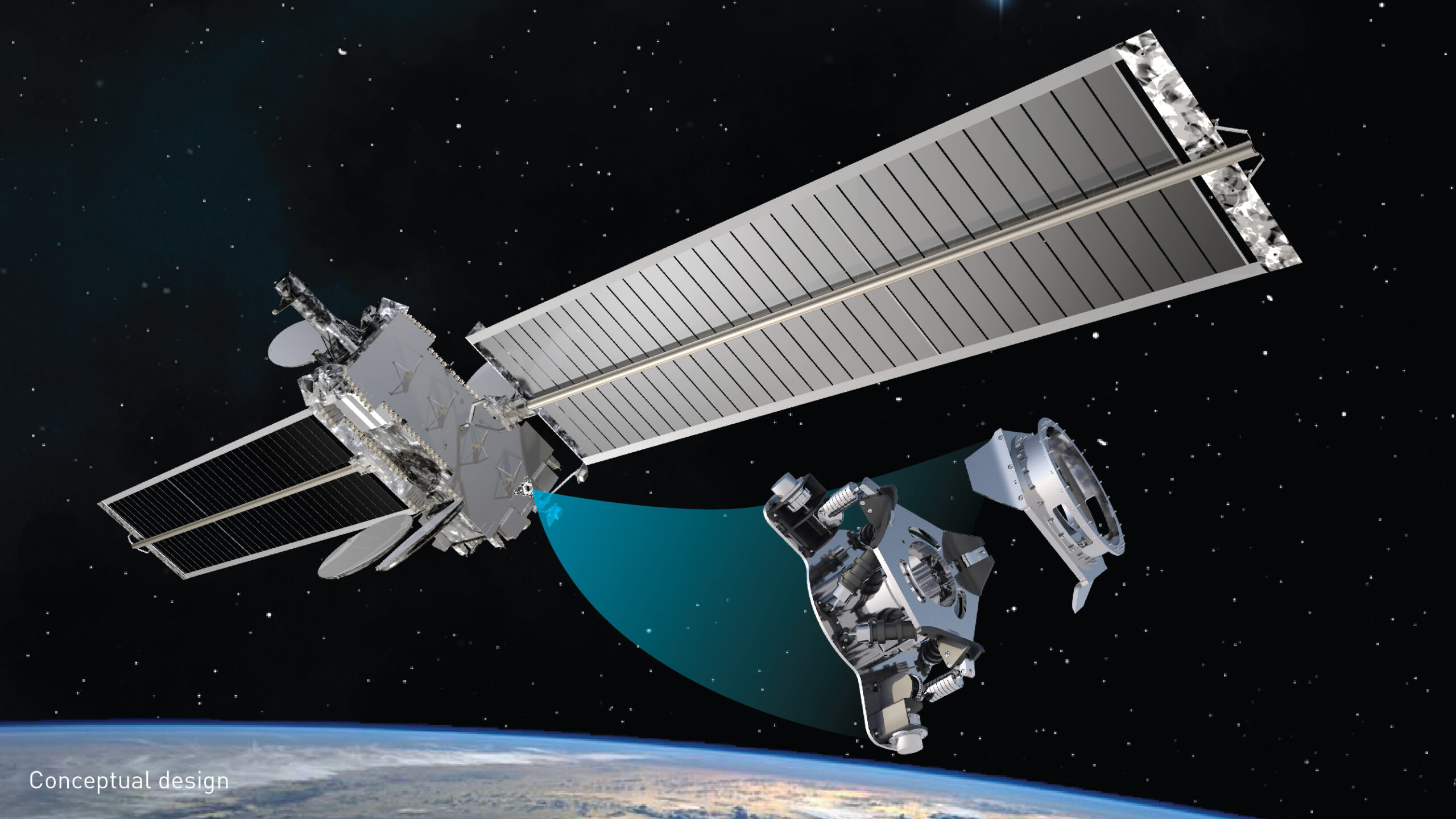
La mobilité spatiale passe du débat à la doctrine
Après des années d’hésitation sur la valeur militaire à court terme de la mobilité des satellites, la Force spatiale américaine place désormais la manœuvrabilité et la logistique beaucoup plus au centre de sa planification future. Selon le texte source fourni, le chef des opérations spatiales, le général Chance Saltzman, a déclaré que le service travaillait étroitement avec le Commandement spatial américain sur la guerre orbitale et sur les technologies et concepts opérationnels nécessaires à la manœuvre en orbite et au ravitaillement des satellites.
Ce changement est important, car la question n’est plus de savoir si la mobilité dans l’espace est un concept technique intéressant. Elle est traitée comme un enjeu central de planification au sein de l’effort « Objective Force » sur 15 ans du service. Le rapport fourni relie cette évolution à une réévaluation plus large de la manière dont les États-Unis entendent rivaliser dans un environnement spatial où des adversaires pourraient chercher à dégrader ou perturber les capacités américaines.
Le message des responsables de haut niveau devient de plus en plus direct: dans l’espace, la manœuvre pourrait devenir aussi importante qu’elle l’est déjà dans les autres domaines militaires. Le chef du Commandement spatial, le général Stephen Whiting, cité dans la source, a appelé à une nouvelle stratégie de guerre de manœuvre spatiale et a soutenu que la force interarmées américaine devrait transposer dans le domaine spatial sa force traditionnelle à déjouer les adversaires.
Ce qu’indiquent réellement les nouveaux documents de planification
L’article indique que la Force spatiale a publié à la fois son Future Operating Environment et son plan Objective Force, exposant les menaces et les besoins futurs par tranches de cinq ans jusqu’en 2040. Ces documents doivent orienter les décisions concernant l’équipement, le personnel, les infrastructures, la formation et les acquisitions.
Ce qui ressort dans le texte fourni est la formulation concernant les architectures futures. Le plan Objective Force affirme que, puisque les concurrents cherchent à dégrader les capacités spatiales américaines, les architectures spatiales les plus performantes seront conçues pour inclure des plates-formes manœuvrables et réparables. Il s’agit d’une évolution notable par rapport à une posture dans laquelle la mobilité était souvent jugée intéressante, mais non urgente.
Le plan prévoit également de démontrer le ravitaillement en orbite et de déployer des « space tugs » opérationnels entre 2025 et 2030, selon les métadonnées fournies et la source. Ce calendrier suggère que le service cherche à combler l’écart entre le développement du concept et la mise en service concrète, plutôt que de laisser la logistique et la maintenance au stade purement expérimental.
Le langage de Saltzman montre un soutien, mais aussi de la prudence
Tout en approuvant cette orientation, les propos de Saltzman dans la source montrent que la Force spatiale voit encore de nombreuses questions sans réponse. Il a approuvé la nécessité d’une force de manœuvre, mais a cadré l’étape suivante autour de l’analyse: modélisation, simulation, arbitrages et conséquences sur la conception de la force.
Le point est important, car la mobilité n’est pas seulement une question matérielle. Si les satellites peuvent manœuvrer plus librement ou être entretenus en orbite, les hypothèses de structure des forces pourraient changer. Le nombre de plates-formes nécessaires, leur durée de vie attendue, la manière de les soutenir et la logistique requise pourraient tous évoluer. Les propos de Saltzman suggèrent que le service ne prétend pas que ces réponses soient tranchées. Au contraire, il utilise le plan Objective Force pour mettre ces questions au grand jour.
Le rapport indique que la Force spatiale travaillera avec le Commandement spatial américain sur des jeux de guerre, la modélisation, la simulation, l’analyse continue et l’affinement. Ce langage renvoie à une institution militaire qui tente de transformer un plaidoyer en une architecture défendable sur le plan programmatique.
Pourquoi le ravitaillement et la maintenance comptent
La conception traditionnelle des satellites a souvent traité les actifs orbitaux comme des systèmes relativement statiques, avec des consommables limités et une capacité d’adaptation réduite une fois déployés. Le concept désormais avancé est différent. Une plate-forme manœuvrable et réparable peut potentiellement se repositionner, durer plus longtemps et répondre plus souplement aux besoins opérationnels.
Le ravitaillement est au cœur de cette logique. Sans lui, la manœuvre reste contrainte par la quantité finie de propergol à bord. Avec lui, l’équation change. Un satellite peut rester pertinent plus longtemps, se déplacer plus souvent ou soutenir des missions qui seraient autrement impraticables.
La mention des « space tugs » renforce cette vision logistique plus large. En pratique, cela implique une couche de soutien orbital plutôt qu’un ensemble de vaisseaux isolés. La Force spatiale ne pense pas seulement à des satellites qui exécutent des missions, mais à des véhicules qui aident d’autres satellites à se déplacer, à durer ou à être entretenus.
La guerre orbitale devient un cadre de planification
Le texte fourni montre clairement que la Force spatiale s’aligne de plus en plus sur la vision du Commandement spatial selon laquelle la manœuvre en orbite fait partie intégrante des opérations futures. Ce changement de rhétorique est important, car la résistance organisationnelle a souvent ralenti l’adoption de nouveaux concepts opérationnels, même lorsque la trajectoire technologique était favorable.
Ce qui change désormais, ce n’est pas seulement l’intérêt porté au matériel, mais aussi le cadrage institutionnel. Le service semble passer du scepticisme sur l’utilité militaire à l’idée que la manœuvrabilité et la logistique peuvent façonner l’architecture des futures opérations spatiales.
Cela ne signifie pas qu’une réponse définitive soit déjà là. La source insiste à plusieurs reprises sur les questions non résolues et sur la nécessité d’une analyse itérative. Mais la direction est sans ambiguïté. La mobilité spatiale n’est plus traitée comme un sujet périphérique. Elle devient partie intégrante de la manière dont la Force spatiale décrit l’avenir même de la guerre orbitale.
Cet article s’appuie sur un reportage de Breaking Defense. Lire l’article original.
Originally published on breakingdefense.com