A Helicopter Without a Pilot Seat
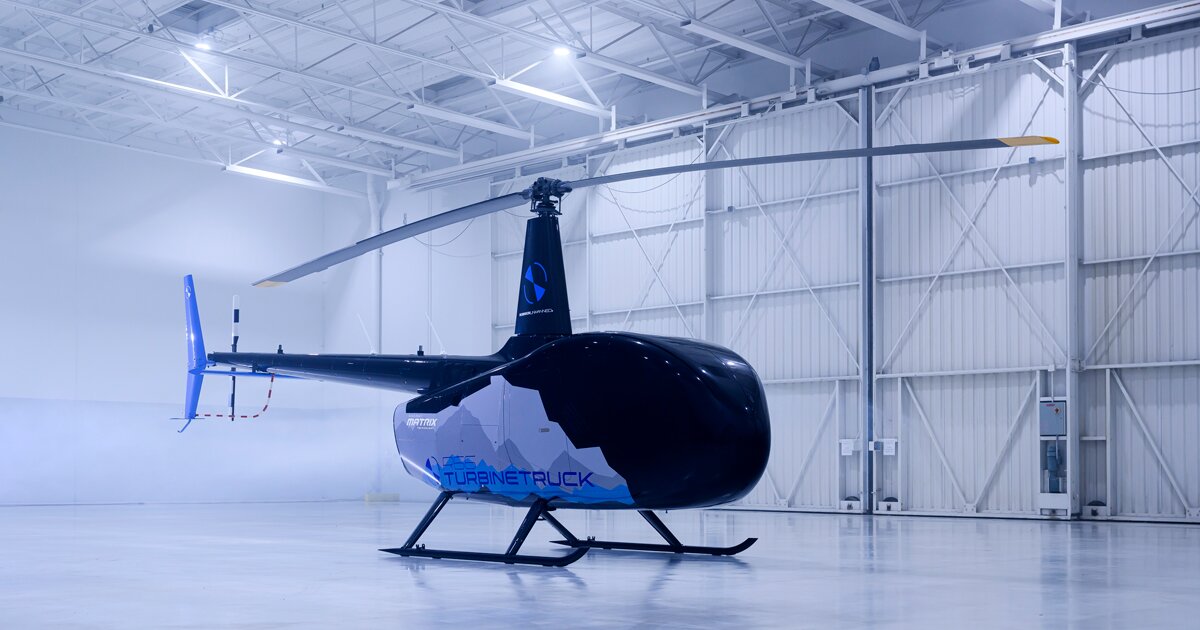
At first glance, Robinson's R66 Turbinetruck looks like any other light cargo helicopter. It has the familiar turbine engine, the standard rotor configuration, the compact fuselage typical of the R66 platform that has been a staple of light aviation for years. But something is conspicuously absent. Where a cockpit should be — with its windshield, instrument panel, and pilot seats — there is instead a pair of clamshell cargo doors and empty space waiting to be filled with freight.
The R66 Turbinetruck, developed by Sikorsky subsidiary Robinson Helicopter Company, represents a growing trend in aviation: converting proven manned aircraft platforms into autonomous cargo carriers. Rather than designing an entirely new airframe from scratch, the company stripped the cockpit from its well-established R66 Turbine helicopter and replaced it with a cargo compartment, creating what it describes as a purpose-built unmanned logistics platform.
Design Philosophy and Specifications
The decision to remove the cockpit rather than simply add autonomous capability to an existing manned helicopter reflects a pragmatic engineering choice. Without the weight and volume consumed by pilot seats, flight controls, instrument panels, and cockpit glazing, the Turbinetruck can carry significantly more cargo in a smaller overall package. The clamshell doors on the nose provide easy loading access, and the cargo bay extends into what was previously the forward fuselage.
The aircraft retains the R66's Rolls-Royce RR300 turboshaft engine, which provides reliable power in a compact, well-proven package. The autonomous flight system handles all aspects of navigation, obstacle avoidance, and landing, using a combination of GPS, lidar, and computer vision sensors mounted where the windshield once was.
Robinson has not disclosed exact payload figures for the Turbinetruck, but the standard manned R66 has a useful load of approximately 500 kilograms. Removing the cockpit and pilot weight likely increases this figure, though the autonomous flight system and additional sensors partially offset the savings.

Military Applications Drive Development
The primary market for the Turbinetruck is military logistics. Modern military operations consume enormous quantities of supplies — ammunition, food, water, medical equipment, spare parts — and moving these supplies to forward operating bases and front-line positions is one of the most dangerous tasks in any conflict. Convoy resupply missions are frequent targets for ambushes and improvised explosive devices, and manned helicopter resupply missions put aircrew at risk.
An autonomous cargo helicopter eliminates the human risk from resupply missions entirely. It can fly at night, in poor weather, and into contested airspace without risking a pilot's life. If the aircraft is lost to enemy fire, the cost is purely financial rather than human. This calculus has driven intense military interest in autonomous logistics aircraft, with programs across multiple branches of the US armed forces and allied nations.
The Turbinetruck enters a competitive field. Kaman's K-MAX unmanned helicopter has already demonstrated autonomous cargo delivery in Afghanistan, and several companies are developing purpose-built autonomous cargo drones. Robinson's advantage lies in the R66 platform's existing supply chain, maintenance infrastructure, and global fleet of trained mechanics who already know the airframe.
Commercial Potential Beyond the Battlefield
While military logistics is the initial target, the Turbinetruck's commercial potential extends far beyond defense applications. Remote mining operations, offshore oil platforms, disaster relief operations, and rural healthcare delivery all require moving supplies to locations that are difficult or dangerous to reach by ground transportation.
In Australia, for example, vast distances between remote communities make helicopter resupply a routine part of life. An autonomous cargo helicopter could reduce the cost and increase the reliability of these essential supply chains. Similarly, island nations in the Pacific and Southeast Asia face persistent challenges in moving goods between scattered communities, a role well-suited to autonomous rotorcraft.
The agricultural sector represents another potential market. Precision agriculture increasingly relies on aerial application of fertilizers, pesticides, and seeds, and autonomous helicopters could perform these tasks more efficiently and safely than manned aircraft.

Regulatory Hurdles and the Path Forward
The biggest obstacle facing the Turbinetruck is not technology but regulation. Aviation authorities worldwide are still developing frameworks for certifying autonomous aircraft operations, particularly in airspace shared with manned aircraft. The Federal Aviation Administration in the United States and the European Union Aviation Safety Agency have both initiated rulemaking processes, but final regulations are likely years away.
Robinson is positioning the Turbinetruck for initial deployment in military contexts, where regulatory requirements are different and the operational need is most urgent. Commercial certification is expected to follow as regulatory frameworks mature and the aircraft accumulates operational experience in military service.
The R66 Turbinetruck may not be the most technically ambitious autonomous aircraft project in development, but its pragmatic approach — building on a proven platform with an established support network — gives it a clear path to operational deployment that more exotic designs may struggle to match.
This article is based on reporting by New Atlas. Read the original article.
Originally published on newatlas.com