A resignation after an exam-security crisis
South Korea’s education minister, Choi Kyo-jin, has resigned after an AI-assisted cheating scandal disrupted preparations for the country’s high-stakes university entrance examinations.
Choi said he accepted responsibility for a failure to prepare adequately in advance, despite the exam concluding without what he described as major incidents. President Lee Jae Myung accepted the resignation, according to the presidential office.
The episode has brought a familiar concern into unusually concrete focus: as compact cameras, smartphones and AI tools become easier to conceal and use, institutions that depend on controlled testing environments face a widening security problem.
A confession triggered a rapid response
Public concern intensified after the top scorer in a national tax accountancy examination confessed to using a miniature camera and smartphone to obtain a near-perfect score. The confession came four days before the university entrance examination, known as the suneung.
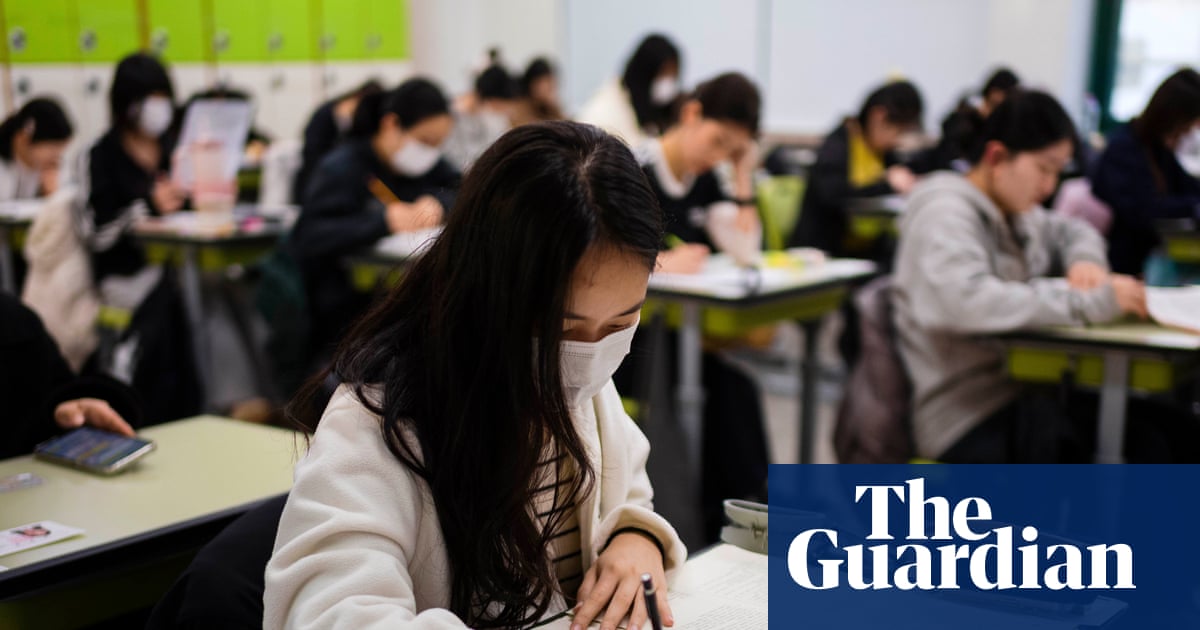
Officials moved quickly to introduce preventive measures for the university test. They blocked public Wi-Fi in testing areas, doubled the number of supervisors and issued emergency alerts intended to identify smartphones brought into exam centres.
Students were instructed to arrive with pencils only. Testing centres supplied erasers, reducing opportunities for concealed digital devices to be disguised as stationery. Candidates were also asked not to wear clothing with buttons; those who did not comply were told stickers could be placed over the buttons to prevent the use of hidden cameras.
Authorities raise the stakes for misconduct
The government also offered a reward of at least $75,000 for information about cheating or misconduct. It said people who reported accomplices could receive reduced penalties.
These measures show how rapidly the response escalated after the accountancy-exam case became public. Rather than concentrating only on conventional prohibited items, the precautions addressed communications networks, wearable or concealed hardware, and ordinary objects that might be adapted to hide technology.
The scramble also drew criticism. Teachers’ unions said the government’s response had come too late, while the minister’s resignation acknowledged the public anger over whether authorities had anticipated the risk before the exam period.
AI changes the nature of test security
The reporting does not establish that AI-assisted cheating occurred during the suneung itself. It does show that the fear of AI-enabled cheating was central to the pressure surrounding the exam, and that the government treated the risk as serious enough to deploy emergency procedures nationwide.
AI tools can make external assistance more useful when a test-taker can discreetly transmit a question or image. In that setting, exam integrity no longer depends only on preventing a student from carrying notes into a room. It also depends on detecting miniature capture devices, limiting access to networks and controlling the objects candidates can bring inside.
South Korea’s measures were therefore physical as well as digital. The controls around Wi-Fi, phones, supervision, stationery and clothing were aimed at interrupting the chain from capture to transmission to outside assistance.
What comes next
The suneung finished without major reported incidents, but the political consequences were immediate. Choi’s resignation places responsibility for preparedness at the ministerial level and leaves authorities with the larger question of how to create durable rules for future examinations.
For schools and testing agencies, the challenge is likely to extend beyond any single tool or device. Policies will need to account for technologies that are increasingly small, connected and capable of providing rapid assistance. At the same time, intensive screening requirements can place new burdens on students and exam staff.
The South Korean response illustrates how a cheating scandal can swiftly become a governance issue when it affects a nationally consequential examination. The immediate security measures may have contained the most urgent concerns, but the resignation underscores that public confidence will depend on whether future safeguards are planned before—not during—the next exam cycle.
Key developments
- Education minister Choi Kyo-jin resigned after the AI-assisted cheating scandal.
- The scandal followed a tax-accountancy exam top scorer’s confession to using a miniature camera and smartphone.
- Authorities blocked public Wi-Fi, increased supervision and tightened rules on devices, stationery and clothing.
- President Lee Jae Myung accepted the minister’s resignation.
This article is based on reporting by The Guardian. Read the original article.

Originally published on theguardian.com