
The International Committee of the Red Cross and human-rights groups are warning that international diplomacy is moving too slowly to govern autonomous weapons as artificial intelligence becomes more deeply embedded in military systems.
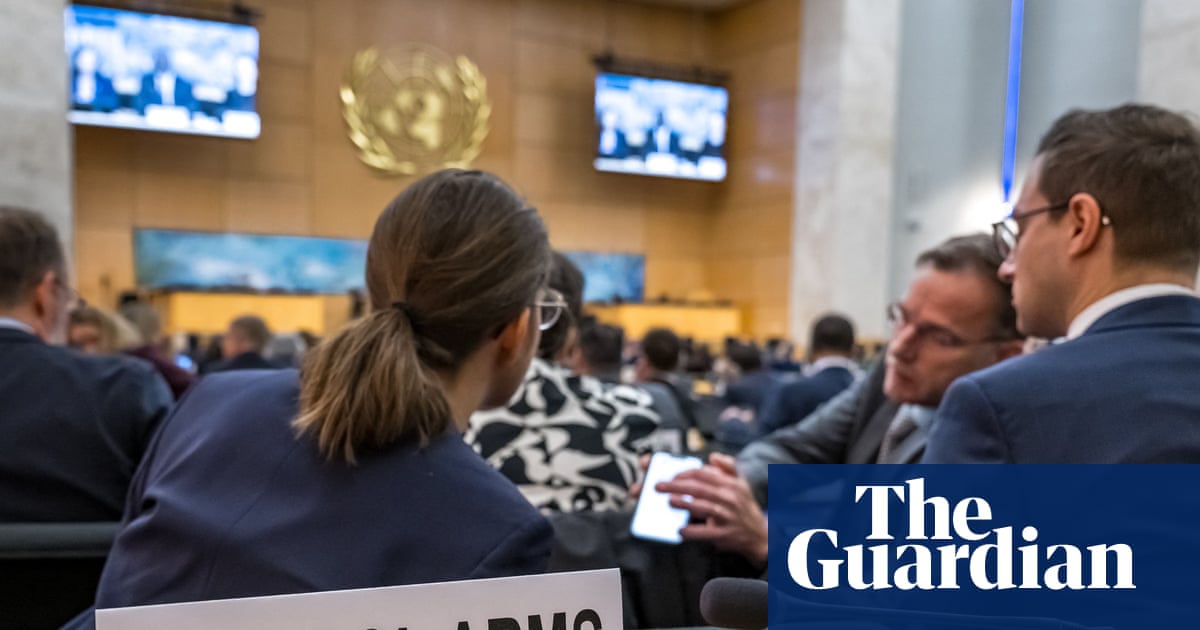
The warning followed a week-long meeting in Geneva of more than 120 states participating in the UN Convention on Certain Conventional Weapons. The gathering ended without agreement on a new regulatory instrument, despite pressure from advocates who say governments need to move faster.
A widening gap between capability and rules
Autonomous weapons are systems that can act without direct human supervision, often through AI or robotics. Their development has become a central concern for humanitarian organizations because the systems could influence or carry out decisions with life-and-death consequences.
Dr Cordula Droege, the ICRC’s director of international law, movement and partnerships, said AI is beginning to be fielded on battlefields and may already be incorporated into weapon systems. Leaving the technology unregulated, she warned, would make it increasingly difficult to impose limits later.
The concern is not confined to a distant or hypothetical generation of weapons. The source text points to AI’s use in producing target banks by the Israeli military in Gaza and to semi-autonomous drones in Russia’s war against Ukraine. Some drones have what is described as “last-mile” capability, in which AI takes over during a weapon’s final approach to a target.
Those examples illustrate why the debate has become more urgent. AI can support military planning, sensing and navigation, but its growing role also raises questions about human control, predictability and accountability. The ICRC’s position is that rules should be established before the technology becomes too widely embedded in armed forces and procurement programs.

What the ICRC wants governments to do
The president of the ICRC, Mirjana Spoljaric Egger, and UN secretary-general António Guterres have called for a legally binding instrument setting clear prohibitions and restrictions for autonomous weapons.
The ICRC has specifically called for a ban on autonomous weapons used against people. It has also argued that weapon systems must behave predictably and that their use should be limited, including by restricting them to military objectives.
These proposals focus on several practical questions. A ban on systems directed at personnel would place a bright line around the use of autonomy in decisions affecting individuals. Requirements for predictable behavior would seek to limit systems that may act in unexpected ways in complex environments. Restrictions tied to military objectives would aim to connect any use of the technology to existing humanitarian-law principles.
Diplomacy continues, but no decisive breakthrough
The Geneva conference did not produce the urgent action advocates wanted. According to the report, states fell short of agreeing to discuss a regulatory instrument over the next two years. That outcome leaves the issue in ongoing international debate while research, testing and deployment continue.
For supporters of binding rules, the process matters because standards created after a technology is entrenched may be harder to enforce. The ICRC’s “genie back in the bottle” warning captures that concern: once systems are widely adopted, national security arguments, industrial investment and military reliance can make international restraint more difficult to negotiate.
Why the issue reaches beyond a single weapon
The policy debate is not solely about whether a machine fires a weapon on its own. It concerns how AI is introduced across a chain of military activity, from generating information and target options to navigation and engagement. As autonomy expands, the distinction between decision-support software and systems acting without human supervision may become more consequential for commanders, regulators and the public.
The ICRC and rights groups are pressing governments to address that trajectory now. Their warning is that international law and political agreements should shape the conditions under which such systems are developed and used, rather than attempting to catch up after their deployment has become routine.
The Geneva meeting shows that broad concern does not automatically translate into a shared legal response. More than 120 states were represented, yet the group did not reach agreement on the next formal step advocates sought. The result is a policy gap at a time when AI-enabled military capabilities are advancing quickly.
What to watch next
- Whether states return to the Convention on Certain Conventional Weapons process with support for a binding instrument.
- Whether governments endorse prohibitions on autonomous weapons used against people.
- How future proposals define meaningful human control, predictability and limits on targets.
- Whether battlefield use of AI-enabled systems increases pressure for international rules.
For now, the ICRC’s message is straightforward: the window for setting limits is narrowing. The organization and allied rights groups argue that the pace of autonomous-weapons development makes delay itself a meaningful policy choice.
This article is based on reporting by The Guardian. Read the original article.
Originally published on theguardian.com