Una Toma, Muchos Autos
La infraestructura pública de carga de EV está mejorando, pero la carga doméstica —el modo dominante para la mayoría de los propietarios de EV— enfrenta limitaciones prácticas que una nueva patente de General Motors tiene como objetivo abordar. El problema central: la mayoría de los hogares tienen uno o dos circuitos capaces de carga Nivel 2, pero los hogares con múltiples EV son cada vez más comunes. Cuando dos o tres vehículos eléctricos necesitan cargarse durante la noche, administrar esa carga de manera eficiente con la infraestructura existente requiere coordinación manual o costosas actualizaciones eléctricas.
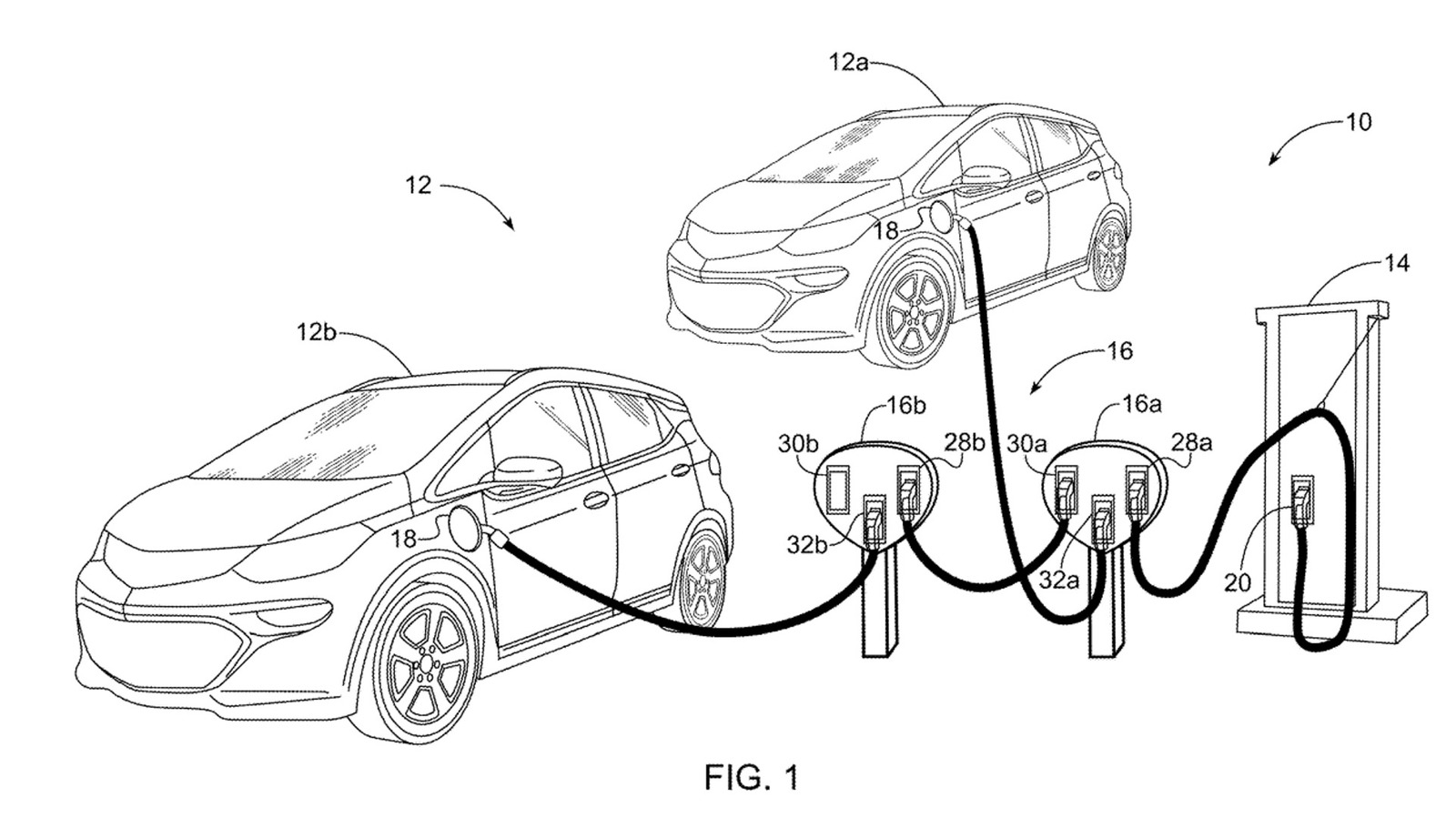
El sistema de carga de "cadena de margarita" patentado por GM conecta múltiples vehículos a través de una única unidad de suministro de energía, con distribución de energía inteligente que enruta la corriente de carga a cada auto en función de sus necesidades. El sistema está diseñado para optimizar el orden y la velocidad de carga en vehículos conectados, minimizando el tiempo total de carga mientras se mantiene dentro de los límites de potencia del circuito.
Cómo Funciona la Cadena de Margarita
En la configuración estándar, una unidad de cargador primario se conecta al panel eléctrico y se comunica con una red de nodos de carga secundarios, cada uno conectado a un vehículo. La unidad primaria monitorea el estado de carga, los requisitos de voltaje y las condiciones térmicas de cada vehículo conectado y asigna dinámicamente la energía en consecuencia.
La arquitectura de "cadena de margarita" significa que los nodos secundarios se conectan no solo a la unidad primaria sino potencialmente entre sí en serie, lo que permite reconfigurar la ruta de energía en función de qué vehículos necesitan cargarse con mayor urgencia. Un vehículo con una batería casi completamente descargada podría recibir la corriente disponible completa hasta que alcance un estado de carga seguro, después de lo cual la energía se redistribuye a los otros vehículos.
La patente de GM describe algoritmos que determinan la secuencia de carga óptima y la asignación de velocidad, teniendo en cuenta factores que incluyen tiempos de salida ingresados por el usuario, temperaturas actuales de la batería y compatibilidad de voltaje de cada vehículo.
El Problema del Hogar Multi-EV
La patente aborda un desafío real y creciente. A medida que aumenta la adopción de EV, los hogares con dos o más vehículos eléctricos se están volviendo comunes, particularmente en EE.UU., donde el transporte dependiente de automóviles significa que la mayoría de los hogares necesitan al menos dos vehículos. Un panel residencial típico de EE.UU. soporta 200 amperios de servicio. Un único cargador Nivel 2 de 48 amperios representa una fracción significativa de esa capacidad. Ejecutar dos simultáneamente puede estresar el panel y arriesgar el disparo del disyuntor principal. El sistema de cadena de margarita permite que múltiples vehículos compartan un circuito de alta potencia de manera inteligente en lugar de competir por la corriente.
Implicaciones para el Costo de Instalación en el Hogar
Uno de los beneficios prácticos del enfoque de cadena de margarita es que podría reducir significativamente el trabajo eléctrico requerido para hogares multi-EV. Actualmente, agregar un segundo o tercer cargador de EV típicamente requiere ejecutar circuitos adicionales, potencialmente actualizar el panel e incurrir en varios miles de dólares en honorarios de electricista. Un sistema de cadena de margarita que permite que múltiples nodos de carga compartan un circuito único reduce tanto la complejidad de instalación como el costo.
El costo de la infraestructura de carga doméstica es una barrera documentada para la adopción de EV, particularmente en viviendas más antiguas donde las actualizaciones de panel son costosas. Simplificar la carga de vehículos múltiples elimina un punto de fricción para los compradores que consideran su segundo o tercer EV.
Cronograma de Patente a Producto
Las patentes representan posibilidades futuras en lugar de productos confirmados. GM presenta cientos de patentes anualmente, y solo una fracción se convierte en productos comerciales en cronogramas predecibles. Sin embargo, el sistema de carga de cadena de margarita aborda un problema que está creciendo en importancia práctica a medida que aumentan las tasas de adopción de EV, lo que lo convierte en una aplicación comercialmente plausible en lugar de tecnología especulativa.
Si GM lleva la tecnología al mercado —ya sea como un producto de carga doméstica de marca GM o a través de licencias a fabricantes de equipos de carga— agregará una capacidad práctica significativa al ecosistema de EV. La tendencia más amplia hacia la gestión inteligente de la energía doméstica significa que este tipo de distribución de carga dinámica probablemente aparezca en el mercado de alguna forma, ya sea de GM o de un competidor.
Este artículo se basa en reportajes de Jalopnik. Lee el artículo original.
Originally published on jalopnik.com