Introduction: The Quest for Cosmic Dawn
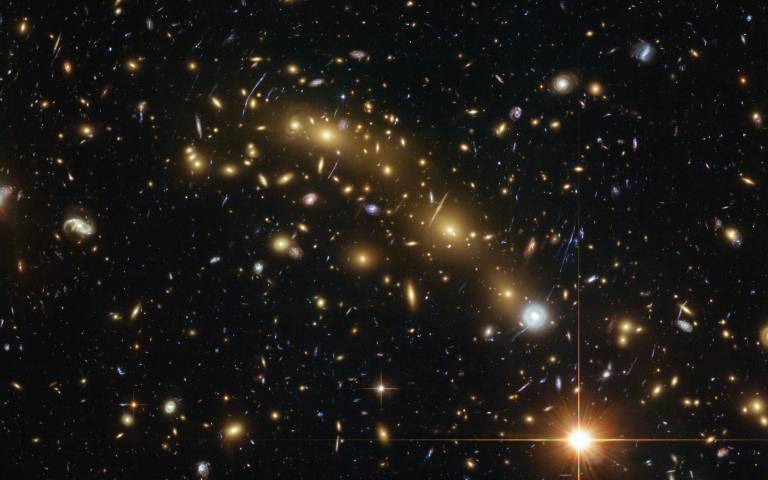
For decades, cosmologists have been searching for the elusive cosmic dawn—the moment when the universe's very first stars and galaxies emerged from the darkness. Now, thanks to NASA's James Webb Space Telescope (JWST) and the tireless work of observational cosmologists like Richard Ellis at University College London (UCL), that moment is finally within observational reach. A recent multi-spectral JWST survey, analyzing thousands of objects across 150 narrow sight lines covering 0.6 square degrees of sky, has revealed a steep drop in galaxy formation at only 150 to 200 million years after the Big Bang. This area is about three times the size of a full moon, yet it provides a unique window into the initial conditions that set the stage for the formation of chemical abundances, supermassive black holes (SMBHs), and large-scale structures we see today.
The Journey to Cosmic Dawn
Richard Ellis's journey into the distant universe began as an undergraduate some 58 years ago. In 1968, high redshift meant luminous quasars—now known as active galactic nuclei (AGN). At that time, astronomers were still using photographic plates and lacked large telescopes. A redshift of 3, where quasars were being found, corresponds to the universe expanding by a factor of four, taking us back before the solar system formed, to a period when the universe was about a third of its present age. In 1995, Ellis was the only European-based member of the Hubble Space Telescope and Beyond Committee, which made the scientific case for what became the 6.5-meter infrared JWST. "We've pushed the frontiers back to when the universe was only 200 million years old and learned so much about how the universe evolves," says Ellis. "We're beginning to see the glimpse of what we call cosmic dawn, the moment when the very first galaxies emerge from darkness."
How Do These Early Galaxies Form?
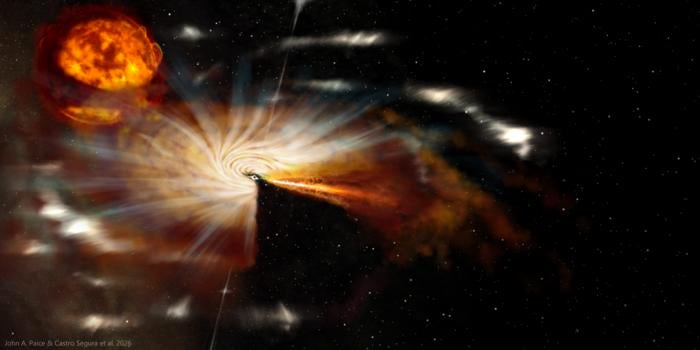
As the universe expanded and cooled, hydrogen atoms eventually formed, but the universe remained dark. Gas clouds were present but not shining. However, these gas clouds soon collapsed around the early cosmos' plethora of dark matter. Eventually, those gas clouds got hot and ignited nuclear burning, giving birth to the first stars and galaxies. These early galaxies are tiny—some thirty times smaller than our grand spiral Milky Way galaxy and only 60 to 70 light years across. The study of galaxies out to the earliest times affords a unique window into the initial conditions that set the stage for the formation and evolution of chemical abundances, supermassive black holes, and large-scale structures we see today, as noted in a 2026 paper appearing in the journal Monthly Notices of the Royal Astronomical Society.
Implications for Cosmology
The ability to observe galaxies at such early times provides critical insights into the processes that shaped our universe. By studying the formation of the first stars and galaxies, cosmologists can better understand how chemical elements were forged and distributed, how supermassive black holes grew, and how large-scale structures like galaxy clusters emerged. The steep drop in galaxy formation at 150-200 million years after the Big Bang suggests that this period marks a critical transition in cosmic history. Future observations with JWST and other telescopes will continue to push the boundaries, potentially revealing the very first stars that ended the cosmic dark ages.
Conclusion
The hunt for cosmic dawn is entering an exciting new phase. With JWST's unprecedented sensitivity and resolution, cosmologists like Richard Ellis are finally able to peer back to the universe's infancy. The discoveries made so far are just the beginning, and the coming years promise to unveil the secrets of the universe's first light. As Ellis reflects, "We've pushed the frontiers back to when the universe was only 200 million years old and learned so much about how the universe evolves." The quest for cosmic dawn is not just about finding the first stars; it is about understanding our cosmic origins.
This article is based on reporting by Universe Today. Read the original article.
Originally published on universetoday.com