A Major Investment in Loitering Munitions
The U.S. Army has placed a $186 million order for Switchblade kamikaze drones, marking one of the largest single procurement contracts for loitering munitions in the service's history. Autonomous systems manufacturer AeroVironment announced on Wednesday that it will supply two variants of its Switchblade family to the Army: the smaller Switchblade 300 for anti-personnel missions and the larger Switchblade 600 designed to destroy armored vehicles and tanks.
The contract reflects the Army's deepening commitment to a category of weapons that barely existed a decade ago but has since been validated on battlefields around the world. Loitering munitions — sometimes called kamikaze or suicide drones — combine the surveillance capabilities of a reconnaissance drone with the destructive power of a guided missile, creating a weapon that can patrol an area for extended periods before striking a target with precision.
Two Weapons, Two Missions
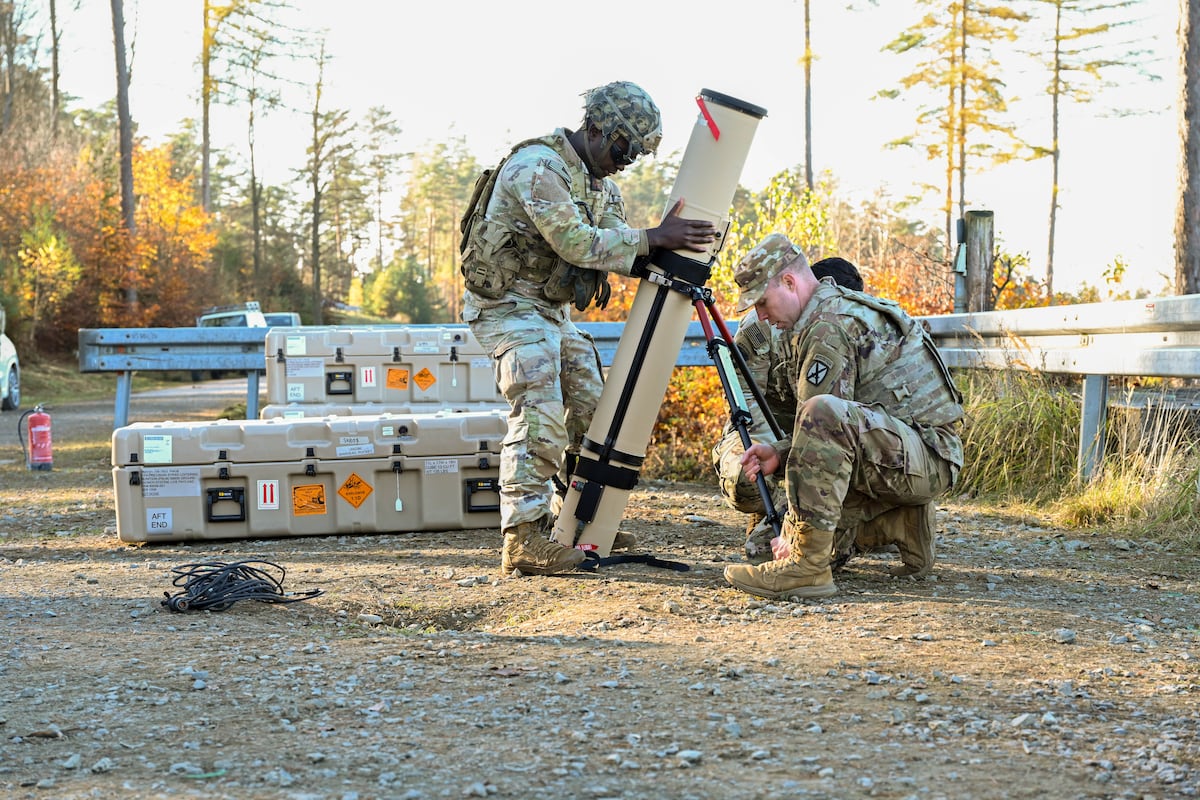
The Switchblade 300 is a tube-launched, backpack-portable system designed for use by small infantry units. Weighing just over five pounds, it can be deployed by a single soldier in minutes, loitering over a target area for up to 15 minutes before striking with a directional fragmentation warhead. Its small size and quiet electric motor make it difficult to detect, giving ground forces an organic precision strike capability that previously required calling in artillery or air support.
The Switchblade 600 is a significantly larger and more capable system designed to defeat armored targets. Equipped with an anti-armor warhead derived from the Javelin missile system, it can destroy main battle tanks, armored personnel carriers, and hardened positions. With a loiter time exceeding 40 minutes and a range of more than 40 kilometers, the Switchblade 600 provides infantry and special operations units with a stand-off anti-tank capability that can be deployed from concealed positions far behind the front lines.
Lessons From Ukraine and Beyond
The large-scale procurement is directly informed by the lessons of modern conflict. The war in Ukraine demonstrated the devastating effectiveness of small, cheap, autonomous weapons against conventional military forces. Both Ukrainian and Russian forces have used loitering munitions extensively, proving that relatively inexpensive drones can destroy military hardware worth millions of dollars. The battlefield footage from Ukraine showing Switchblade-type systems striking Russian tanks and supply vehicles has become a powerful advertisement for the technology.
Beyond Ukraine, conflicts in the Middle East and North Africa have further validated the loitering munition concept. Armed drones of various types have been used by state and non-state actors alike, demonstrating that the technology is accessible, effective, and increasingly difficult to defend against. The U.S. military's investment in Switchblade systems reflects an understanding that loitering munitions will be a central feature of warfare for the foreseeable future.
The Shift Toward Expendable Autonomy
The Switchblade procurement represents a broader philosophical shift within the U.S. military toward expendable autonomous systems. Traditional military platforms — fighter jets, tanks, warships — are designed to be reused over decades and cost tens of millions to hundreds of millions of dollars each. Loitering munitions invert that model, offering a single-use weapon that costs a fraction of the platforms it can destroy.
This economic asymmetry is reshaping military planning. A Switchblade 600 costs a small fraction of the Javelin missile system that inspired its warhead, yet it adds reconnaissance and loiter capabilities that a Javelin cannot provide. More importantly, it removes the soldier from the immediate danger zone, allowing precision strikes from safe distances. The Army's investment suggests that expendable autonomous weapons will increasingly supplement — and in some cases replace — traditional munitions and manned platforms.
Industrial Base and Production Capacity
The $186 million contract also signals the Pentagon's interest in scaling up domestic production of loitering munitions. AeroVironment has been expanding its manufacturing capacity in response to growing demand from both the U.S. military and international customers. The company's production facilities have been running at elevated rates since the Ukraine conflict demonstrated the need for large inventories of expendable autonomous systems.
Building a robust industrial base for loitering munitions has become a priority for defense planners who recognize that any large-scale conflict would consume these weapons at extraordinary rates. Ukraine's experience showed that modern warfare can burn through thousands of drones per month, far outstripping pre-war production capacity. The Army's investment helps ensure that American manufacturers can produce Switchblade systems at the scale that a major conflict would demand.
The Autonomous Weapons Debate Continues
The procurement inevitably intersects with the ongoing debate about autonomous weapons and the role of human oversight in lethal decision-making. While current Switchblade systems include a human operator who identifies and approves targets before the weapon strikes, the technology is evolving toward greater autonomy. Future variants may incorporate AI-driven target recognition, the ability to coordinate swarm attacks, and reduced reliance on human control links that can be jammed or spoofed.
These capabilities raise ethical and legal questions that the military, policymakers, and civil society have yet to fully resolve. The $186 million Switchblade order is both a practical military investment and a statement about the direction of modern warfare: smaller, cheaper, smarter, and increasingly autonomous.
This article is based on reporting by C4ISRNET. Read the original article.
Originally published on c4isrnet.com