Anduril is moving from concept to industrial scale
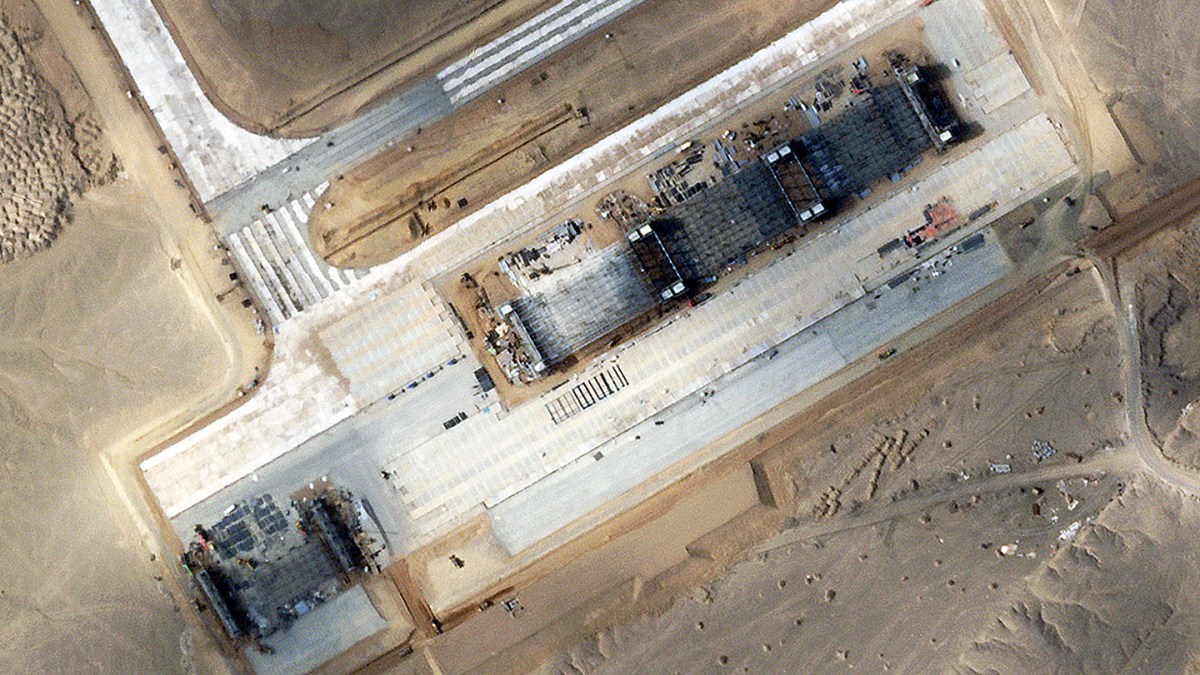
Anduril Industries will begin building its Fury high-speed combat drones at its new Arsenal-1 manufacturing campus in Ohio in the coming days, according to a Reuters report carried by C4ISRNET. The site, located south of Columbus, is part of a $1 billion autonomous-systems manufacturing effort that the company says could employ more than 4,000 people over the next decade, with roughly 250 expected by the end of this year.
The announcement is important because it turns a familiar defense-tech promise into something more concrete: industrial capacity. Anduril is not simply discussing autonomous aircraft development. It is opening a factory designed to produce them at scale.
The Fury drone is central to the plan
Production of the Fury autonomous aircraft will be the first program launched at the Ohio facility. The drone is Anduril’s entrant for the US Air Force’s Collaborative Combat Aircraft program, which aims to pair crewed fighter jets and other aircraft with uncrewed systems that can operate alongside human pilots.
The “loyal wingman” concept has become one of the most watched ideas in military aviation because it promises additional mass, reach, and mission flexibility without requiring every aircraft in a formation to carry a pilot. That promise has drawn attention from both established contractors and newer defense firms trying to prove they can deliver usable systems faster and at lower cost.
Anduril is clearly trying to position itself in that latter category.
Manufacturing is the message
C4ISRNET’s report emphasizes comments from Anduril leadership that the company’s manufacturing philosophy differs from traditional defense primes. Rather than designing first and worrying about production later, the company says it has built manufacturability into the product from the beginning.
The examples cited are revealing. Anduril says it is using commercial materials such as aluminum rather than titanium, composite techniques borrowed from the recreational boat industry, and a commercial business-jet engine for Fury because that engine already has an established supply chain and maintenance ecosystem.
Those choices point to a specific argument: next-generation defense systems do not have to be built through the slow, bespoke, and highly specialized production logic that has long dominated major weapons programs. They can be designed for repeatability, supply access, and lower production friction from the outset.
Why this matters to the Pentagon
The report frames Anduril as part of a growing group of smaller defense firms seeking major Pentagon contracts at a time when the Trump administration wants newer entrants to disrupt weapons manufacturing. That political context matters because the US defense establishment has spent years talking about the need for faster procurement, more software-centric development, and stronger access to commercial manufacturing methods.
Autonomous aircraft are a test case for whether that rhetoric can be translated into industrial reality. Producing one demonstration vehicle is not enough. The military wants systems that can be fielded in numbers, supported over time, and updated without the full burden of legacy acquisition culture.
An autonomous-systems campus built around those assumptions is therefore strategically relevant even before it proves itself at full output.
The Ohio site is broader than one aircraft
Fury may be first, but it is not the only program intended for the new plant. C4ISRNET says Anduril expects its Roadrunner interceptor, Barracuda cruise missile family, and a classified program also to be produced there by year’s end.
That broadens the significance of Arsenal-1. The facility is not just a Fury line. It is an attempt to build a multi-program manufacturing base for autonomous and precision systems. If successful, that would give Anduril something many defense-tech startups lack: a visible industrial footprint that supports multiple product families rather than a single headline platform.
It also creates a stronger case that the company can behave like a defense prime in output while still claiming the speed and design flexibility of a newer entrant.
Ukraine, Iran, and the demand signal for unmanned systems
The report explicitly links rising US military interest in unmanned aircraft to battlefield lessons from Ukraine and Iran. That context is central. Recent conflicts have reinforced how important low-cost mass, autonomy, and rapid replacement capacity can be in contested environments.
Those lessons create pressure on the US industrial base. It is no longer enough to excel at a small number of exquisite platforms. Militaries also need scalable systems that can be produced quickly and adapted as threats evolve. Combat drones fit that demand profile, and companies that can manufacture them efficiently stand to benefit.
A manufacturing bet on the future force
Arsenal-1 represents more than a local economic development story. It is a bet on how the future force will be equipped. If the Pentagon increasingly values autonomous teammates, interceptors, and lower-cost precision systems that can be manufactured with commercial supply discipline, then factories like this will matter as much as test ranges and design labs.
That is why the Ohio launch is worth watching. It shows where the defense AI conversation becomes an industrial one. The decisive question is no longer only whether autonomous aircraft are strategically useful. It is whether they can be built, supported, and delivered at scale. Anduril is now claiming it can.
This article is based on reporting by C4ISRNET. Read the original article.
Originally published on c4isrnet.com