Weather patterns, not just single variables, may matter for neurological emergencies
A new study from researchers in Hungary suggests that certain stormy weather patterns are associated with increases in emergency hospital visits for stroke, brain hemorrhage and other neurological conditions. Published in the journal Heliyon, the work takes a broader approach than many earlier studies by examining full weather-system patterns instead of isolating single meteorological factors such as temperature or barometric pressure.
The researchers analyzed medical data from 34,650 patients who presented with neurological symptoms at a major county hospital in Budapest between 2015 and 2019. They then compared those records with daily weather classifications in the Carpathian Basin, using the Péczely system, which sorts atmospheric circulation into 13 distinct weather types.
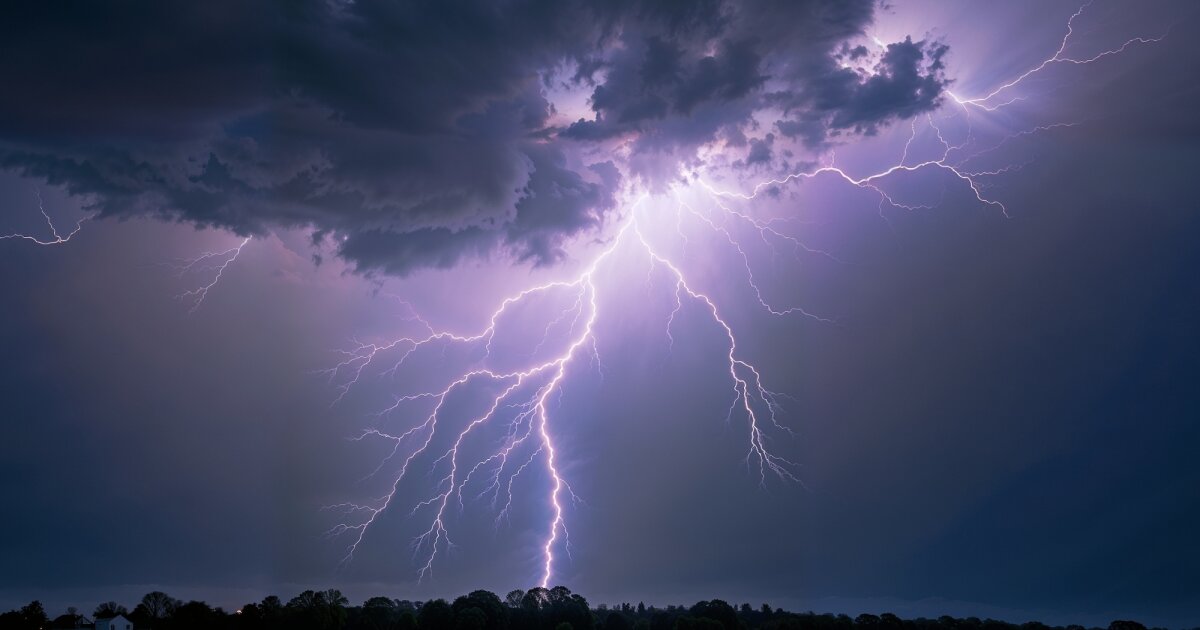
The result was a specific link between unstable, wet and windy conditions and higher emergency demand.
A synoptic approach to a familiar question
Most research on weather and health has focused on individual variables. The Hungarian team chose a synoptic climatological approach instead, looking at the combined behavior of weather systems over a region. That matters because patients do not experience atmospheric factors one at a time. A stormy day can involve simultaneous shifts in humidity, precipitation, wind, temperature and pressure.
By modeling whole-pattern relationships, the researchers hoped to capture a more realistic view of how the environment affects vulnerable people. Their analysis pointed to significant increases in emergency room visits on days classified as Péczely types 4 and 7, conditions typically described as cloudy, windy and wet.
Associate professor Brigitta Szilágyi said those classifications provide a strong framework for exploring the links between complex atmospheric circulation and emergency-care volume. In other words, the study is less about one bad metric and more about the stress created when multiple meteorological pressures arrive together.

Who may be most affected
Neurologist Gábor Lovas said adverse weather of this kind can place simultaneous stress on the cardiovascular and central nervous systems. The report notes that epidemiological studies have associated such conditions with increased emergency visits for both ischemic and hemorrhagic stroke, as well as seizures, especially among people with pre-existing neurological or vascular disease.
The proposed mechanisms described in the article include blood-pressure lability, dehydration, autonomic dysregulation and sleep disruption. The point is not that storms directly “cause” every event, but that unstable weather may help trigger crises in already vulnerable populations.
That distinction matters. A weather-linked increase in emergency admissions does not mean everyone faces the same level of risk. It suggests that certain people may be more likely to decompensate when rapid environmental changes stack on top of existing medical fragility.
Why this study stands out
The scale of the patient data gives the findings weight. The study covered nearly 35,000 patients over four years at a prominent Budapest hospital, creating a substantial clinical dataset for comparison with atmospheric patterns. The use of a regional weather classification system also adds a layer of structure that differs from simpler correlations between one weather variable and one health outcome.
That approach may prove useful for hospital planning. If certain synoptic weather types are consistently associated with neurological emergencies, health systems may eventually be able to use forecast patterns as one input for staffing and preparedness.
The study does not claim to provide a universal rule for every country or climate. It is rooted in a specific geographic area and weather-classification method. But it does strengthen the case that complex weather events deserve attention as a real part of neurological risk analysis.

What the findings do and do not say
The reported association should not be mistaken for a simple deterministic warning that every storm brings a stroke wave. The research identifies a statistical link between certain weather patterns and higher emergency volumes. It does not say weather is the sole driver, nor does it eliminate the importance of underlying conditions, medications, hydration or access to care.
Still, the findings are notable because they move beyond anecdote. Many clinicians and patients have long suspected that rough weather can worsen symptoms or coincide with medical events. This study offers a structured attempt to quantify that relationship in neurological care.
It also reinforces the idea that health forecasting may become more sophisticated when meteorology is treated as a pattern-recognition problem rather than a list of isolated readings.
A practical implication for aging and at-risk populations
For people with known vascular or neurological disease, the study’s message is mostly one of awareness. Days marked by strong wind, precipitation and rapidly shifting conditions may be periods when vulnerable individuals need closer attention. For emergency systems, those same days may deserve heightened operational awareness.
Researchers did not present the findings as a standalone public warning tool, but they did frame the weather-health connection as clinically meaningful. If future work confirms the pattern across other regions, weather-type analysis could become part of public-health planning, especially as climate variability complicates forecasting and preparedness.
For now, the Hungarian study adds a substantial new data point to an emerging field: stormy weather may do more than disrupt travel or flood streets. Under the wrong conditions, it may also coincide with measurable spikes in serious neurological emergencies.
This article is based on reporting by refractor.io. Read the original article.

Originally published on refractor.io