A Defense Contract Turns E-Waste Into a Strategic Materials Story
Flash Metals Texas, Inc., operating as Metallium, has been awarded a Phase II Small Business Innovation Research contract focused on recovering critical minerals from electronic waste. According to the candidate metadata, the award comes through the U.S. Department of Defense via the Defense Logistics Agency, placing the effort squarely inside a broader national push to secure access to strategically important materials.
Even in a short contract announcement, the underlying significance is clear. Critical minerals sit at the center of modern manufacturing, electronics, energy systems, and defense production. When a government buyer advances a company from an earlier research phase into Phase II, it typically signals that the concept has moved beyond a purely speculative idea and is being treated as a technology worth further development.
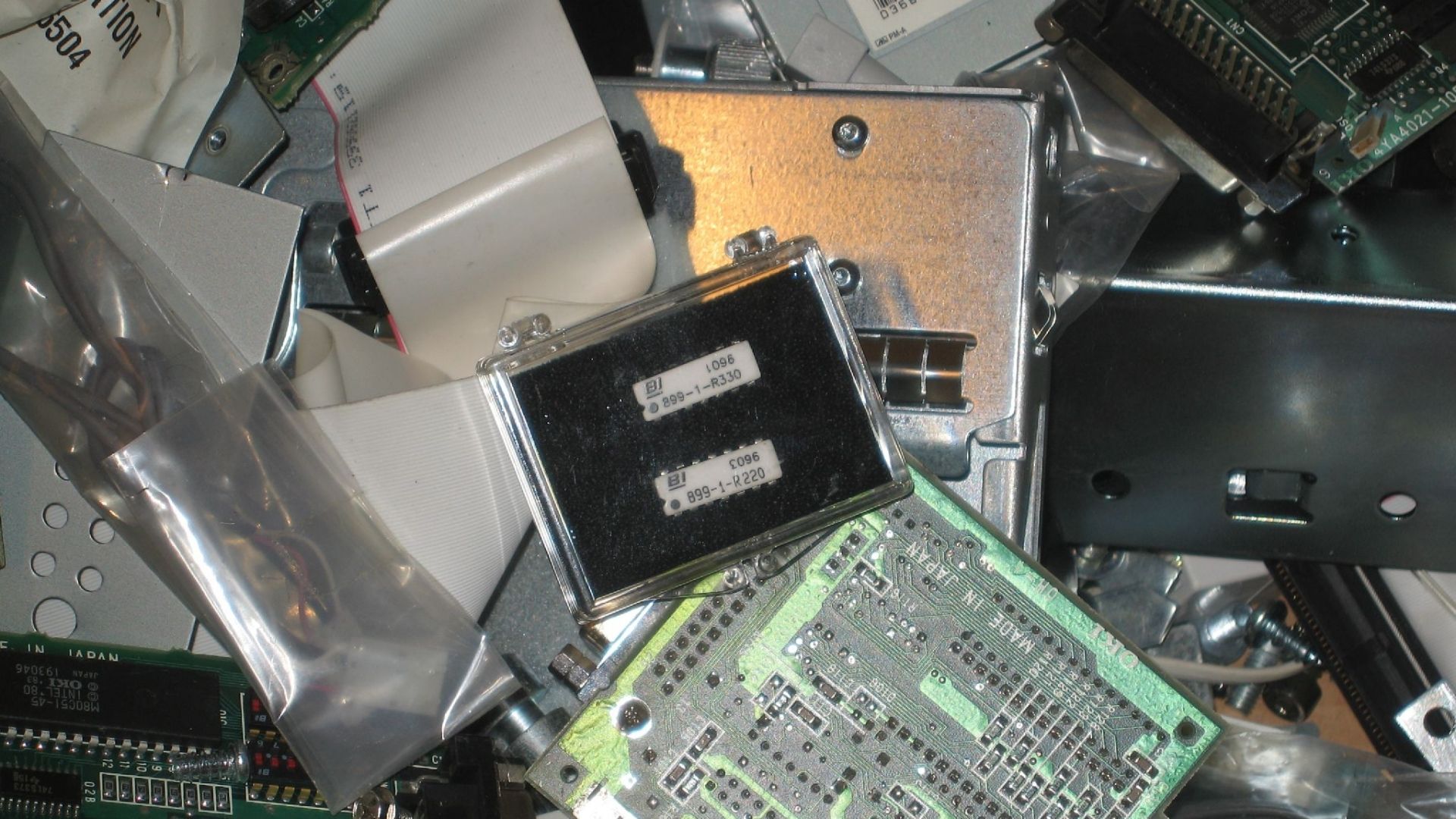
In this case, the focus is not on new mining projects but on recovery from e-waste. That distinction matters. Electronic waste contains a dense mix of metals and mineral inputs already extracted, refined, and embedded in discarded products. If those materials can be recovered economically, recyclers and manufacturers gain an alternative supply source that is domestic, potentially faster to scale than greenfield mining, and aligned with waste-reduction goals.
Why Critical Minerals Keep Moving Up the Priority List
The contract reflects how much the critical-minerals conversation has changed. A few years ago, these materials were often discussed mainly in the context of electric vehicles and batteries. Now the issue reaches across semiconductors, communications hardware, aerospace systems, precision weapons, sensors, and industrial manufacturing. That makes supply-chain resilience not just a commercial concern, but a defense planning issue.
The Defense Logistics Agency’s involvement is especially notable because it points to procurement and sustainment priorities, not just abstract technology policy. Defense agencies care about whether key inputs can be sourced reliably, at sufficient quality, and without severe geopolitical exposure. Recovering valuable materials from end-of-life electronics is attractive because it could create a more circular and more controllable supply stream inside the United States.
E-waste recovery also addresses a practical bottleneck. Many advanced products are replaced quickly, but their material content is not easily recaptured at scale. A successful recovery process would not eliminate the need for mining, but it could reduce pressure on primary supply chains and help create secondary inventories of strategically important inputs.

What a Phase II SBIR Usually Suggests
The candidate does not provide technical details about Metallium’s process, recovery yields, or target materials. Still, the Phase II designation implies a higher level of confidence than a concept-stage research grant. In the SBIR framework, Phase II awards are typically used to continue development after an earlier feasibility effort has shown enough promise to justify expanded work.
That means the government is not merely encouraging experimentation in the abstract. It is funding further work with the expectation that the technology could move closer to practical use. For a company working on materials recovery, that can include scaling a process, demonstrating repeatability, improving economics, or tailoring outputs to real defense or industrial needs.
Without overstating what is known, the award suggests Metallium has positioned itself within a high-interest segment of industrial innovation: extracting strategic value from complex waste streams. That is a difficult problem, but also one with unusually strong policy tailwinds.
Circular Manufacturing Meets Industrial Strategy
The broader appeal of e-waste mineral recovery is that it speaks to several priorities at once. It offers a potential answer to resource security, domestic manufacturing capacity, environmental cleanup, and industrial efficiency. Instead of treating obsolete electronics only as a disposal challenge, this approach treats them as an urban ore body.
That framing has become more compelling as governments and manufacturers confront the real costs of concentrated global supply chains. A discarded device may contain only small quantities of any given mineral, but the aggregate volume of electronic waste is enormous. The business case depends on whether sorting, extraction, and refinement can be done at sufficient purity and price.
For defense stakeholders, the upside is straightforward. If critical inputs can be recovered from waste streams within U.S. borders, exposure to supply disruptions can be reduced. For industry, the opportunity is to build a materials business on feedstock that already exists in abundance.
The Phase II award does not prove that e-waste recovery is solved, and it does not reveal how far Metallium is from commercial deployment. But it does show that the technology area continues to attract serious institutional backing. In a sector where many ambitions remain stuck at the pilot stage, federal support of this kind can help determine which approaches get the chance to mature.
As critical minerals move deeper into industrial and geopolitical strategy, technologies that recover value from discarded electronics are likely to draw even more attention. Metallium’s award is one data point, but an important one: the U.S. defense establishment appears willing to fund the idea that tomorrow’s strategic materials may come not only from mines, but from the devices already headed for the scrap heap.
This article is based on reporting by Interesting Engineering. Read the original article.

Originally published on interestingengineering.com