Un hito de velocidad con un propósito muy específico
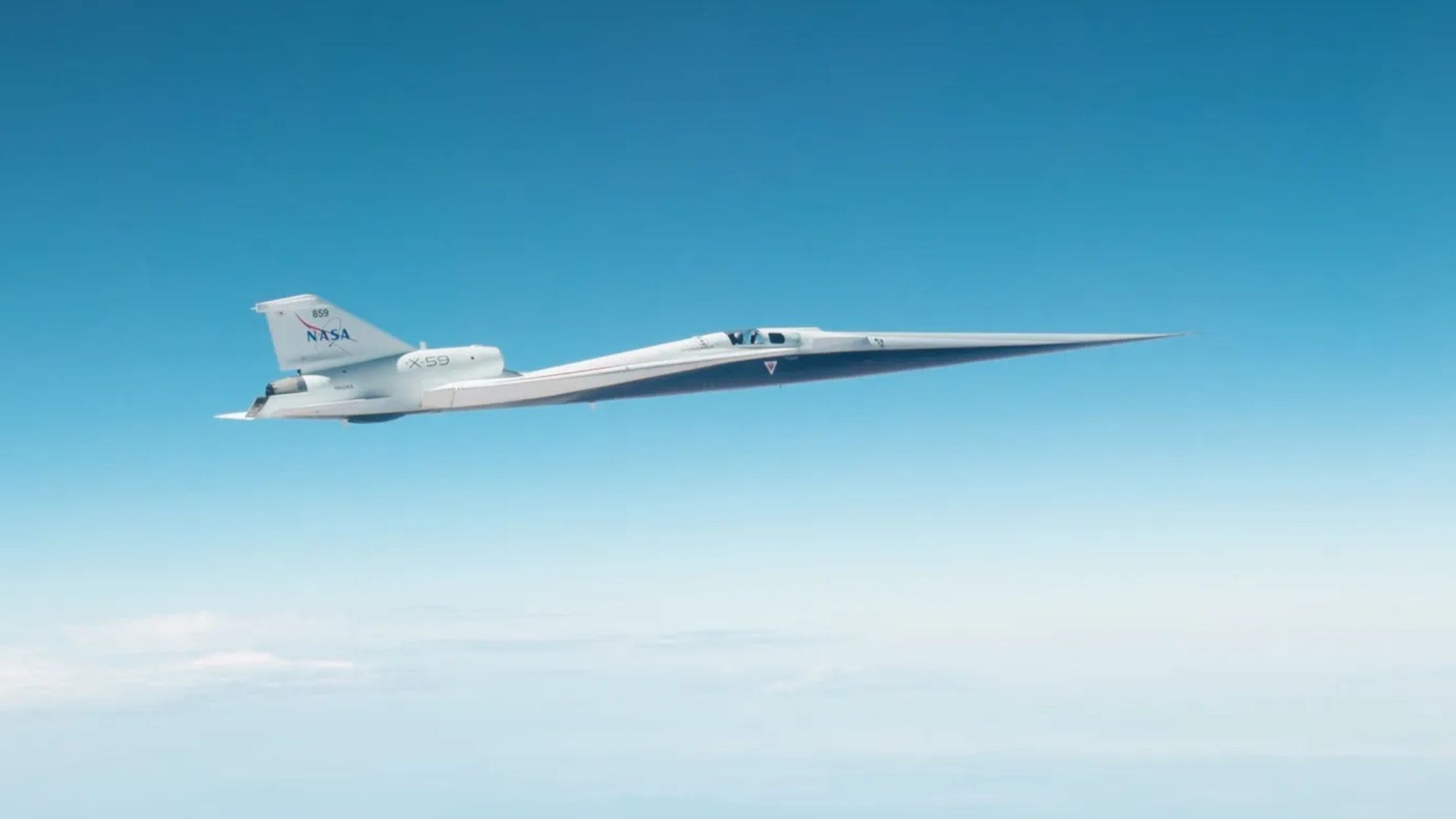
El X-59 de la NASA no se está construyendo para revivir la antigua era supersónica en una forma familiar. Se está construyendo para comprobar si el transporte supersónico puede rediseñarse en torno a una promesa acústica muy distinta: un sonido menos perturbador sobre tierra. Por eso importa el último hito de la aeronave. Según el texto candidato y los metadatos proporcionados, el X-59 alcanzó 924 mph a 55.000 pies en una prueba de la NASA, tras romper oficialmente la barrera del sonido en Mach 1.1 apenas una semana antes.
Por sí solo, 924 mph es una cifra llamativa. En contexto, es más significativa como señal de que el programa avanza hacia una envolvente de vuelo en la que la aeronave puede evaluarse no solo como concepto, sino como un sistema operativo para investigación supersónica silenciosa. El propósito del X-59 está incrustado en la frase que se repite una y otra vez: “supersónico silencioso”. Esa formulación no es marketing vacío. Describe el problema central de ingeniería que el programa intenta resolver.
Por qué el X-59 importa más allá de la velocidad
Los aviones supersónicos nunca han estado limitados solo por la velocidad o la propulsión. También han estado limitados por el ruido, en especial por el perturbador estampido sónico que durante mucho tiempo ha restringido las operaciones supersónicas sobre tierra. Durante décadas, esa realidad ayudó a definir el techo comercial para viajar más rápido que el sonido. Cualquier intento serio de reabrir ese futuro debe abordar tanto la aceptación pública como la regulación, no solo la aerodinámica.
El X-59 importa porque está diseñado explícitamente para superar esa barrera. La aeronave está pensada para recopilar evidencia sobre si una configuración diferente puede reducir la intensidad y la forma del estampido que se escucha en el suelo. Un caso exitoso no crearía de inmediato un nuevo mercado de pasajeros, pero podría influir en cómo reguladores, fabricantes y operadores piensan sobre la viabilidad de futuras rutas supersónicas.
Eso hace que cada hito sea más que un titular de piloto de pruebas. Un vuelo exitoso a gran altitud y alta velocidad ayuda a demostrar que la aeronave está avanzando por las condiciones necesarias para la misión de investigación más amplia. En otras palabras, la velocidad aquí es necesaria, pero no es el objetivo final. Es parte de validar una plataforma experimental destinada a dar forma a las reglas y expectativas en torno a una nueva clase de vuelo.

El momento sugiere un programa que gana impulso
La secuencia descrita en el material proporcionado es notable. El X-59 rompió oficialmente la barrera del sonido apenas una semana antes de la última prueba. Ahora ha alcanzado 924 mph a 55.000 pies. Incluso con detalles limitados en el texto candidato, ese emparejamiento señala impulso. Sugiere una campaña que pasa de los eventos de primer umbral a una demostración más sostenida del rendimiento.
En los programas aeroespaciales, especialmente los experimentales, los hitos suelen importar por cómo se encadenan. Una sola prueba puede demostrar un punto. Una segunda, poco después, puede empezar a mostrar continuidad y confianza. Eso es especialmente relevante para una aeronave destinada a apoyar no solo la validación de ingeniería, sino también una conversación más amplia sobre lo que deberían poder hacer las futuras operaciones supersónicas.

El supersónico silencioso también es un proyecto regulatorio
El X-59 se sitúa en la intersección entre la tecnología y la elaboración de normas. Incluso la aeronave más avanzada tendría una relevancia comercial limitada si las restricciones operativas actuales permanecieran intactas. Por eso el trabajo de la NASA tiene valor estratégico más allá del vehículo en sí. La ambición más amplia es proporcionar el tipo de datos que puedan informar futuras decisiones sobre el ruido comunitario aceptable.
Si la aeronave puede ayudar a demostrar que un vehículo supersónico puede oírse de forma distinta en tierra, podría fortalecer el argumento para reconsiderar la suposición de larga data de que todo vuelo supersónico sobre tierra debe gestionarse de la misma manera. Eso sería significativo para cualquier programa comercial o gubernamental futuro que intente combinar alta velocidad con una mayor flexibilidad de rutas.
Hay una razón por la que los proyectos aeroespaciales experimentales suelen parecer abstractos hasta que llegan unos pocos hitos concretos. Cifras como altitud y velocidad vuelven legible el programa. Alcanzar 924 mph a 55.000 pies no resuelve la cuestión del vuelo silencioso, pero sí da al proyecto una idea más clara del progreso práctico.
Una aeronave construida para responder una pregunta difícil
El X-59 no persigue el espectáculo por sí mismo. Persigue evidencia. ¿Puede una aeronave volar a velocidad supersónica mientras cambia el perfil sonoro que llega a las comunidades de abajo? Esa pregunta tiene consecuencias técnicas, económicas y regulatorias. Un sí no mejoraría solo una aeronave. Podría reajustar las suposiciones detrás de un sector que ha permanecido limitado durante décadas.
La última prueba, por tanto, merece atención no porque demuestre que el futuro supersónico ya llegó, sino porque mantiene en marcha un intento serio de alcanzarlo. En aeroespacial, hay una diferencia entre una idea que sigue siendo prometedora y un programa que empieza a acumular hechos operativos. El X-59 está sumándose a la segunda categoría.
Por ahora, los detalles proporcionados siguen siendo moderados: una velocidad, una altitud y un vínculo con un hito sónico previo. Eso basta para sostener una conclusión simple. El experimento supersónico silencioso de la NASA no está estático. Está avanzando a través de las pruebas que determinarán si una aeronave más rápida también puede convertirse en una más aceptable.
Este artículo se basa en la cobertura de Interesting Engineering. Lee el artículo original.
Originally published on interestingengineering.com