Introducing Argus: A Robot That Defies Conventional Symmetry
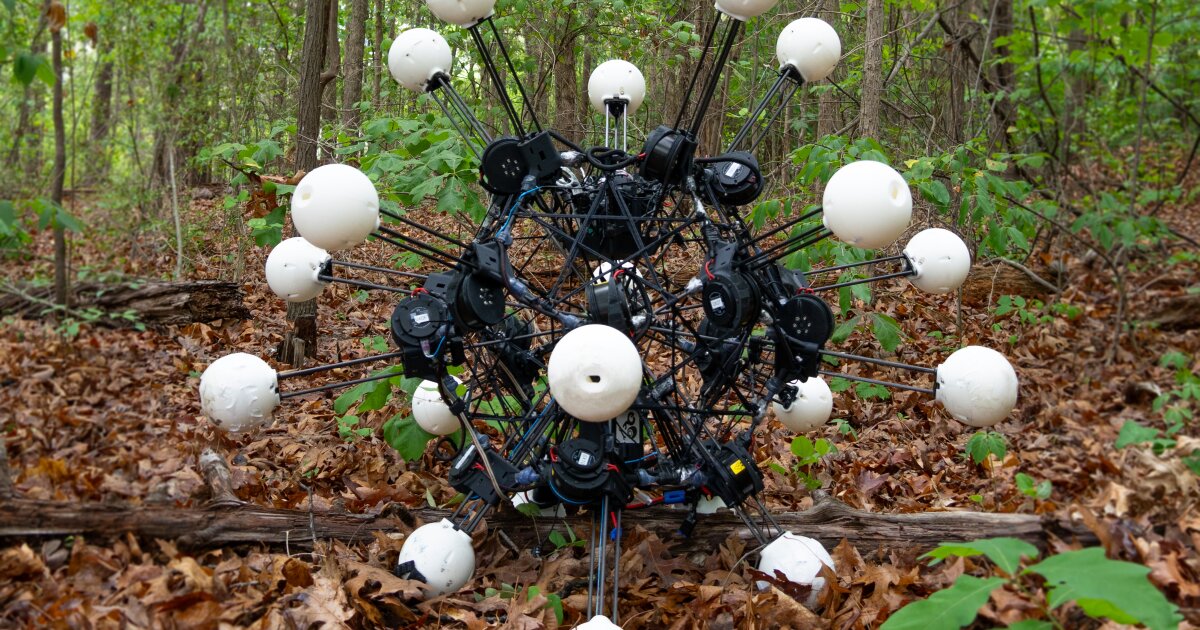
Most robots are built with a clear front and back, mirroring the bilateral symmetry found in nature. But researchers at Duke University have taken a radically different approach with Argus, a sea-urchin-inspired robot that abandons traditional body symmetry in favor of a new design principle called dynamic symmetry. Argus is covered with 20 telescoping legs, each equipped with a depth camera, giving it 20 eyes and the ability to move in any direction with equal ease.
The Concept of Dynamic Symmetry
According to Assistant Professor Boyuan Chen, who leads the research, most robotics has focused on symmetrical body shapes, but the team argues that the more powerful symmetry is at the level of what the robot can do. Dynamic symmetry, or dynamic isotropy, measures how uniformly a robot can accelerate in every direction—north, south, east, west, up, or down—without needing to reorient. This shifts the focus from appearance to capability.

How Argus Works
Argus's 20 legs are arranged radially around its body, each capable of telescoping independently. The 20 depth cameras provide a 360-degree view of the environment, allowing the robot to perceive obstacles and terrain in all directions simultaneously. This setup enables Argus to traverse loose sand, rocky surfaces, and other challenging terrains without a preferred direction of travel.
Resilience and Damage Tolerance
One of the most striking features of Argus is its resilience. The robot can continue moving even when up to three of its legs are disabled. This damage tolerance is a direct result of its redundant, symmetrical locomotion system. If one leg fails, others can compensate, maintaining mobility. This makes Argus particularly suitable for hazardous environments where damage is likely.

Potential Applications
The dynamic symmetry design principle could revolutionize robotics for search and rescue, planetary exploration, and military reconnaissance. In disaster zones, a robot that can move in any direction without turning can navigate rubble more efficiently. On other planets, where terrain is unpredictable, Argus's omnidirectional movement and resilience would be invaluable.
Comparison with Traditional Robots
Traditional wheeled or legged robots often have a defined forward direction and must turn to change course. This wastes time and energy. Argus, by contrast, can instantly switch direction by adjusting leg movements, much like a ball rolling. The researchers note that forward and backward become the same, and left and right become the same, fundamentally changing the control problem.
Future Developments
The Duke team plans to refine Argus's design, potentially reducing the number of legs while maintaining dynamic symmetry. They are also exploring how the principle can be applied to other types of robots, including flying and swimming drones. The goal is to create machines that can adapt to any environment with minimal reconfiguration.
Conclusion
Argus represents a paradigm shift in robotics, challenging the assumption that symmetry must be about appearance. By prioritizing dynamic symmetry, researchers have created a robot that is more versatile, resilient, and efficient. As the field moves toward more adaptive machines, Argus's design could become a blueprint for future generations of robots.
This article is based on reporting by New Atlas. Read the original article.
Originally published on newatlas.com