La estrategia de reconocimiento facial de ICE podría ampliarse mucho más
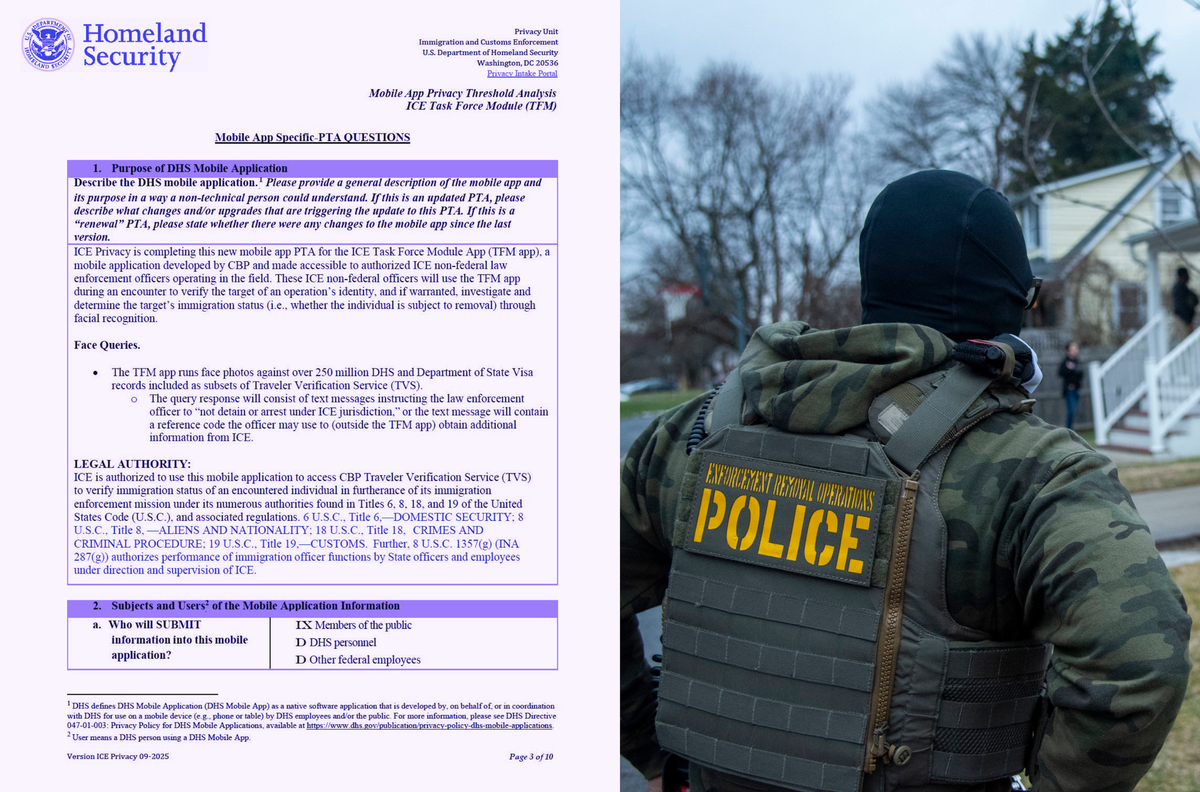
ICE planea dar a los organismos locales de seguridad acceso a una aplicación de reconocimiento facial que puede usarse durante encuentros en la calle para ayudar a verificar la identidad de una persona y su estatus migratorio, según un documento interno del Departamento de Seguridad Nacional obtenido por 404 Media. Si se despliega como se describe, el programa llevaría una capacidad ya utilizada por los agentes federales de inmigración a las manos de potencialmente más de mil agencias locales.
La expansión reportada importa porque ampliaría tanto el alcance práctico como el significado político de la tecnología de control migratorio. Las agencias federales ya tienen amplia autoridad y capacitación especializada para operaciones de inmigración. Los departamentos de policía locales, por lo general, no. Darles una herramienta que pueda consultar una enorme base de imágenes y devolver datos biográficos, incluido si alguien podría estar sujeto a expulsión, difuminaría la línea entre la labor policial local ordinaria y la aplicación federal de la ley migratoria.
Lo que dice el documento
Según la cobertura de 404 Media, la aplicación propuesta permitiría a agentes no federales que participan en grupos de trabajo de ICE usar reconocimiento facial durante un encuentro para verificar la identidad de un objetivo y, cuando corresponda, investigar su situación migratoria. El texto fuente dice que el sistema se apoyaría en una base de datos con cientos de millones de imágenes y que estaría destinado a policías locales que, en algunas operaciones, han llegado a actuar como extensiones de ICE.
El artículo también dice que las agencias federales ya usan una herramienta relacionada llamada Mobile Fortify. En ese flujo de trabajo, los agentes apuntan la cámara de un teléfono a una persona, la aplicación escanea el rostro y el sistema devuelve información que puede incluir si a esa persona se le ha emitido una orden de expulsión. Ese punto de partida es importante porque muestra que no se trata solo de una idea piloto. El cambio de política está en quién obtiene acceso a la capacidad, no en si la capacidad existe.
Por qué alarman los grupos de libertades civiles
Los críticos sostienen que el problema no es solo la vigilancia, sino también los errores, la retención y el aumento de alcance. 404 Media informa que la tecnología se ha equivocado y se ha usado contra ciudadanos estadounidenses. Ese riesgo se vuelve más serio si la base de usuarios pasa de personal federal capacitado a un grupo mucho más grande de policías locales que trabajan en condiciones diversas, con supervisión desigual y estándares distintos para detenciones y registros.
Nate Wessler, de la American Civil Liberties Union, citado por 404 Media, advirtió que el plan pondría una herramienta defectuosa de reconocimiento facial en manos de muchos miles de policías locales. La crítica se centra en varios puntos a la vez: falsas coincidencias, almacenamiento a largo plazo de datos personales y la posibilidad de que agentes sin experiencia en inmigración terminen tomando decisiones relevantes sobre el estatus en el terreno. Incluso los defensores de la aplicación asistida por tecnología tendrían que lidiar con esa realidad operativa. Una comprobación rápida de identidad puede parecer eficiente en el papel y aun así crear errores difíciles de revertir en la práctica.
Un cambio en cómo la aplicación de la ley migratoria llega a la calle
La implicación más profunda del informe es institucional. En la última década, la aplicación de la ley migratoria en Estados Unidos ha oscilado repetidamente entre modelos más centralizados y más distribuidos. Una herramienta de escaneo facial para la policía local representaría una versión más distribuida, en la que los sistemas federales de inmigración se activan mediante la policía rutinaria en la calle. Eso podría cambiar cómo las comunidades experimentan la labor policial, especialmente en lugares donde los residentes inmigrantes ya ven con riesgo las interacciones con la policía.
El documento descrito por 404 Media sugiere un futuro en el que el reconocimiento facial se trata como una capa rápida de filtrado durante los encuentros, en lugar de como un paso investigativo especializado. Eso puede atraer a agencias que buscan rapidez y cobertura. También plantea una pregunta básica de rendición de cuentas democrática: quién autoriza esta clase de expansión, bajo qué salvaguardas y con qué mecanismo de impugnación cuando el sistema se equivoca.
Como mínimo, el informe señala una próxima batalla política con consecuencias mucho más amplias que la ley de inmigración. Afecta los límites de la vigilancia biométrica, el papel de la policía local en la aplicación federal y el grado en que una comprobación algorítmica de identidad puede moldear la libertad de una persona en tiempo real. Si el despliegue avanza, esas preguntas dejarán de ser abstractas muy pronto.
Este artículo se basa en un reportaje de 404 Media. Leer el artículo original.
Originally published on 404media.co