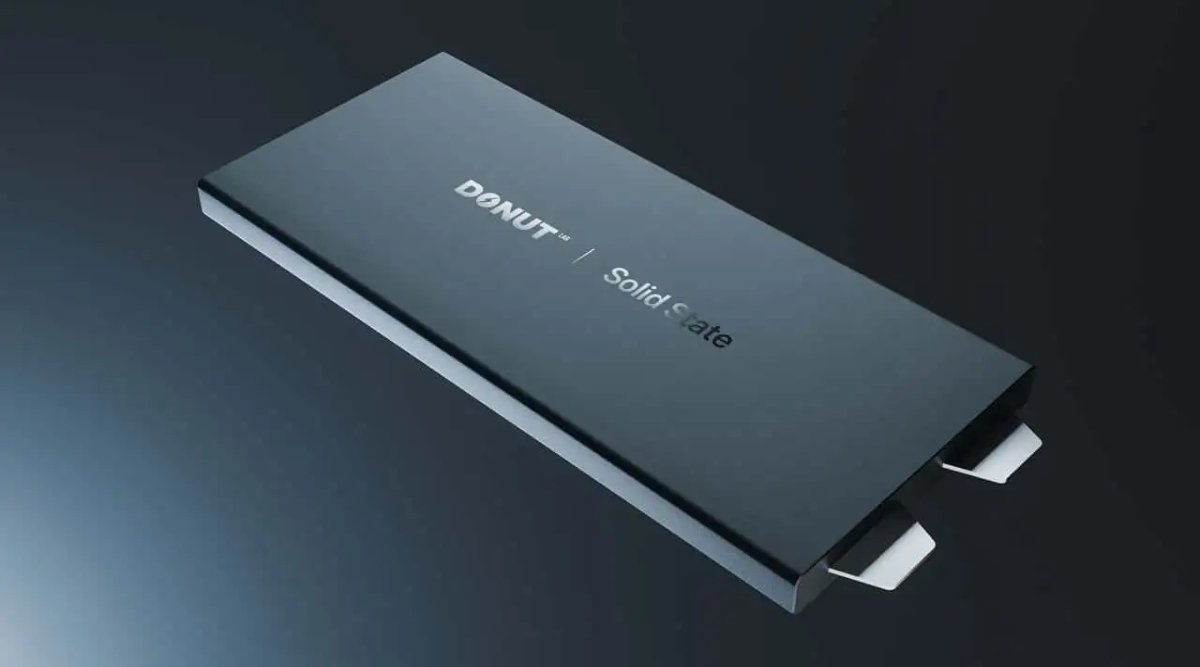
A high-profile battery claim is facing a credibility test
Donut Lab, a Finland-based company that has drawn attention for saying it developed a working solid-state battery now powering a production electric motorcycle, is facing a new challenge after a whistleblower filed a criminal complaint questioning those claims.
According to reporting cited in the source material, Lauri Peltola filed the complaint and argued that Donut Lab may have misrepresented material facts about its battery technology. The allegations focus on whether the company overstated critical benchmarks such as energy density and battery lifespan, and whether it has the production infrastructure needed to support its public narrative about commercialization.
Those questions matter because solid-state batteries are often presented as a major next step for electric mobility. Claims of major gains in safety, energy density, and durability can influence investor attention, media coverage, partner interest, and market expectations long before a product reaches large-scale manufacturing. When a company suggests it is already near production readiness, scrutiny rises quickly.
The core allegations
The supplied source text says the complaint challenges both technical and operational claims. On the technical side, the criticism centers on whether Donut Lab exaggerated key performance figures. On the operational side, it raises doubts about whether the company is actually prepared to scale manufacturing in a way consistent with its public positioning.
The source text also points to reports of internal communications between Donut Lab and its partners. Those documents reportedly suggest inconsistencies between what was presented publicly and the actual stage of development. If accurate, that would shift the issue from ordinary startup optimism to a more serious dispute over whether the market was shown a picture of maturity that the underlying technology had not yet reached.
Another point raised in the source material concerns the battery model used in demonstrations. Reporting cited there says the showcased model was reportedly based on an earlier version developed by CT-Coating, while development had already moved toward a newer but less mature design. That distinction is important because demonstrations can shape public understanding of readiness. If an older design was shown while a newer version remained less developed, observers could reasonably ask whether the technology on display matched the commercial promise being made.

Why the case matters beyond one startup
Battery innovation attracts unusually intense attention because it sits at the center of multiple industrial transitions. Electric vehicles, grid storage, consumer electronics, and defense-adjacent power systems all depend on advances in energy storage. As a result, startups that claim a step change in chemistry or manufacturing often receive outsized visibility.
That visibility creates a familiar tension. Early-stage companies need attention and capital, but many of the most important technical milestones are hard for outsiders to verify. Energy density, cycle life, manufacturability, and scale-up readiness are not just laboratory talking points. They are the difference between an interesting prototype and a commercial technology.
The Donut Lab dispute therefore speaks to a broader pattern in deep-tech markets: bold claims can travel faster than independent validation. When that happens, customers, partners, and investors can be left sorting out whether a company is leading a real breakthrough or simply presenting an unfinished technology in its best possible light.
A credibility moment for commercialization claims
The complaint appears especially significant because Donut Lab had been discussed not just as a research-stage company, but as one moving toward real-world deployment. The source text says it had claimed a working solid-state battery was already powering a production electric motorcycle. That kind of statement carries more weight than a general promise about future potential. It implies a degree of engineering maturity, integration, and repeatability.
If the underlying technology is less advanced than described, the consequences could extend beyond reputational damage. Partnerships can be reassessed. Commercial roadmaps can slip. Prospective buyers may hesitate. Regulators or investigators may also take a closer look when discrepancies are framed as possible misrepresentation rather than ordinary technical delay.
At the same time, the currently available source material presents allegations, not proven findings. The supplied text describes a complaint, reported concerns, and questions raised by cited outlets. It does not establish a legal outcome or a final technical verdict. That distinction is essential. The immediate development is not that Donut Lab’s battery claims have been disproven, but that they are now under sharper formal and public challenge.
What to watch next
The next phase will likely depend on whether the complaint produces official action, whether Donut Lab publicly answers the specific allegations, and whether independent evidence emerges around the battery’s actual performance and readiness. In situations like this, the most meaningful signals usually come from verifiable demonstrations, transparent test data, manufacturing evidence, and consistent product-level disclosures.
For now, the Donut Lab story has shifted from excitement about a possible solid-state breakthrough to a more fundamental question: whether the company’s public claims accurately reflect the state of its technology. In battery markets, that gap between promise and proof is often where the real story begins.
This article is based on reporting by CleanTechnica. Read the original article.
Originally published on cleantechnica.com




