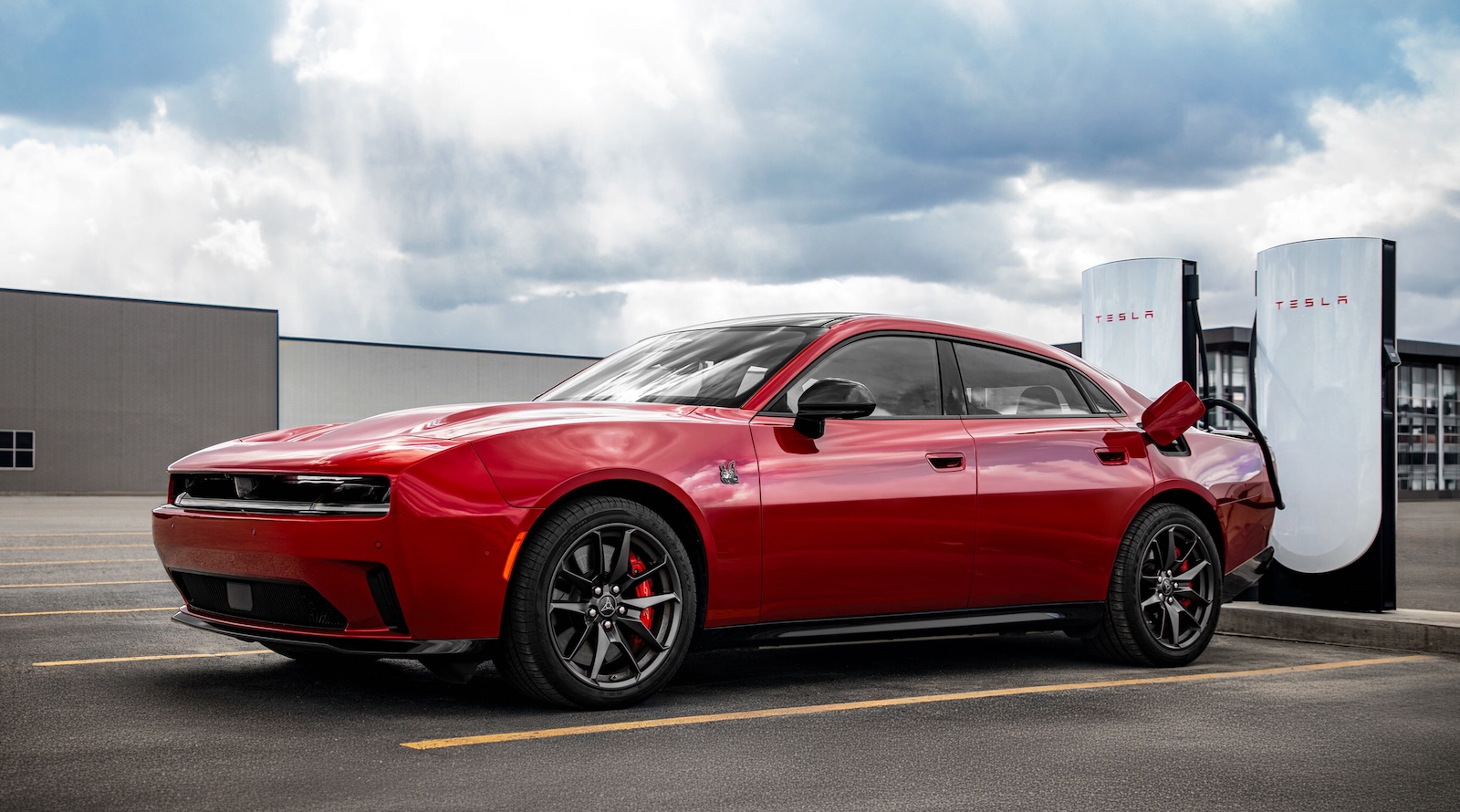
Another Major Brand Joins the Supercharger Network
Stellantis, the multinational automaker behind brands including Jeep, Ram, Dodge, Chrysler, Fiat, Peugeot, and Opel, has announced that its electric vehicles will gain access to Tesla's Supercharger network. The move follows similar announcements from Ford, General Motors, Rivian, Honda, and several other manufacturers, representing a broad industry acknowledgment that Tesla's charging infrastructure has become the de facto standard for long-distance EV travel in North America.
The integration means Stellantis EV owners will be able to use their vehicles' native charging ports — or Tesla-compatible adapters for older models — to access more than 60,000 Supercharger connectors across North America, Europe, and other regions where Tesla has expanded its network. For owners of Stellantis brands, which have historically relied on the CCS charging standard and the less dense Electrify America network, this significantly expands the practical range of their vehicles for long trips.
Why the Industry Is Consolidating Around Tesla's Standard
The North American Charging Standard, or NACS — Tesla's proprietary connector design — was adopted as the Society of Automotive Engineers' official J3400 standard in 2023, paving the way for the industry-wide adoption that has since followed. The SAE standardization removed the legal and branding friction that had previously made other manufacturers hesitant to explicitly endorse a Tesla-designed system.
The practical argument for NACS is straightforward: Tesla's Supercharger network is larger, more reliable, and better maintained than the alternatives. J.D. Power and other consumer research consistently shows that the Supercharger network outperforms competing public charging networks on uptime, charging speed, and user experience. For EV manufacturers trying to reduce range anxiety as a purchase barrier, access to Tesla's infrastructure is a meaningful product improvement.

What This Means for Electrify America and CCS
The accelerating adoption of NACS by major automakers raises difficult questions for the CCS ecosystem and the charging networks built around it. Electrify America, which was established as part of Volkswagen Group's settlement following the diesel emissions scandal, has been the primary alternative to Superchargers for American EV owners. Its network has struggled with reliability issues and slower build-out relative to Tesla's.
Stellantis brands have historically been sold with Electrify America charging packages — bundled free charging that was part of the EV value proposition for vehicles like the Jeep Wrangler 4xe and Fiat 500e. How those relationships evolve as Supercharger access becomes the more valued amenity remains to be seen. Volkswagen Group itself, which owns Electrify America, is navigating its own complicated position in the consolidating charging landscape.
The Broader Implications for EV Adoption
Charging infrastructure fragmentation has been a persistent complaint from EV skeptics and a genuine friction point for potential buyers. The patchwork of incompatible connectors, varying software platforms, and wildly inconsistent reliability across charging networks has made long-distance EV travel more complicated than it needs to be.
The industry's convergence around the Supercharger network — even as manufacturers remain Tesla competitors on the vehicle side — represents a pragmatic acknowledgment that infrastructure is a different kind of competitive resource than the vehicles themselves. Having a car that can charge reliably everywhere is more important to mainstream adoption than protecting a proprietary connector standard that was losing the standardization battle anyway. With Stellantis now on board, the EV charging landscape of 2026 looks substantially more coherent than it did three years ago.
This article is based on reporting by CleanTechnica. Read the original article.
Originally published on cleantechnica.com




