The electricity system is colliding with the AI buildout
The boom in data centers and other large electricity-hungry facilities is forcing regulators to answer a question that used to feel more technical than political: who gets to decide how giant new customers connect to the grid, and on what terms?
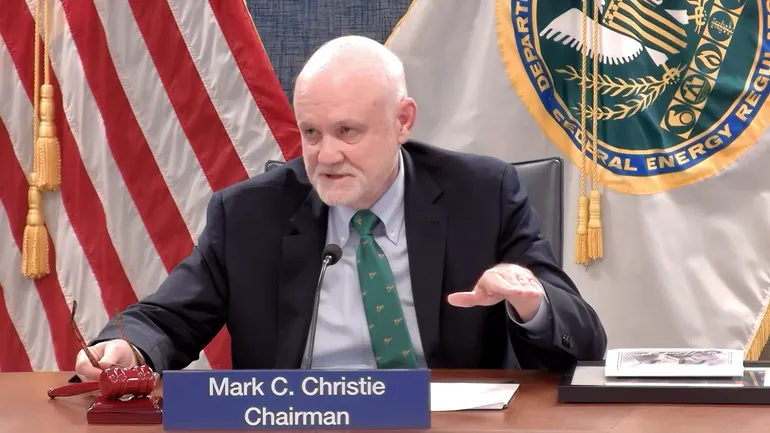
An opinion essay published by former Federal Energy Regulatory Commission chairman Mark Christie argues that the answer should remain with the states, not FERC. His case is that state regulators have handled retail load interconnections for decades and are already building policies aimed at reliability and consumer protection as demand from large-load customers accelerates.
The dispute is not procedural trivia. It sits at the center of a larger struggle over how the grid absorbs AI-linked infrastructure growth without shifting costs onto households or undermining reliability. That is why the debate over jurisdiction now matters far beyond utility law circles.
Why this fight is happening now
Christie points to an October Department of Energy directive telling FERC to consider rules for interconnecting data centers and other large loads to the transmission system. In his view, that would amount to federal preemption in an area long governed by states.
The urgency is easy to understand from the demand figures he cites from Virginia, home to the world’s best-known concentration of data centers. Dominion Energy, according to Christie, currently has 70 gigawatts of new demand in its queue, almost all from large-load customers. Dominion’s all-time peak load, by comparison, is 24.6 gigawatts. The queue is therefore nearly triple the system’s historic peak, with roughly 10 additional interconnection requests arriving each month.
Even if not all of that queued demand ultimately materializes, the numbers show why utilities and regulators are under pressure. The system is no longer dealing with a steady expansion of ordinary consumption. It is confronting concentrated blocks of new demand that can reshape infrastructure planning on their own.
The state argument
Christie’s position is that states are not waiting around for Washington to solve the issue. He highlights action by the Virginia State Corporation Commission, which has reviewed Dominion’s large-load interconnection processes, held technical conferences and ordered the utility to establish a new large-load customer rate class.
That argument has two parts. First, states are closer to the operational and consumer consequences of these decisions. Second, they are explicitly trying to avoid cost-shifting to residential customers while protecting reliability. Those goals matter because large-load customers can require expensive grid upgrades, dedicated service arrangements or new generation planning. The political question is who pays and how risk is allocated if projected demand does not arrive as expected.
Christie links that concern to the White House Ratepayer Protection Pledge, framing state regulation as the level of government best suited to shield households from the side effects of hyperscale industrial demand.
The federal case, and what is really at stake
Although Christie’s article is an argument rather than a neutral report, the issue it describes is real and growing. The federal case for involvement is easy to infer from the scale of the queue problem. Data centers and other enormous loads do not fit neatly into older categories of retail demand. Their impact reaches into transmission planning, regional reliability and wholesale market design, which is precisely the terrain where FERC traditionally exerts power.
That leaves the U.S. grid in a familiar twenty-first-century bind. Digital infrastructure may be built by private companies, but the consequences spill outward into shared systems and public oversight. The more AI and cloud expansion compresses timelines for new power demand, the harder it becomes to separate retail questions from transmission questions.
Christie’s warning is therefore a sign of how much the ground is shifting. What once looked like a technical utility proceeding is becoming a frontline policy fight over industrial growth, state authority and who should bear the costs of electrifying the next compute wave.
As data center demand keeps rising, the jurisdictional argument will not stay academic for long. It will shape who can move first, who pays for upgrades and how quickly the grid can respond to one of the fastest-growing sources of electricity demand in the U.S. economy.
This article is based on reporting by Utility Dive. Read the original article.

Originally published on utilitydive.com