Windows That Generate Electricity
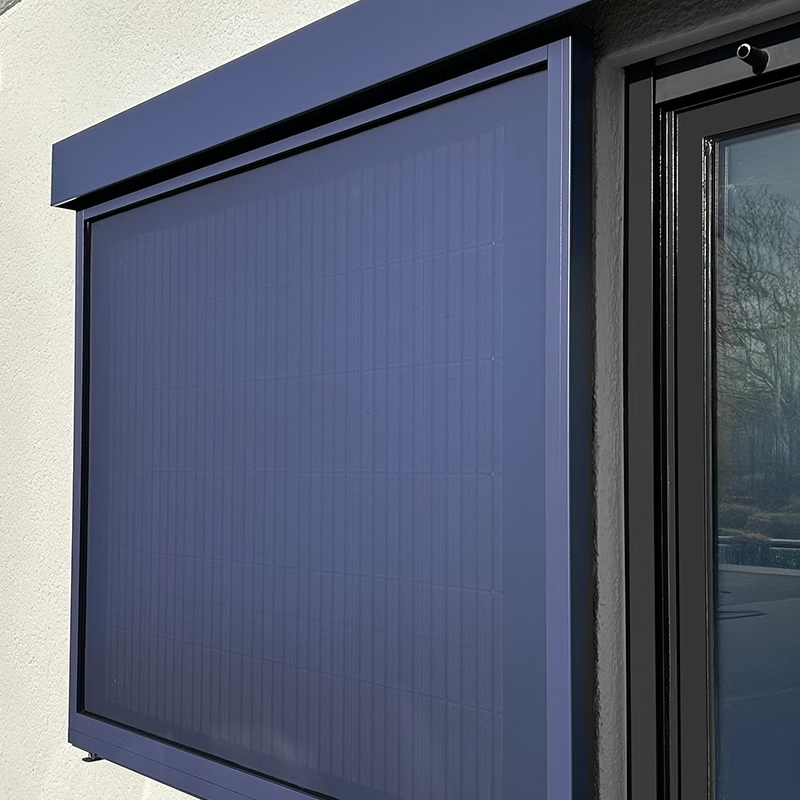
German facade systems manufacturer Ehret has introduced SolarSlide, a sliding shutter with integrated photovoltaic modules designed to turn building facades into power generators. Developed in collaboration with the Fraunhofer Institute for Solar Energy Systems (Fraunhofer ISE), the product has been available in France since January and represents a new approach to building-integrated photovoltaics (BIPV) that combines solar shading with on-site electricity generation.
Each glass-on-glass module measures one meter by one meter and contains 25 monocrystalline silicon cells producing approximately 141.7 watts. Installed as a sliding panel in front of windows, the shutter performs double duty: filtering direct sunlight to reduce summer heat gain and air conditioning loads while simultaneously converting that sunlight into usable electricity.
Two Configurations for Different Scales
Ehret offers the SolarSlide in two configurations targeting different market segments. The standard SolarSlide version is designed for medium-scale commercial and residential installations. It connects to external inverters and energy storage systems, allowing integration with existing building electrical infrastructure. Multiple shutters can be connected in series or parallel depending on the building's energy system architecture.
The SolarSlide Pro includes an integrated microinverter and can connect directly to a standard 230-volt outlet. This plug-and-play approach targets smaller residential projects and retrofits where simplicity is paramount. A homeowner can have shutters installed and generating electricity without rewiring their electrical panel or installing a separate inverter system — a significant reduction in installation complexity and cost.
Both versions use the same core module design: colored glass-on-glass construction without visible cell structures. The cells are embedded between two glass layers with a colored coating that conceals the typical dark blue or black appearance of silicon solar cells. This allows architects to specify shutter colors that complement a building's facade design rather than imposing the industrial appearance of conventional solar panels.

The BIPV Market Opportunity
Building-integrated photovoltaics have been discussed for decades but have struggled to achieve widespread adoption. The fundamental challenge has been cost: dedicated rooftop solar panels are cheaper per watt than building-integrated solutions because they use standardized designs manufactured at massive scale. BIPV products, by contrast, must be customized to fit specific building elements and are produced in much smaller volumes.
SolarSlide sidesteps this challenge by integrating PV into a product category — sliding shutters — that already exists in European building markets. Sliding shutters are a common architectural element in Mediterranean and Central European buildings, used for light control, privacy, and thermal regulation. By adding PV capability to an existing product type, Ehret avoids the need to convince architects and builders to adopt an entirely new building element.
The European Union's Energy Performance of Buildings Directive is also creating regulatory tailwinds for BIPV products. The directive requires new buildings to be progressively more energy-efficient, with near-zero energy buildings becoming the standard. Facade-mounted PV can help buildings meet these requirements when roof space is insufficient, particularly for multi-story residential and commercial buildings where the facade area far exceeds the roof area.
Performance and Practical Considerations
At 141.7 watts per one-square-meter panel, SolarSlide's output is modest compared to rooftop panels. A typical residential window might accommodate one or two shutters, generating roughly 140 to 280 watts. The value proposition improves with scale. A commercial building with dozens of south- and west-facing windows could install a substantial array of SolarSlide panels, collectively generating several kilowatts of power.
The dual function of shading and generation creates an interesting energy synergy. By blocking direct sunlight, the shutters reduce air conditioning loads — a major energy expense in summer months. The electricity they generate can partially offset the remaining cooling energy requirement. This combined effect is larger than either function alone and can be quantified in building energy modeling tools to support regulatory compliance calculations.
Installation and Architecture
The rail-mounted sliding system is based on Ehret's existing aluminum joinery designs, which are already widely used in European facade construction. This means architects and contractors working with the product can use familiar installation techniques and hardware. The shutters slide along tracks mounted above and below windows, allowing users to position them for optimal shading or retract them fully when shading is not needed.
The electrical connections run through the mounting rails and connect to the building's wiring at designated junction points. For the Pro version with integrated microinverters, the output is standard AC power that feeds directly into the building's electrical circuit — no special wiring or equipment required beyond a standard outlet.
SolarSlide joins a growing number of BIPV products that are blurring the line between building materials and energy systems. As buildings become increasingly electrified and energy codes tighten, facades that generate power will transition from architectural novelty to practical necessity.
This article is based on reporting by PV Magazine. Read the original article.
Originally published on pv-magazine.com