Quilt ties consumer comfort and installer workflow into one HVAC pitch
Quilt is using an April 2026 showcase in Honolulu to make a broader argument about the next phase of home electrification: that heat pumps will need to compete on software, usability, and installation workflow, not just on energy performance. The company’s latest push combines two messages. One is directed at homeowners, who are being promised room-by-room temperature control and occupancy-aware automation. The other is aimed at HVAC professionals through a newly launched tool called Toolbox, which Quilt says is designed specifically for technicians.
The immediate venue for that pitch is the Hawaii Electric Home Show, scheduled for April 25 and 26 in Honolulu. According to the supplied source text, Quilt plans to exhibit there while highlighting its all-electric ductless heat pump system. The company describes that system in ambitious terms, calling it the most intuitive, advanced, and efficient ductless heat pump on the market. Those claims remain the company’s own characterization, but they show how aggressively Quilt is positioning itself in a crowded category where user experience and install complexity can influence adoption as much as raw equipment specifications.
A product story built around control
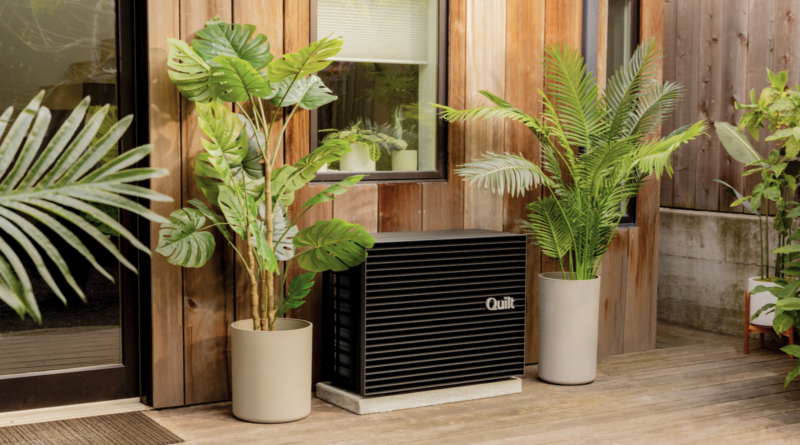
The strongest theme in Quilt’s current messaging is granular control. The company says its indoor unit, outdoor unit, control dial, and app work together as a single climate system. It also emphasizes room-by-room management, arguing that different occupants can keep different parts of the home at different temperatures instead of relying on a uniform setting. That feature is hardly trivial in the context of residential electrification, where comfort complaints can quickly undermine enthusiasm for otherwise efficient technologies.
Quilt also says the system includes Auto-Away, which uses occupancy sensing to reduce energy use when rooms are empty. That claim places the company squarely in the broader trend of smart-home equipment moving from manual scheduling toward automated presence-based control. In practical terms, the promise is straightforward: deliver comfort only where it is needed and scale back conditioning where it is not.
The source text does not independently verify the performance impact of those features, and it does not provide measured efficiency data. Still, the company’s emphasis reveals what it believes matters in the market. Rather than selling a heat pump purely as an appliance replacement, Quilt is presenting it as an intelligent home climate platform.

Why installer experience is becoming part of the sales equation
The more strategically interesting part of Quilt’s update may be the launch of Toolbox. The company says the new product is the first technician experience built specifically for HVAC professionals in its ecosystem. It argues that while many companies have focused on improving the end-user experience, less attention has been paid to the installation side of the business.
That distinction matters. HVAC adoption is often constrained not only by customer demand but by the realities of labor, training, documentation, and job-site coordination. If installers find a system cumbersome, inconsistent, or poorly documented, deployment can slow no matter how strong the consumer-facing pitch may be. Quilt is responding to that friction point by trying to make technicians more effective on the job.
According to the supplied source text, Toolbox was built by engineers and designers with backgrounds at Google, Apple, and Nest. Quilt says the product gives certified partner technicians what they need to manage cleaner and faster installations from a phone, reducing the need to switch between paperwork, manuals, and separate process steps. The company also presents the software as part of a longer-term effort to support partners and improve business profitability.
A familiar electrification challenge: technology is only half the battle
The significance of this launch lies in what it says about the heat pump market. Residential electrification has often been framed around equipment efficiency and climate benefits, but market uptake can hinge on more mundane variables: how intuitive the controls feel, how quickly a job can be completed, and whether contractors see a product as worth recommending. Quilt’s combined consumer-and-contractor push suggests the company understands that the path to growth runs through both the living room and the job site.
That is especially relevant in a product class like ductless systems, where room-level flexibility is often part of the appeal. Quilt is betting that a software layer spanning occupancy sensing, app control, and technician guidance can differentiate its offering from standard hardware-first competitors. Whether that translates into wider adoption will depend on execution, but the company is clearly trying to widen the definition of what a modern HVAC platform should include.

What this announcement really signals
The supplied source is promotional in tone, and much of the language comes directly from Quilt or an event-related writeup. That limits how far any conclusions should go. There is no independent benchmark in the material showing that the system outperforms rival ductless products, and there are no adoption figures for Toolbox. Even so, the announcement is notable because it reflects a real industry shift: home-energy technology companies increasingly need polished software, service infrastructure, and installer support to stand out.
For Quilt, the near-term objective appears to be visibility. The company is using a public electrification event to present itself as both a premium consumer brand and a practical partner for professionals. If that strategy works, it could help the company turn smart-home framing into a more durable HVAC business model.
At minimum, the launch shows where one emerging player thinks the sector is headed. Heat pumps are no longer being sold only on the basis of replacing fossil-fuel systems or cutting energy use. They are being sold as connected products that need to feel easier, smarter, and less burdensome for everyone involved. Quilt’s message in Honolulu is that the future of home climate control may be as much about software and workflow as compressors and refrigerant lines.
This article is based on reporting by CleanTechnica. Read the original article.
Originally published on cleantechnica.com




