A power plant sale is turning into a broader fight over data center load
The PJM Interconnection’s market monitor is urging federal regulators to reject Hull Street Energy’s proposed purchase of two peaking power plants from Rockland Capital, arguing that the transaction could allow generation capacity to be diverted away from the regional market and toward data centers.
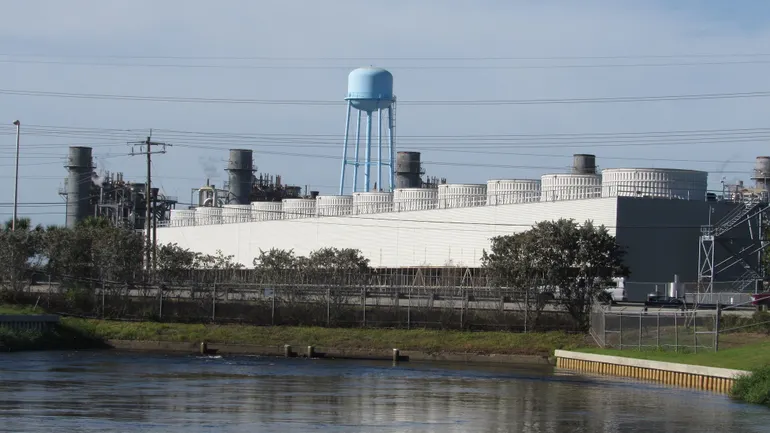
On its face, the case concerns two plants totaling 1,267 megawatts: the 677-megawatt Lee County generating station in Illinois and the 590-megawatt Tait generating station near Dayton, Ohio. But the filing described by Utility Dive reveals a much larger regulatory concern. As electricity demand rises, especially from data center development, the traditional assumptions behind capacity markets may no longer hold.
Why the PJM market monitor objects
According to the supplied source text, Monitoring Analytics told the Federal Energy Regulatory Commission that the transaction raises unanswered questions because Hull Street Energy is both a generation owner and a developer of data centers in the PJM market. One Hull Street company is redeveloping the retired Sammis power plant site in Ohio into an energy and data center campus.
The concern is that ownership of these peaking plants could give Hull Street the ability or incentive to steer capacity away from PJM’s competitive market structure and into dedicated service for data centers. If that happens, the market monitor argues, the costs and risks associated with serving data center load could shift onto other customers.
This is not just a theoretical objection. The source text says PJM is already facing tighter supply-demand conditions, largely driven by data center development. In a constrained system, removing or redirecting capacity can have system-wide consequences for prices, reliability, and competitive behavior.

A new pressure point for electricity regulation
The case underscores how quickly data center growth is reshaping U.S. power policy. Hyperscale computing, AI infrastructure, and large digital campuses are creating concentrated electricity demand that utilities and grid operators must accommodate. In some regions, that demand is strong enough to change market dynamics, not just load forecasts.
The market monitor’s filing appears to treat this deal as an early test of whether existing merger and transaction review standards are equipped for that reality. Utility Dive reports that FERC’s merger policy does not specifically account for the removal of capacity resources to serve data centers. That gap is now becoming a live issue.
If a power asset remains physically available but is commercially repositioned to serve a private, high-growth load, regulators must decide whether that is merely a business strategy or a broader market problem. Monitoring Analytics clearly leans toward the second view.
The public-interest argument
The filing quoted in the source text argues that the transaction could enhance Hull Street Energy’s ability to exercise market power in ways that are adverse to competition and rates, and therefore inconsistent with the public interest. It also says that allowing capacity to be removed for data center service would shift costs and risks from data centers to other PJM customers.
That framing is significant because it connects data center infrastructure directly to retail consequences. The issue is not being presented solely as one of wholesale market design. It is being presented as a fairness issue for the rest of the grid.
At the same time, the companies’ April 3 application reportedly argues that the deal satisfies FERC’s standards for approval. They said it would not harm competition, rates, or regulation and would not cross-subsidize a non-utility affiliate. In other words, both sides are appealing to the same public-interest framework while interpreting the future implications very differently.

Why peaker plants matter in this debate
The plants in question are peaking units, which are especially relevant in periods of high demand or system stress. Even if they do not run continuously, their presence in a capacity market can be important to reliability and pricing. That makes any question about their future market participation more consequential than a routine asset transfer might seem.
Because PJM is already under supply pressure, the optics of potentially repurposing peaker capacity for large private loads are especially sensitive. The case highlights a broader structural challenge: high-value new loads may be willing to secure generation in ways that compete with the traditional logic of shared grid planning.
If regulators do not adapt, more such transactions could force repeated case-by-case fights. If they do adapt, this dispute may be remembered as one of the moments when data center electrification stopped being a background trend and became a formal regulatory category.
What FERC may really be deciding
FERC is nominally being asked to assess one sale. In reality, it may also be deciding whether current policy tools are adequate for an era in which generation, private load development, and grid scarcity are increasingly intertwined.
The answer matters beyond PJM. Other regions are also wrestling with the energy demands of data centers and AI infrastructure. If dedicated supply arrangements begin to pull generation resources away from open markets, regulators everywhere will face similar questions about competition, reliability, and cost allocation.
The source text does not say how FERC will rule, but it makes clear why the case has attracted scrutiny. Existing standards were not built with this exact scenario in mind. That does not guarantee rejection, but it does increase the odds that the commission will be pushed to clarify how data center-driven deals should be evaluated.

A marker for the next phase of grid politics
The broader importance of the dispute is that it links three major forces: rising electricity demand, the buildout of digital infrastructure, and the stress those trends place on market rules built for a different era. As data centers grow, their power strategies will no longer be niche infrastructure questions. They will become central questions for energy regulators.
That makes the Hull Street-Rockland deal more than a corporate transaction. It is a marker of a deeper transition in how generation assets may be valued and deployed. The market monitor’s warning is ultimately about who gets priority access to scarce capacity and who bears the costs when the answer changes.
For policymakers, that is likely to be one of the defining energy questions of the next few years.
This article is based on reporting by Utility Dive. Read the original article.
Originally published on utilitydive.com




