The direction of the energy transition is holding, but the path is getting messier
North America’s energy transition is still moving forward, but it is entering a more complicated phase in which politics and execution matter as much as technology costs. That is the central message of Energy Monitor’s review of GlobalData’s North America Energy Transition 2026 outlook. The report argues that the broad economic case for renewables remains intact, yet the region’s trajectory is becoming harder to predict as policy volatility and geopolitical conflict complicate deployment.
That distinction is important. For much of the past decade, the energy transition was often framed as a cost story. Solar got cheaper, storage improved, wind scaled, and the expectation was that adoption would accelerate on those economics alone. The new outlook suggests that phase is over. Technology and economics still matter, but the decisive constraints now involve permitting, grids, industrial capacity, and political commitment.
Renewables are still growing
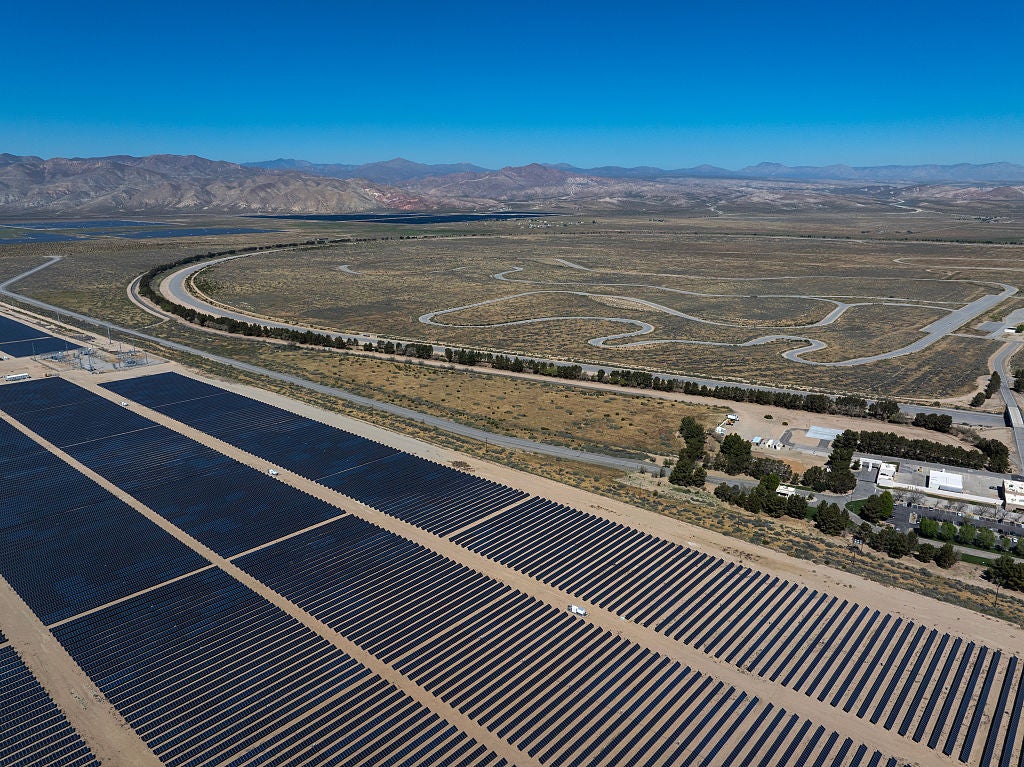
Despite the turbulence, the outlook still projects substantial growth. Renewables are expected to rise from 32 percent of power generation in 2025 to 43 percent by 2035 across North America. Solar alone is projected to reach 19 percent. On the capacity side, renewables are expected to move from 42 percent to 58 percent over the same period.
Those are meaningful gains, and they show the transition has not stalled. But the report also places North America in a weaker comparative position than the global trend. Worldwide, renewables are expected to account for around 69 percent of capacity by 2035. The implication is not only that North America may decarbonize more slowly. It is that regions that move faster on grids, supply chains, and electrification could also gain an industrial edge.
That competitive framing marks a shift from older debates that treated the transition mainly as a climate target. Increasingly, speed of execution is also being read as a measure of economic capability.

Demand growth is making the transition harder and more urgent
The most immediate pressure in the outlook comes from electricity demand. North American consumption is projected to rise from about 5,000 terawatt-hours in 2025 to nearly 5,900 terawatt-hours by 2035. Electrification contributes to that increase, but the report points to data centers as a bigger source of pressure than many expected.
That matters because demand growth changes the transition problem. It is no longer only about replacing legacy generation with cleaner sources. It is also about building enough new supply, transmission, storage, and system flexibility to serve a larger and more power-hungry economy. If demand expands quickly while infrastructure lags, even favorable renewable economics may not be enough to keep the transition on schedule.
This is where the outlook’s emphasis on execution becomes most concrete. Regions that can connect projects to the grid, expand supply chains, and manage rising loads will gain momentum. Regions that cannot may find that a formally pro-transition strategy still produces slower real-world results.
Politics remain the major swing factor
The report also highlights political volatility as a major source of uncertainty, specifically noting the Trump administration’s active discouragement of renewable energy projects. That does not erase the long-term trend, but it does make the path less linear. Transitions can stall, reroute, or reverse, and policy swings can affect not only project approvals but business confidence in where to invest.
This is why the analysis describes the current period as more exacting. The easy story was that economics would do most of the work. The harder story is that energy systems are built through policy, infrastructure, and industrial coordination. If those elements become unstable, the winners inside the transition can change even when the overall direction remains positive.
In that sense, the outlook is less a contradiction of clean-energy momentum than a warning against complacency. The transition is still accelerating in absolute terms, but relative performance matters. Falling behind the global pace would carry consequences not only for emissions goals but for industrial competitiveness and energy-system resilience.
Key takeaways
- Renewables are projected to rise from 32 percent of North American generation in 2025 to 43 percent in 2035.
- Renewable capacity is expected to grow from 42 percent to 58 percent over the same period.
- North America is projected to trail the global pace, where renewables could reach about 69 percent of capacity by 2035.
- Electricity demand is expected to rise sharply, with data centers identified as a major driver.
- Policy volatility is reshaping which technologies and projects are best positioned to win.
The broad conclusion is not that the North American transition is failing. It is that the next decade will be defined less by whether clean technologies are viable and more by whether governments and markets can build quickly and consistently enough to keep up with demand. The economics opened the door. Politics and execution will decide how wide it gets.
This article is based on reporting by Energy Monitor. Read the original article.
Originally published on energymonitor.ai




