Private cellular networks are moving deeper into industrial operations
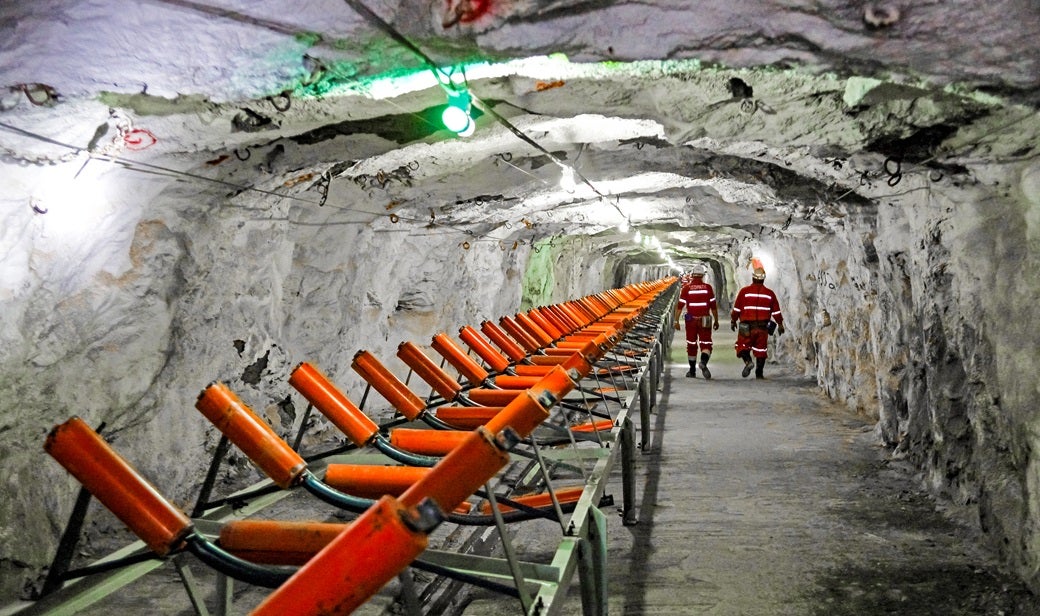
The push to modernize mining is increasingly converging on a communications problem. As operators look for safer, more automated, and more data-driven sites, the underlying network has become as important as the machinery it supports. A partnership between Ericsson and mining equipment company Epiroc is advancing one answer: private 4G and 5G cellular networks built specifically for mines.
According to the supplied source material, the companies have worked together since 2016 to simplify the use of private cellular technology for telematics, digitalization, and automation across mining environments. The core argument behind the effort is straightforward. Mines are physically difficult places to connect reliably, whether they consist of long underground tunnels or large open-pit operations. Traditional communications tools can struggle with that combination of scale, obstruction, and operational risk. Private cellular networks are being presented as a more robust platform for the next generation of mining systems.
The story is notable not because it announces a single dramatic breakthrough, but because it reflects a wider industrial shift. More heavy industries are treating connectivity as foundational infrastructure rather than a secondary utility. In mining, that change carries particular weight because communication failures can affect both productivity and worker safety.
Why mining is a demanding connectivity environment
The source describes mines as extensive and unforgiving structures, with tunnels stretching for hundreds of kilometers underground or wide surface operations threaded with roads and equipment. In such settings, connectivity has to do more than support office-style data traffic. It must remain continuously available, deliver high bandwidth, keep latency low enough for machine control, and maintain security across critical operations.
Those requirements become more pressing as automation expands. The article points to examples such as drill rigs operating autonomously in sync, rock bolts that detect movement and warn workers, and systems that tell people what is approaching around a corner to help avoid collisions. These are not generic digitization talking points. They are use cases that depend on persistent, site-wide communications with predictable performance.
That helps explain why private LTE and 5G are being emphasized over legacy Wi-Fi-based approaches. In the account provided, cellular networks offer superior coverage and capacity in sprawling underground and open-pit environments. Their low-latency characteristics are especially relevant for real-time or semi-autonomous control tasks, where network inconsistency can directly limit the usefulness of advanced equipment.

The automation case is linked to safety and environmental pressure
Mining companies are pursuing these systems under multiple forms of pressure. The source notes the industry is trying to raise productivity, lower costs, and improve safety while also reducing environmental impact. That combination is important because it means connectivity investments are being justified on several fronts at once.
Automation can support productivity by coordinating equipment and reducing downtime. It can support safety by improving visibility, monitoring, and worker awareness in areas with limited lines of sight or higher hazard levels. It may also help environmental goals if more precise digital control reduces waste, improves operational efficiency, or enables better site monitoring. The article does not quantify those gains, but it clearly frames network modernization as an enabler for all three priorities.
That framing mirrors a broader pattern across industrial technology. Infrastructure upgrades are increasingly sold not as standalone IT projects, but as multipliers for automation, sensing, and operational decision-making. In that sense, mining is following a familiar industrial logic: once machines, sensors, and control systems become more connected, the value of reliable wireless coverage rises sharply.
Why the Ericsson-Epiroc partnership stands out
The partnership’s relevance comes from the combination of telecom expertise and mining equipment knowledge. Ericsson brings the cellular network capability, while Epiroc contributes direct experience in mining machinery, workflows, and customer requirements. The source argues that this pairing has helped standardize automation and connectivity in ways that make mining products, services, and solutions safer, smarter, and more efficient.
That standardization claim deserves attention. One of the recurring barriers in industrial digitization is fragmentation: different machines, software systems, and network layers often fail to integrate cleanly. If private cellular deployments in mines can be made more repeatable and interoperable, the technology becomes easier to scale beyond isolated pilot projects.
The timeline matters too. A collaboration running since 2016 suggests this is not a sudden marketing pivot to capitalize on 5G hype. It points instead to a longer effort to match network architecture with the realities of mining sites. The question now is whether that work translates into wider deployment across the sector.
What this means for industrial connectivity
The larger takeaway is that private cellular is continuing to carve out a role in places where mainstream public networks or simpler on-site wireless systems are not enough. Mining is one of the clearest examples because the environment is so difficult and the operational stakes are so high. If private 4G and 5G networks prove they can support autonomous equipment, hazard detection, and real-time awareness reliably, they strengthen the case for similar architectures in other heavy industries.
At the same time, the source is explicitly partner content, which means its claims should be read as an industry position rather than an independent field audit. Even so, the underlying trend is credible within the boundaries of the supplied material: connectivity is becoming core mining infrastructure, and private cellular networks are being advanced as a practical way to support that transition.
For the energy and industrial sectors more broadly, that is the signal worth watching. Digital transformation in hard physical environments depends less on glossy dashboards than on whether the network underneath can cope with distance, obstruction, mobility, and risk. Mining may be showing how that infrastructure layer is starting to mature.
Why this story matters
- Private 4G and 5G are being positioned as essential infrastructure for automated and connected mining operations.
- The mining use cases highlighted depend on low latency, broad coverage, and secure communications in difficult environments.
- The long-running Ericsson-Epiroc partnership reflects a wider industrial shift toward connectivity-led modernization.
This article is based on reporting by Energy Monitor. Read the original article.
Originally published on energymonitor.ai




