A new tender with a different market design
India has opened a 500 megawatt renewable energy tender that stands out not just for its capacity, but for the market structure attached to it. According to the supplied source text, the Solar Energy Corporation of India is seeking proposals for interstate transmission system-connected renewable projects that will supply 1,500 megawatt-hours of assured peak power, framed as 500 megawatts for three hours, under a contract-for-difference mechanism.
The notable feature is that the selected developers will primarily sell the electricity generated by their projects through power exchanges. SECI will sign contract-for-difference agreements with successful bidders for a period of 12 years, creating a route for renewable generation that is more explicitly linked to traded market dispatch than to conventional long-term offtake structures.
That makes the tender an important policy and market signal. It suggests India is continuing to search for mechanisms that reward renewable power not only for low-cost generation, but for delivery into periods when the grid needs it most.
What the tender requires
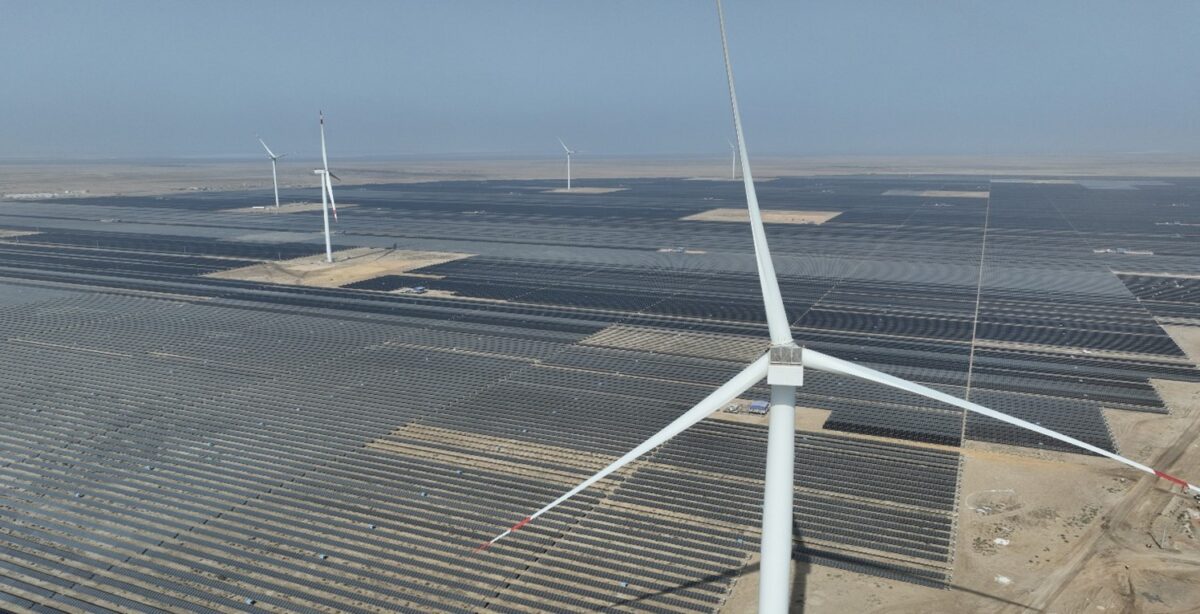
The source text states that developers selected through the tender will set up ISTS-connected renewable projects, with or without energy storage systems. Projects may be located anywhere in India at sites chosen by the developer. For each project, the renewable generation component and the energy storage system, if included, must be co-located.
The co-location requirement is significant because it encourages integrated project design. Rather than treating storage as a separate balancing resource somewhere else on the system, the tender allows developers to package generation and flexibility at the project level. That can improve dispatch reliability, especially for a structure centered on assured peak power.
The supply target of 1,500 megawatt-hours for three hours also matters. It frames the procurement around time-sensitive delivery rather than simple nameplate capacity. In effect, the tender is asking renewable developers to show not just how much energy they can produce, but how dependably they can shape that output into a usable peak product.

Why power exchange dispatch changes the equation
The instruction to sell power through exchanges is one of the clearest signs that India is experimenting with a more market-responsive renewable procurement model. Traditional renewable tenders often revolve around fixed power purchase agreements. This one retains long-term contractual support through a contract-for-difference arrangement while pushing actual energy sales into exchange-based trading.
That hybrid structure can have several effects. It may encourage better alignment between renewable output and market demand. It may also provide developers with a clearer commercial incentive to optimize project operation, especially if storage is involved. And it could help deepen the role of exchanges in integrating renewable electricity into the wider power system.
The source text does not spell out settlement formulas or strike-price mechanics, so the exact financial design remains outside the supplied material. But the headline arrangement is clear enough to mark this as more than a standard capacity auction.
Peak power is becoming a central renewable challenge
As renewable penetration grows, the value question shifts. Cheap daytime generation remains important, but systems increasingly need renewable resources that can contribute when demand peaks or when solar output weakens. India’s new tender addresses that issue directly by specifying assured peak power.
The ability to include energy storage systems gives developers a route to meet that requirement, but storage is not mandatory. That leaves room for different project strategies depending on resource profile, commercial assumptions, and site conditions. The co-location rule, however, ensures that if storage is used, it is part of an integrated plant design rather than an abstract contractual add-on.
This is consistent with a broader evolution in energy markets where renewables are increasingly judged on firmness, timing, and dispatchability as well as cost. The tender reflects that shift by treating peak delivery as a procurement objective in its own right.

Why this matters for India’s energy transition
India’s renewable buildout is large enough that procurement design now has system-level significance. A 500 MW tender is material on its own, but the bigger importance lies in what kind of future projects it may encourage. If the contract-for-difference structure works well with exchange dispatch, it could offer a template for additional procurements aimed at reliability-oriented clean power.
The tender’s design points to several priorities at once:
- Greater use of market-linked renewable dispatch
- More emphasis on peak-period delivery rather than flat energy output
- Encouragement of co-located renewable-plus-storage development
- Broader integration of flexible clean power into interstate transmission networks
Each of those themes matters in a power system trying to grow rapidly while maintaining reliability and affordability.
A policy experiment worth watching
The SECI tender is best understood as both a procurement event and a market design experiment. It does not simply ask who can build renewable capacity most cheaply. It asks who can provide assured peak power under a structure that uses exchanges for dispatch and contracts-for-difference for revenue support.
That is a more sophisticated question, and one better matched to the realities of a modernizing grid. Renewables are no longer a side category in India’s power mix. They are becoming central enough that timing, firmness, and trading design now matter as much as installation volume.
If developers respond strongly and the mechanism performs as intended, this tender could influence how future clean power auctions are structured. At minimum, it shows that India is pushing beyond first-generation renewable procurement models and testing a framework where market participation and system value are more tightly linked.
This article is based on reporting by PV Magazine. Read the original article.

Originally published on pv-magazine.com




