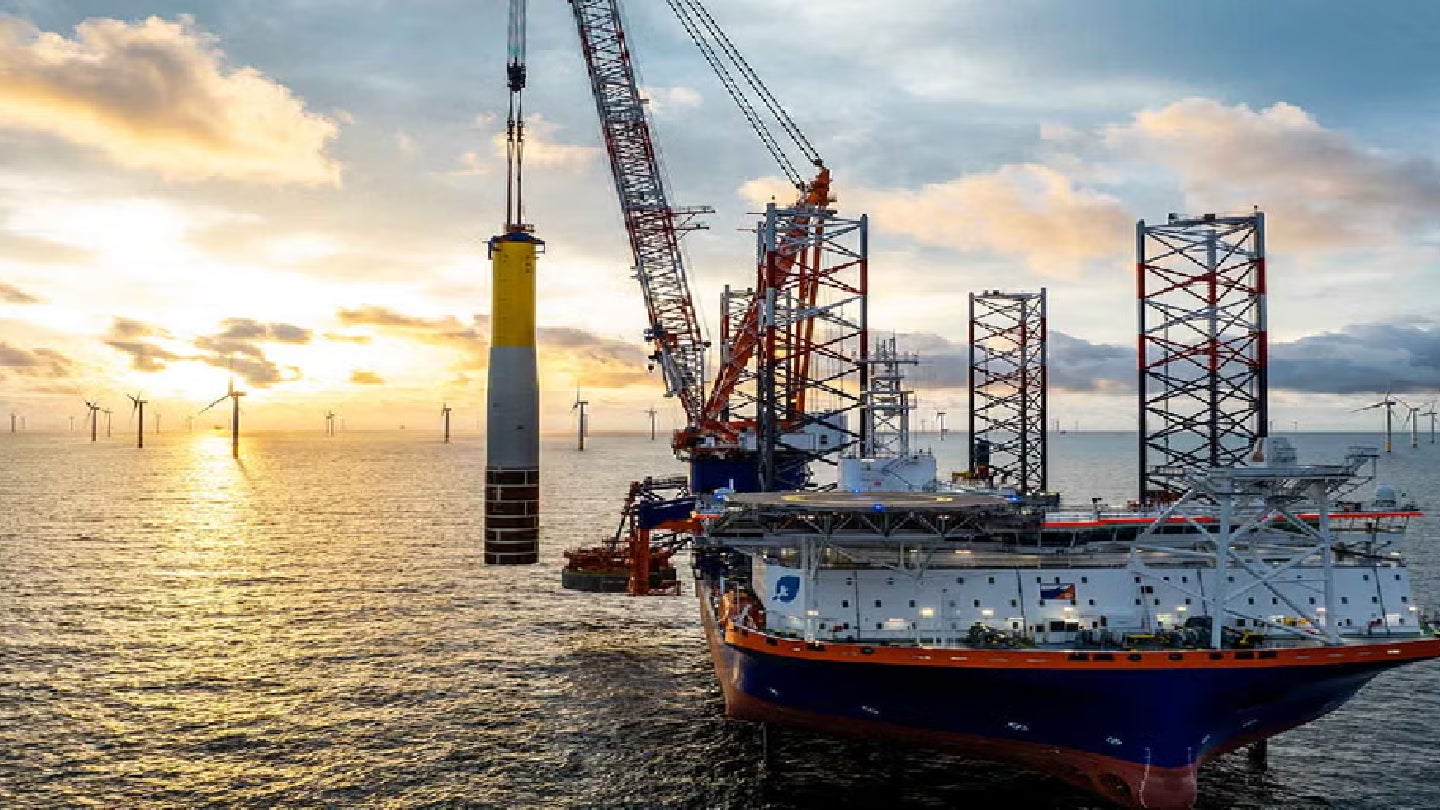
An offshore wind buildout depends on more than turbines
Germany’s next wave of offshore wind expansion is not only about turbine capacity. It is also about the control systems that make large projects operable, secure, and grid-ready. That is the significance of Hitachi Energy’s new contract to supply automation equipment for Nordseecluster B, the 900-megawatt second phase of a larger offshore wind development led by RWE and Norges Bank Investment Management.
According to Energy Monitor, Hitachi Energy will provide its MicroSCADA system and associated technical infrastructure, allowing 60 wind turbines to connect directly to an offshore converter station operated by the local grid provider. The project is scheduled to become operational in 2029.
On paper, this may look like a routine supplier announcement. In practice, it highlights one of the less visible realities of large-scale renewable deployment: generation capacity alone does not deliver electricity. Modern wind projects require tightly integrated digital control layers to manage high-voltage connections, communicate with grid operators, and maintain stable performance under changing conditions.
What Nordseecluster B represents
Nordseecluster B is the second phase of a broader 1.6-gigawatt offshore wind development. RWE holds a 51% stake in the overall project, while Norges Bank Investment Management owns 49%. Once fully completed, the Nordseecluster development is expected to supply electricity to an estimated 1.6 million households in Germany.
That scale helps explain why automation contracts matter. Offshore wind is not a collection of isolated turbines. It is a coordinated electrical and operational network stretching from individual generators to offshore substations, converter platforms, onshore control centers, and national transmission systems. A failure in that chain can compromise output, revenue, grid compliance, and maintenance planning.
Germany’s broader energy transition makes those integration issues even more consequential. The country is pushing for greater energy independence and a larger share of renewable electricity, which means offshore projects must be brought online not just quickly, but with dependable control architecture that supports long-term system operation.

The role of MicroSCADA
Hitachi Energy’s MicroSCADA platform is positioned as the project’s automation backbone. According to the source text, it will support management of high-voltage connections and remain compatible with third-party 66-kilovolt generator switchgear and supervisory control and data acquisition systems.
Compatibility is a critical detail. Offshore wind farms are built from equipment sourced across multiple vendors, and operators need these systems to communicate reliably across technical boundaries. A control platform that can integrate third-party components reduces friction in engineering and operation.
The system will also provide integrated interfaces between the onshore control center, the transmission system operator, and RWE’s trading teams. That reflects the increasingly digital character of electricity markets. Wind farms do not merely generate power; they participate in dispatch, forecasting, balancing, and revenue optimization. Automation software therefore sits at the intersection of engineering and commercial operations.
In other words, the contract is not just about monitoring hardware. It is about enabling real-time coordination across the organizations that will operate, regulate, and monetize the project’s output.
Cybersecurity and grid dependence
The agreement also specifies that the MicroSCADA solution will follow the latest cybersecurity protocols to secure data exchange throughout the grid network. That point deserves emphasis. As renewable assets become more digitized and more connected, they also become more exposed to cyber risk.
Offshore wind farms are critical infrastructure. Their control systems influence generation flows, maintenance actions, and communication with the grid. A secure automation layer is therefore a foundational requirement, not an optional feature. The more Europe’s power system leans on interconnected digital assets, the more valuable secure operational technology becomes.
For developers, cybersecurity is increasingly part of bankability. Investors and regulators want assurance that energy infrastructure can withstand not just weather and mechanical failure, but hostile digital interference. Contracts like this reflect that evolving standard.

A repeat supplier relationship
Hitachi Energy previously supplied automation systems for Nordseecluster A, the first phase of the broader project. That continuity suggests RWE is standardizing at least part of its digital infrastructure across the cluster, which can simplify commissioning, training, and long-term operations.
Standardization is especially useful offshore, where maintenance access is costly and operational complexity scales quickly. Reusing proven systems can reduce integration risk as projects move from one phase to the next.
The Nordseecluster development therefore illustrates a broader pattern in renewable energy deployment. Headlines tend to focus on megawatts, turbine counts, and project finance. But the success of these assets depends equally on the less visible software and control systems that connect generation to the grid.
That is why the Hitachi-RWE deal matters. It is a reminder that the energy transition is also an automation transition. As more offshore wind comes online, the competitive edge will not belong only to those who install large amounts of capacity. It will also belong to those who can integrate, secure, and operate that capacity reliably within increasingly complex power systems.
Nordseecluster B will not produce electricity until 2029. But the work of making it an effective part of Germany’s grid is already underway, and digital infrastructure is at the center of that effort.
This article is based on reporting by Energy Monitor. Read the original article.
Originally published on energymonitor.ai




