A coal region is being rewired around utility-scale solar
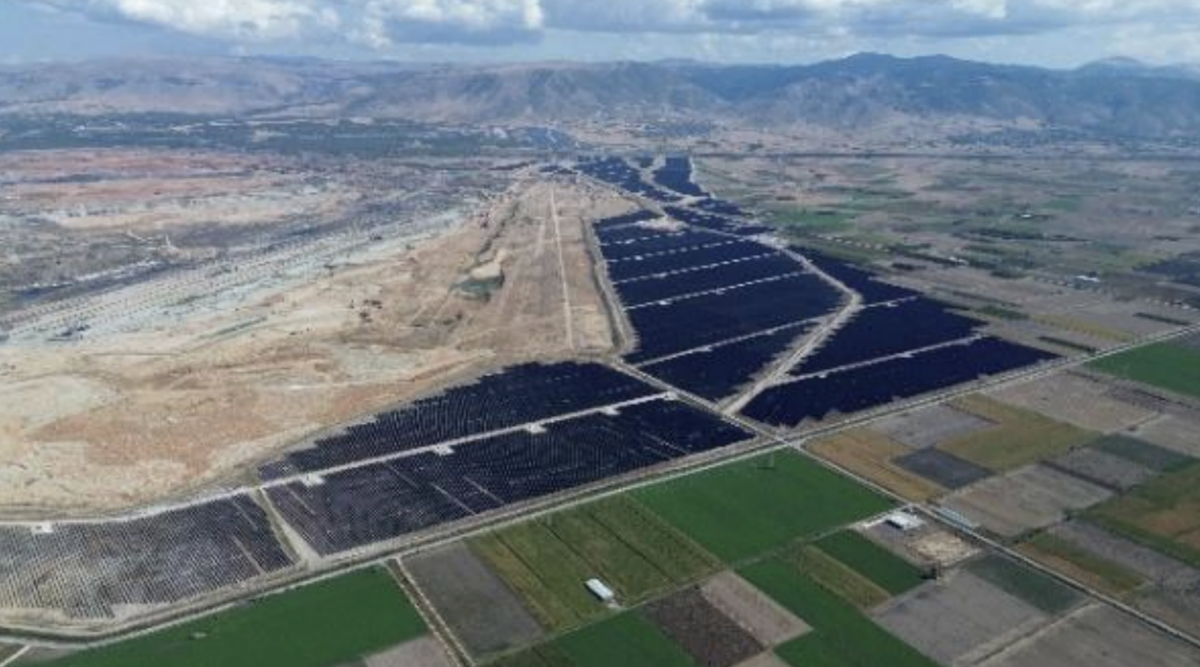
Greece’s Public Power Corp. Group has completed a solar portfolio totaling 2,130 megawatts on former lignite mine land in northern Greece, turning one of the country’s old coal landscapes into a major clean-power cluster. According to the supplied source material, the projects are located around Amyntaio and Ptolemaida and are expected to generate 3.15 terawatt-hours annually, equivalent to nearly 6% of Greece’s yearly electricity consumption.
The scale alone makes the development significant. But the more important story is what kind of energy transition it represents: not just new generation capacity, but a geographic and industrial conversion of former fossil-fuel territory into renewable infrastructure.
What has been built
The completed portfolio includes several large sites, led by the 940 MW Amyntaio solar complex, developed with RWE, and the 550 MW Phoebe photovoltaic plant near Pontokomi, described in the supplied text as the European Union’s second-largest single-site solar plant. Taken together, the 2.13 GW cluster immediately places the region among the more important utility-scale solar centers in Europe.
Those numbers matter because they shift solar from incremental addition to system-level relevance. Generating the equivalent of nearly 6% of national annual electricity demand is not a symbolic milestone. It is enough to shape grid planning, market expectations, and regional development strategy.

Why the mine-site conversion matters
Former lignite mine land is not just available space. It carries economic and political weight. Coal regions are often at the center of energy-transition tensions because they combine legacy infrastructure, employment histories, and local identities built around extraction. Repurposing those sites for solar changes the story from closure alone to redevelopment.
That does not erase the social complexity of moving away from coal. But it does create a visible model of post-lignite land use. Instead of leaving degraded industrial landscapes as stranded assets, Greece is converting them into productive energy sites that remain central to the national power system.
The symbolism is strong for a reason. Energy transition is often criticized when it appears detached from place. Projects like this tie decarbonization directly to the physical footprint of the old system, showing how one energy era can be overbuilt by the next.
Storage is the next test
The supplied source text also notes that PPC is working on a third large-scale battery storage facility in the area, while two pumped-hydro storage projects are progressing as well. That detail is crucial. Very large solar clusters are most effective when paired with storage or other flexibility resources that help manage timing, reliability, and grid integration.
In other words, Greece is not just adding panels. It is moving toward a more complete regional energy platform in which solar generation is supported by assets designed to smooth supply and improve system resilience. That matters because utility-scale renewable buildouts increasingly live or die on integration, not merely on installed capacity.
The battery and pumped-hydro pipeline suggests policymakers and developers understand that the transition from coal to renewables is not a one-for-one swap. It requires a broader redesign of how electricity is produced, balanced, and delivered.
A larger European signal
The Greek project also sends a wider signal across Europe. Many countries are searching for credible transition models for former fossil-fuel regions, especially as coal exits accelerate and energy security remains a live concern. A 2.13 GW solar buildout on mine land offers a concrete example of how large-scale renewable deployment can align with regional redevelopment.
That does not make the approach universally replicable. Local grid conditions, financing structures, land availability, and permitting frameworks differ widely. But scale changes perception. Once projects become large enough to move national demand figures, they stop looking like edge experiments and start looking like templates.
Based on the supplied reporting, that is where the PPC cluster now sits. It is no longer just a set of individual projects. It is a territorial energy transformation, backed by capacity numbers large enough to matter at country scale.
From legacy extraction to new generation
The strongest conclusion supported by the source material is that Greece has completed one of its most consequential renewable redevelopments to date. PPC’s 2.13 GW solar portfolio on former lignite mine land ties together climate policy, industrial reuse, and grid-scale power generation in a single project geography. With battery and pumped-hydro work moving ahead in parallel, the region is being positioned not only as a place where coal ended, but as a place where a new power system is being built.
That is the deeper significance of the announcement. In the energy transition, capacity figures matter. But where those megawatts are built, and what they replace, matters just as much. Northern Greece is now offering one of the clearer examples of that principle in action.
This article is based on reporting by PV Magazine. Read the original article.
Originally published on pv-magazine.com