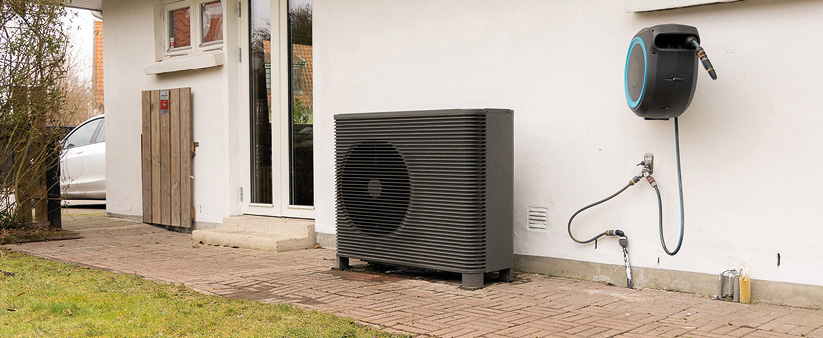
Electrification policy meets household energy strategy
France’s latest electrification plan places heat pumps at the center of its housing transition, with the government targeting one million installations per year by 2030 and aiming to permanently phase out gas boilers in new housing. On its face, that is a heating policy. In practice, it could become a meaningful tailwind for residential solar as well.
The reason is straightforward. Heat pumps increase household electricity use while reducing direct fossil fuel consumption. As more homes electrify heating, the value of producing power on-site can rise too, especially when paired with expectations of lower running costs and supportive financing.
PV Magazine frames this as a potentially beneficial development for the French residential photovoltaic sector, and the connection is logical. Electrification does not just shift end-use technology. It changes the economics of the whole home energy system.
What France is planning
The plan, unveiled last week by Prime Minister Sebastien Lecornu, makes heat pumps a central instrument of decarbonization in buildings. The government is targeting deployment of one million units annually in French homes by 2030, with the stated objective of cutting heating costs by half.
The direction extends beyond single-family homes. For multi-family buildings, the ambition is to eliminate gas and fuel oil heating by 2050. To support the rollout, the government has initially earmarked 200 million euros.
Energy minister delegate Maud Bregeon also proposed a leasing model for heat pumps, to be combined with stronger support through the MaPrimeRenov’ program and energy savings certificates. According to the report, the increase in subsidies could reach 2,000 euros, within an overall cap of 12,000 to 14,000 euros, with the intention of ensuring a return on investment within three years.

Why heat pumps can help rooftop solar
A home with electric heating has more reason to care about power production, load management, and self-consumption. Heat pumps shift part of the household energy bill from gas or oil to electricity, which can make rooftop solar more attractive even when solar was not the primary policy target.
This does not mean every heat-pump installation automatically becomes a solar installation. But the technologies align in several ways:
- Heat pumps increase electricity demand in a way that rooftop solar can partially offset.
- Electrified homes may pay more attention to integrated energy upgrades rather than isolated appliance replacement.
- Government support that improves the economics of electrification can make complementary investments easier to justify.
In other words, once a homeowner starts rethinking heating, the conversation can expand to generation, storage, and broader energy efficiency.
The strategic importance of bundling technologies
Europe’s energy transition often advances through combinations rather than single technologies. A rooftop solar panel does one thing. A heat pump does another. But together they can help reshape the daily energy profile of a household, especially when paired with insulation upgrades, smart controls, or flexible tariffs.
That bundled logic matters because consumer adoption is often driven by lived economics, not abstract decarbonization targets. If households believe they can lower heating bills, reduce exposure to fossil fuel volatility, and improve long-term energy autonomy, adoption becomes easier.
The French plan clearly emphasizes the first of those goals. The possible boost to residential solar comes from the same household calculation.

What may determine the size of the solar spillover
The boost to rooftop PV is not guaranteed. Several factors will shape whether France’s heat-pump rollout translates into stronger residential solar demand.
First is financing. A leasing scheme and higher subsidies may lower the barrier for heat pumps, but solar uptake will depend on whether households can afford or finance a second major upgrade. Second is program design. If installers, incentives, and communications treat electrification as a whole-home package, solar may gain more than if policy remains technology-specific. Third is timing. Households often prefer to do major energy renovations in coordinated phases rather than repeatedly disrupting the home.
There is also a behavioral element. Once a homeowner begins monitoring electricity consumption more closely because of a heat pump, interest in self-generation can rise naturally.
A larger shift away from combustion in buildings
The French government’s emphasis on phasing out gas boilers in new housing and eventually eliminating gas and fuel oil heating in multi-family buildings by 2050 signals a structural move away from combustion-based heating. That is significant not only for emissions but for market design.
As more building energy demand becomes electric, the grid, distributed generation, and consumer-side flexibility all become more central. Residential solar is part of that system-level transition. It benefits from policies that expand the role of electricity in everyday household life, even when the policy headline is heat pumps rather than photovoltaics.
This is why the French plan deserves attention beyond the heating market. It is a reminder that electrification policy can create adjacent demand across the energy stack.

Why the French case matters more broadly
France is not the only country trying to accelerate clean heating, but its approach illustrates a wider lesson for energy policy. Support for one electrification technology can have second-order effects on others. The strongest transitions often happen when those effects reinforce one another.
For policymakers, that means incentives should be judged not only by direct uptake but by the ecosystems they encourage. For installers and manufacturers, it means customer acquisition strategies may increasingly revolve around whole-home packages. And for the residential solar sector, it means growth opportunities may come from policies that were not written specifically for PV at all.
If France succeeds in rapidly expanding heat pump deployment, rooftop solar may be one of the quieter beneficiaries. The common thread is simple: once a home electrifies heat, electricity itself becomes more valuable, and that can change the appeal of generating more of it at home.
This article is based on reporting by PV Magazine. Read the original article.
Originally published on pv-magazine.com