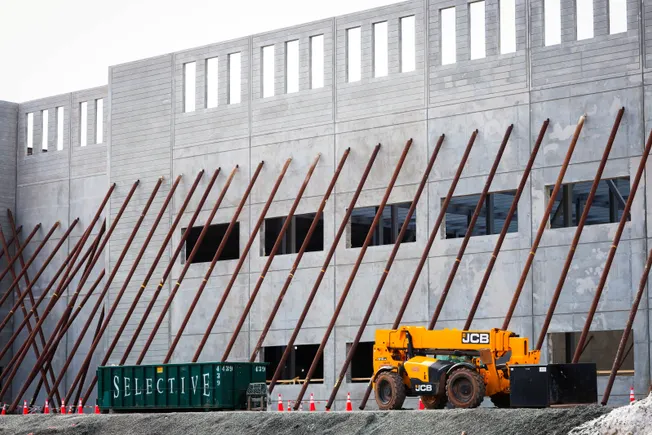
Data center growth is no longer concentrated in just a few familiar markets
A federal power-market snapshot highlighted by Utility Dive points to the scale and changing geography of U.S. data center demand. According to the report, 50 gigawatts of data centers were online at the end of 2025, with the Midcontinent Independent System Operator, or MISO, showing the strongest growth of any region examined.
The figure is significant on its own. Fifty gigawatts is not a niche load story. It signals that data centers have become one of the major shaping forces in the U.S. electricity system. But the regional detail may matter even more. Utility Dive said the Federal Energy Regulatory Commission found that MISO has posted 43% annual growth in data center capacity since 2020, outpacing other high-growth regions that are also seeing rapid expansion.
Those regions include ERCOT, the Southwest Power Pool, and the Southeast. All were described as growing quickly. But the standout, based on the FERC figures cited, is MISO.
Why MISO’s growth matters
For years, discussion around data center electricity demand often focused on a limited set of markets. What the FERC snapshot suggests is a broader shift: large-scale computing infrastructure is spreading deeper into multiple grid territories, and some of the strongest growth is happening in a central U.S. region that may not dominate the public conversation in the way other power markets do.
MISO covers a large multistate footprint, and the reported pace of expansion there matters because it changes how utilities, regulators, and grid operators think about load planning. A 43% annual growth rate since 2020 is not incremental. It implies sustained acceleration over several years rather than a short-lived burst.
The regional mix is important for another reason. When growth shows up across MISO, ERCOT, the Southwest Power Pool, and the Southeast, it suggests this is not a single-market anomaly. Instead, data center development appears to be becoming a structural issue for power systems across the country.

What 50 gigawatts says about the scale of the challenge
The headline number helps frame the electricity implications. An online data center fleet of 50 gigawatts means the sector is now large enough to influence major decisions about generation, transmission, and system reliability. Even without additional detail in the FERC summary cited by Utility Dive, the directional message is clear: data center demand is now part of the core planning problem for the grid.
That matters because grid planning is not built only around total demand. It is built around where demand appears, how quickly it grows, and whether the surrounding infrastructure can keep up. A large new load can be manageable in one location and highly disruptive in another, depending on transmission conditions, available generation, and the pace of interconnection work.
The FERC numbers do not answer all of those questions. But they do establish the scope of the issue. Once 50 gigawatts are already online, future debate is no longer about whether data centers will matter to the grid. It is about how the grid adapts.
A regional story with national implications
MISO’s leading growth rate stands out, but the broader list of fast-growing regions is just as revealing. ERCOT has become synonymous with large-scale power and industrial load discussions. The Southwest Power Pool has increasingly attracted attention as a lower-cost region with room for development. The Southeast has also been part of the data center conversation. Seeing all of them grouped together in a federal market snapshot reinforces the idea that digital infrastructure growth is becoming geographically diverse.
That diversity has practical implications. It means planners cannot assume one uniform solution. Different regions operate under different market structures, resource mixes, and transmission constraints. A load surge in one territory may prompt one set of policy responses, while another region may require a different balance of utility investment, generation additions, or transmission upgrades.
Even so, the common denominator is speed. The faster data center capacity grows, the less room grid institutions have for slow, sequential decision-making. That is one reason these FERC figures are likely to be watched closely. They provide a simple measure of how large the sector already is and where pressure is intensifying most quickly.
The data center build-out is becoming a power-system issue, not just a tech issue
There is a tendency to discuss data centers primarily through the lens of technology demand, cloud growth, or artificial intelligence. The FERC snapshot shifts the framing toward infrastructure. Once the numbers reach this scale, data centers stop being only a digital economy story and become a utility and market design story as well.
That does not mean the federal snapshot is a complete map of what comes next. It is best understood as a marker. It tells policymakers and industry leaders where the country stood at the end of 2025: 50 gigawatts online, strong expansion across several regions, and especially rapid acceleration in MISO.
The immediate implication is that regional grid planning will face mounting pressure to anticipate where the next wave of large-load growth appears. The longer-term implication is that the relationship between computing infrastructure and electricity infrastructure is tightening. Each new cluster of data center development has the potential to shape investment priorities far beyond the tech sector itself.
What to watch from here
The most important follow-on question is whether the regions now seeing the fastest growth can keep pace with the infrastructure demands that accompany it. The FERC numbers do not settle that. But they make the stakes harder to ignore.
For MISO in particular, the reported 43% annual growth rate since 2020 places the region in a national spotlight. If that pace continues, the region could become one of the clearest tests of how a major grid operator absorbs fast-rising digital demand. For ERCOT, the Southwest Power Pool, and the Southeast, the same story applies in varying form: growth is happening quickly enough that power-system planning cannot treat it as peripheral.
The 50-gigawatt figure is therefore more than a statistic. It is a threshold indicator. It marks the point at which U.S. data center development has become firmly embedded in the country’s electricity future. The growth is broad, the pace is uneven, and the pressure is already visible. FERC’s snapshot does not tell the whole story, but it does make one thing unmistakable: the grid is now being reshaped by the expansion of computation at a national scale.
This article is based on reporting by Utility Dive. Read the original article.
Originally published on utilitydive.com